Cortes-Mejia Juan-Manuel, Boquete-Castro Ana, Arana-Lechuga Yoaly, Terán-Pérez Guadalupe Jovanna, Casarez-Cruz Katiuska, González-Robles Rosa Obdulia, Velázquez-Moctezuma Javier
Sleep Disorders Clinic, Universidad Autónoma Metropolitana, Sleep Disorder Clinic - Mexico City - Ciudad De Mexico - Mexico.
Postgraduate in dentistry. Catholic University of San Antonio. Murcia, Spain.
Sleep Sci. 2022 Jan-Mar;15(1):75-81. doi: 10.5935/1984-0063.20210034.
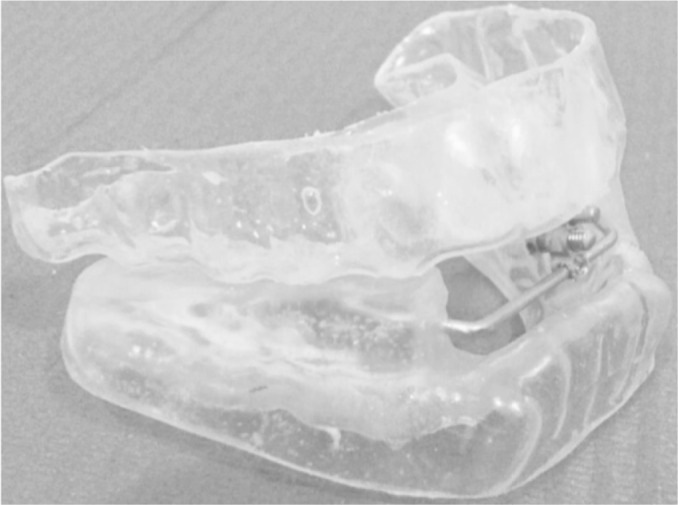
This study aimed to evaluate the therapeutic effcacy of custom-made mandibular advancement devices (MAD) in the control of primary snoring and sleep apnea and to correlate with anatomical changes identified through imaging tests.
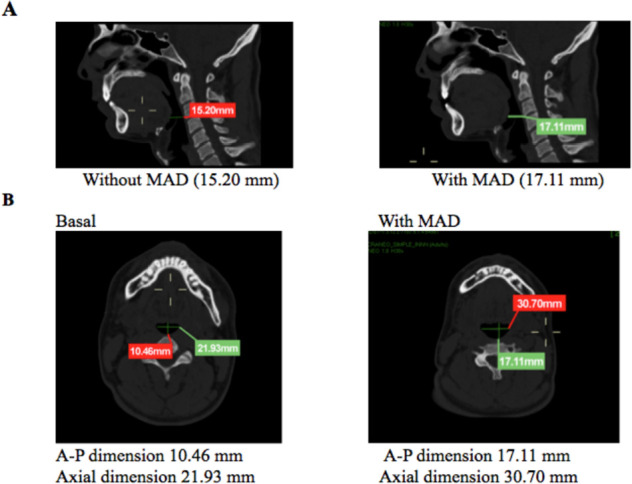
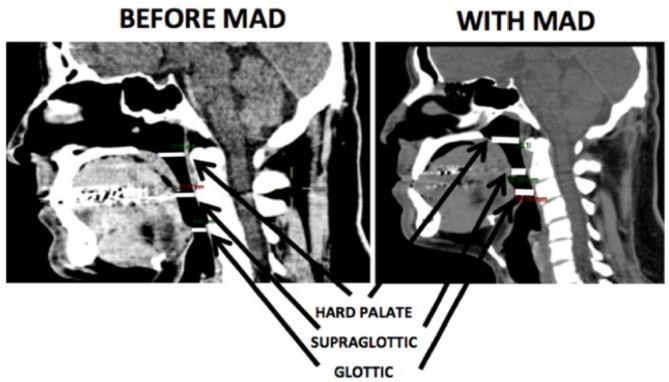
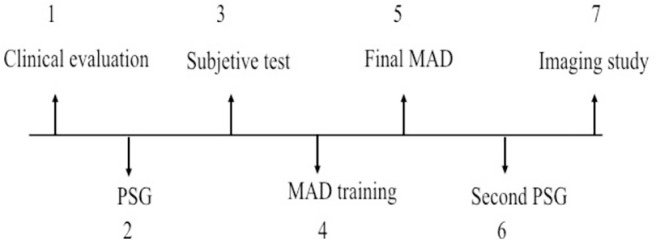
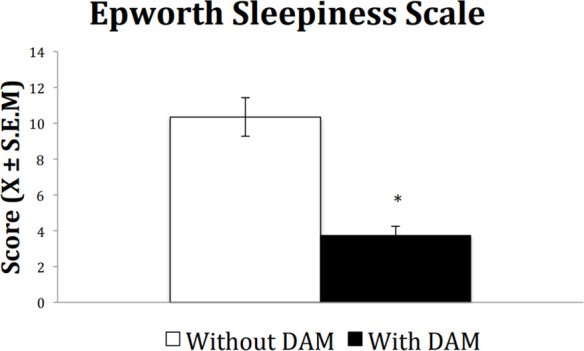
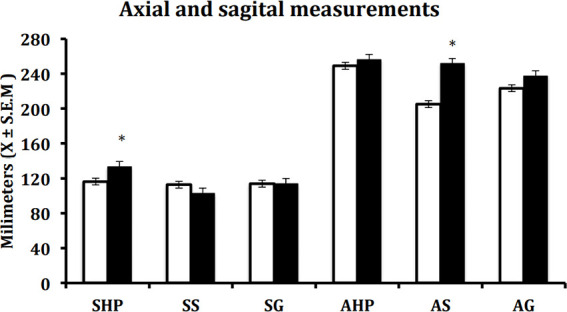
Patients (n = 17) diagnosed with sleep apnea or primary snoring were included in this study and subsequently treated with MADs. Changes were assessed using a polysomnographic study (PSG), the Epworth Sleepiness Scale (ESS), and an imaging study with computed tomography scanning (CT). Studies were performed before and after the use of MAD. Anteroposterior measurements were taken in the sagittal plane at the hard palate, glottis, and supraglottic levels along the hard palate axis. Afterward, measurements were taken in the axial plane at the same levels along the hard palate axis.
From the six recorded measurements, the airway caliber increased by five. However, these changes were significant only in two measurements (sagittal hard palate and axial supraglottic). Snoring was controlled in 16 of the 17 subjects. From these sixteen, 12 subjects had a correct opening of the airway at the hard palate level. Moreover, daytime sleepiness decreased in all subjects.
Present results suggest that sagittal hard palate and axial supraglottic opening after use of MAD are mainly responsible for eliminating snoring and improve sleep apnea.
本研究旨在评估定制下颌前移装置(MAD)在控制原发性打鼾和睡眠呼吸暂停方面的治疗效果,并将其与通过影像学检查确定的解剖学变化相关联。
本研究纳入了17名被诊断为睡眠呼吸暂停或原发性打鼾的患者,随后用MAD进行治疗。使用多导睡眠图研究(PSG)、爱泼华嗜睡量表(ESS)以及计算机断层扫描(CT)成像研究来评估变化。在使用MAD之前和之后进行研究。在矢状面沿着硬腭轴在硬腭、声门和声门上水平进行前后测量。之后,在轴向平面沿着硬腭轴在相同水平进行测量。
在记录的六项测量中,气道口径有五项增加。然而,这些变化仅在两项测量中显著(矢状面硬腭和轴向声门上)。17名受试者中有16名的打鼾得到控制。在这16名受试者中,有12名在硬腭水平气道开放正确。此外,所有受试者的日间嗜睡情况均有所减轻。
目前的结果表明,使用MAD后矢状面硬腭和轴向声门上开放主要负责消除打鼾并改善睡眠呼吸暂停。