Rahaman Sheikh Mizanur, Chowdhury Srikanta, Mukai Yasutaka, Ono Daisuke, Yamaguchi Hiroshi, Yamanaka Akihiro
Department of Neuroscience II, Research Institute of Environmental Medicine, Nagoya University, Nagoya, Japan.
Department of Neural Regulation, Nagoya University Graduate School of Medicine, Nagoya, Japan.
Front Neurosci. 2022 May 19;16:877054. doi: 10.3389/fnins.2022.877054. eCollection 2022.
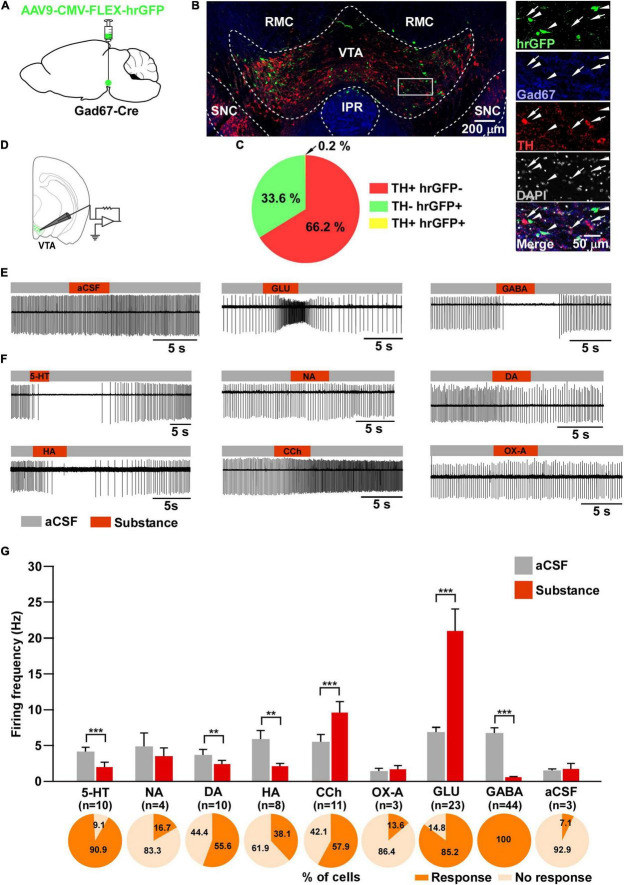
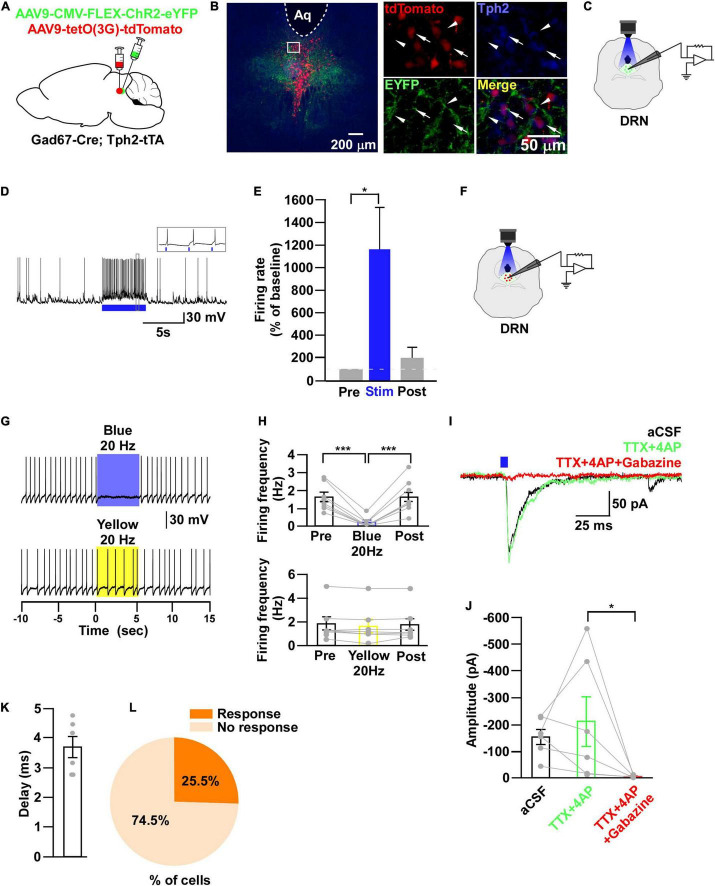
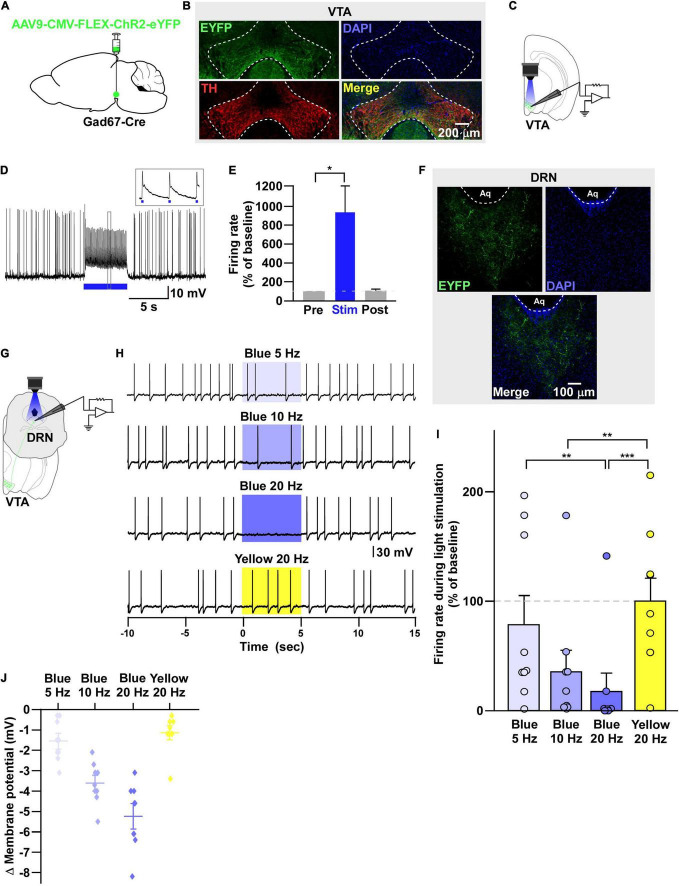
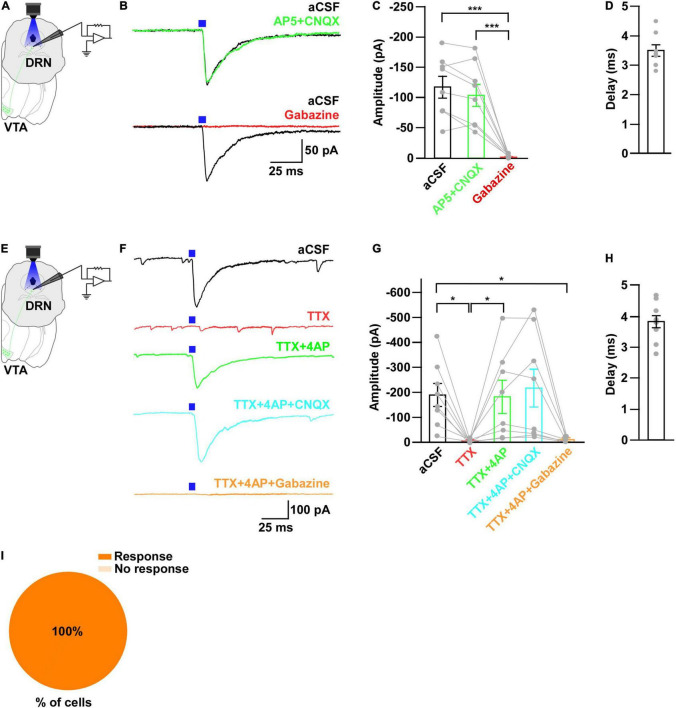
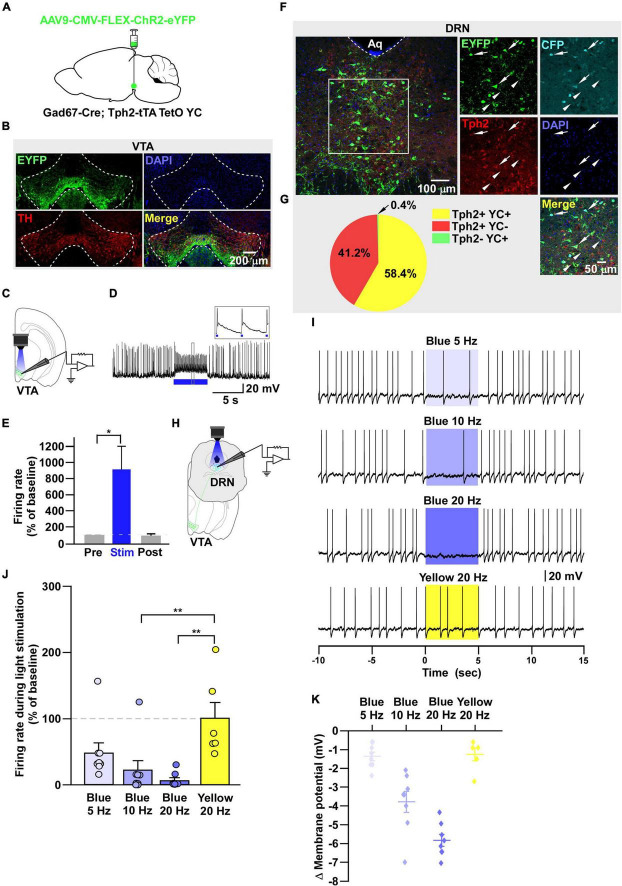
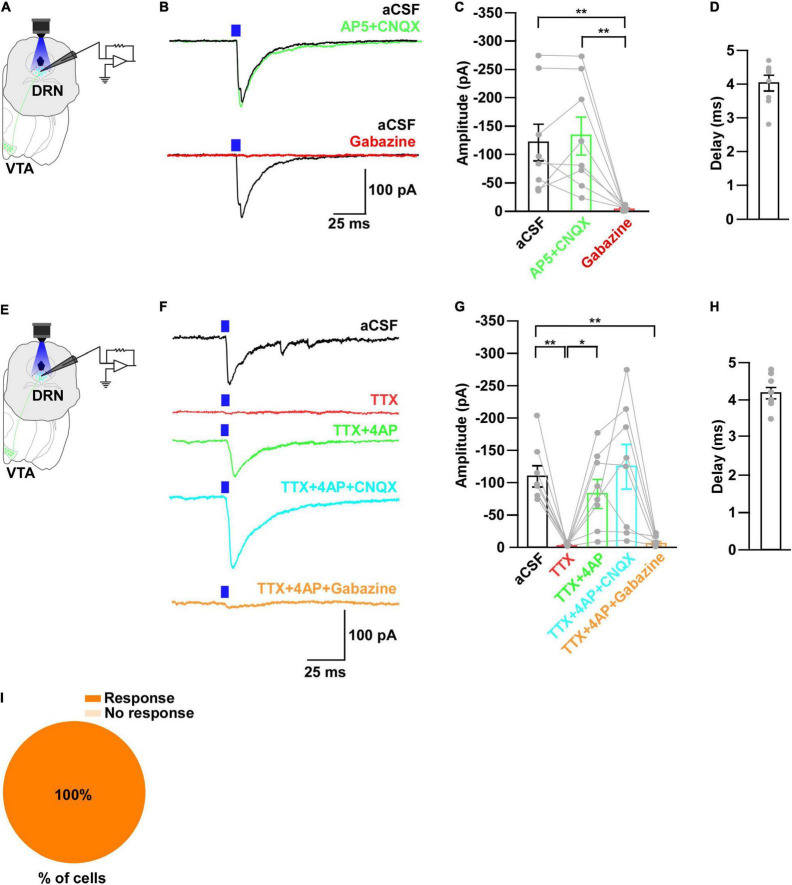
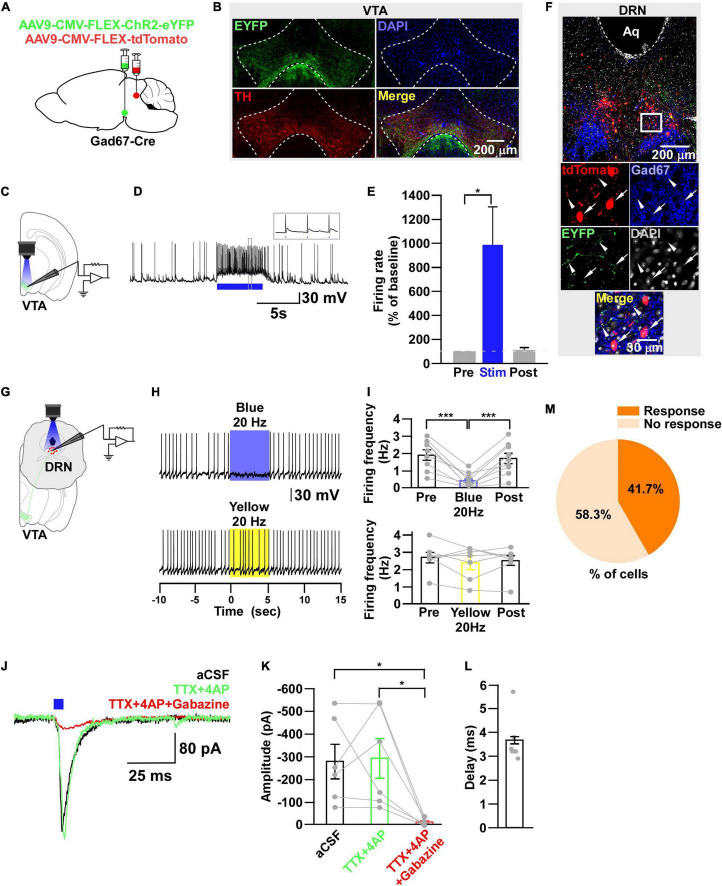
GABAergic neurons in the ventral tegmental area (VTA) have brain-wide projections and are involved in multiple behavioral and physiological functions. Here, we revealed the responsiveness of Gad67+ neurons in VTA (VTA) to various neurotransmitters involved in the regulation of sleep/wakefulness by slice patch clamp recording. Among the substances tested, a cholinergic agonist activated, but serotonin, dopamine and histamine inhibited these neurons. Dense VTA neuronal projections were observed in brain areas regulating sleep/wakefulness, including the central amygdala (CeA), dorsal raphe nucleus (DRN), and locus coeruleus (LC). Using a combination of electrophysiology and optogenetic studies, we showed that VTA neurons inhibited all neurons recorded in the DRN, but did not inhibit randomly recorded neurons in the CeA and LC. Further examination revealed that the serotonergic neurons in the DRN (DRN) were monosynaptically innervated and inhibited by VTA neurons. All recorded DRN neurons received inhibitory input from VTA neurons, while only one quarter of them received inhibitory input from local GABAergic neurons. Gad67+ neurons in the DRN (DRN) also received monosynaptic inhibitory input from VTA neurons. Taken together, we found that VTA neurons were integrated in many inputs, and their output inhibits DRN neurons, which may regulate physiological functions including sleep/wakefulness.
腹侧被盖区(VTA)中的γ-氨基丁酸能神经元具有广泛的脑内投射,并参与多种行为和生理功能。在此,我们通过脑片膜片钳记录揭示了VTA中Gad67+神经元对参与睡眠/觉醒调节的各种神经递质的反应性。在所测试的物质中,一种胆碱能激动剂激活了这些神经元,但血清素、多巴胺和组胺抑制了它们。在包括中央杏仁核(CeA)、中缝背核(DRN)和蓝斑(LC)在内的调节睡眠/觉醒的脑区观察到密集的VTA神经元投射。结合电生理学和光遗传学研究,我们发现VTA神经元抑制DRN中记录的所有神经元,但不抑制CeA和LC中随机记录的神经元。进一步检查发现,DRN中的血清素能神经元受到VTA神经元的单突触支配和抑制。所有记录的DRN神经元都接受来自VTA神经元的抑制性输入,而其中只有四分之一接受来自局部γ-氨基丁酸能神经元的抑制性输入。DRN中的Gad67+神经元也接受来自VTA神经元的单突触抑制性输入。综上所述,我们发现VTA神经元整合了许多输入,其输出抑制DRN神经元,这可能调节包括睡眠/觉醒在内的生理功能。