Kumar Amit, Kumar Rakesh, Gupta Anand K, Kishore Sunil, Kumar Manish, Ahmar Rizwan, Prakash Jayant, Sharan Shambhavi
Pediatrics, Indira Gandhi Institute of Medical Sciences, Patna, IND.
Cureus. 2022 Jun 2;14(6):e25590. doi: 10.7759/cureus.25590. eCollection 2022 Jun.
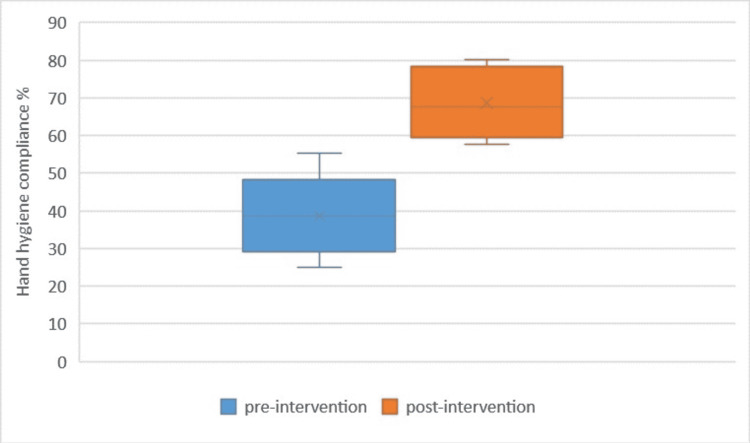
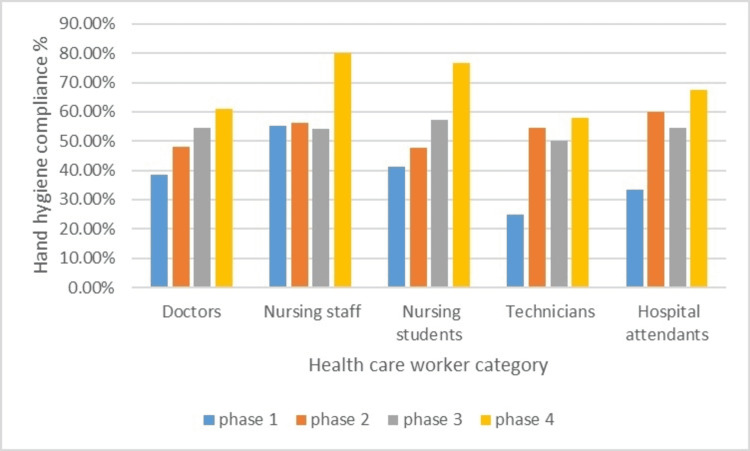
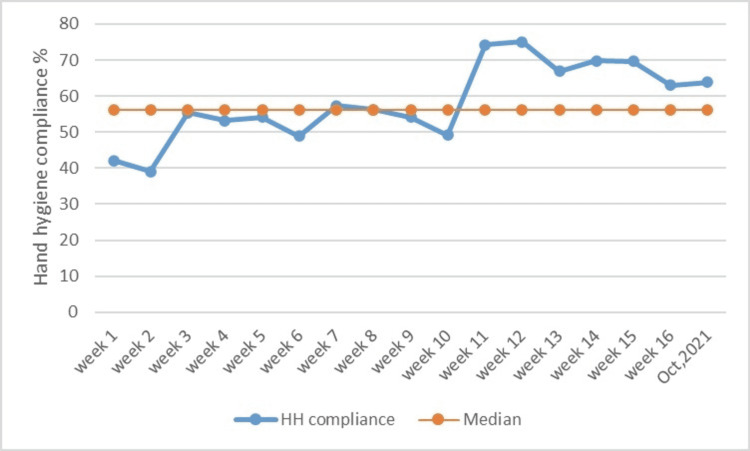
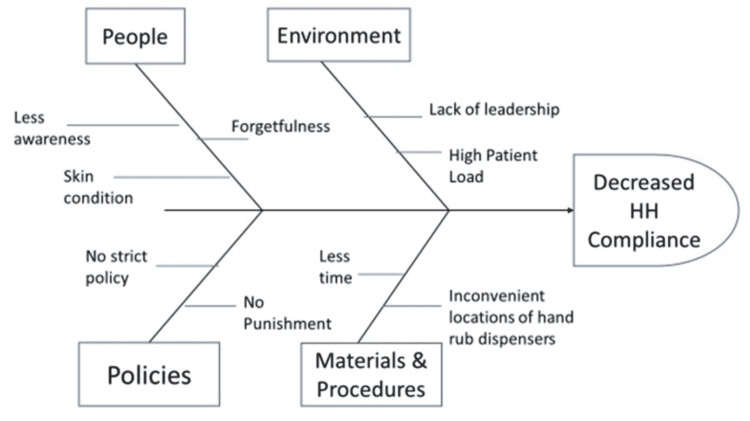
Background Hospital-acquired infections (HAIs) are the most severe complications of intensive care stay, especially in pediatric patients. Proper hand hygiene (HH) is the cheapest, simplest, but often neglected method to prevent HAIs. The World Health Organization (WHO) has formulated and promoted a standardized recommendation for HH. Both the WHO and the Centers for Disease Control and Prevention (CDC) recommend the use of soap and water for handwashing whenever there is visible dirt on the hands. In all other situations, an alcohol-based hand rub is an effective alternative. The quality improvement (QI) methodology has been widely followed in many countries to improve basic and advanced healthcare systems. The QI strategy follows the plan-do-study-act (PDSA) method. Methodology This quasi-experimental (pre- and post-intervention), prospective, QI study was conducted at the neonatal intensive care unit and pediatric intensive care unit of the pediatrics department in a tertiary care hospital in Bihar, India. A QI team was formed. The study was divided into four phases. WHO charts for assessing HH compliance were used for observation and data collection. The EQUATOR Checklist (Squire Checklist) was used to accurately report the QI work. Epi Info™ (version 7.2.5) was used for statistical analysis. The chi-square test was used to measure the statistical difference between pre- and post-intervention HH compliance (proportions). Results In the pre-intervention phase, a total of 106 HH opportunities were observed. The HH compliance at this stage was 40.6%. The QI team conducted several meetings, and a root cause analysis was performed with the help of the Fishbone diagram. It was decided to target three probable causes, namely, (a) less awareness, (b) inconvenient locations of hand rub dispensers, and (c) forgetfulness. The QI team decided to run three PDSA cycles. In the last phase, 212 HH opportunities were observed with a compliance percentage of 69.8%. There was a significant improvement when data of pre- and post-intervention HH compliance were compared in all categories of healthcare workers (HCWs), except doctors, where the improvement was not statistically significant. When the cumulative data of all subtypes of HCWs were analyzed, there was a significant improvement (p < 0.0001). Run charts and box plots were used for the easy depiction of the results. Conclusions Adopting proper HH methods remains the most effective way of preventing nosocomial infections, especially in intensive care units. We used the WHO model of HH in our study. The pre-intervention HH compliance was 40.6%. QI methodology using root cause analysis and implementation of three PDSA cycles were used to increase the HH compliance percentage. Post-intervention HH compliance increased to 69.8% and the effect was sustained. The study highlights the usefulness of the QI methodology in bringing small but important changes in clinical practice for better patient care.
医院获得性感染(HAIs)是重症监护期间最严重的并发症,尤其是在儿科患者中。正确的手卫生(HH)是预防HAIs最经济、最简单但常被忽视的方法。世界卫生组织(WHO)已制定并推广了HH的标准化建议。WHO和疾病控制与预防中心(CDC)均建议,只要手上有明显污垢,就使用肥皂和水洗手。在所有其他情况下,酒精类擦手液是一种有效的替代方法。质量改进(QI)方法在许多国家被广泛采用,以改善基础和高级医疗保健系统。QI策略遵循计划-执行-研究-行动(PDSA)方法。
这项准实验性(干预前和干预后)、前瞻性的QI研究在印度比哈尔邦一家三级护理医院儿科的新生儿重症监护病房和儿科重症监护病房进行。成立了一个QI团队。该研究分为四个阶段。使用WHO评估HH依从性的图表进行观察和数据收集。使用赤道清单(斯奎尔清单)准确报告QI工作。使用Epi Info™(7.2.5版)进行统计分析。卡方检验用于测量干预前后HH依从性(比例)之间的统计差异。
在干预前阶段,共观察到106次HH机会。此阶段的HH依从率为40.6%。QI团队召开了几次会议,并借助鱼骨图进行了根本原因分析。决定针对三个可能的原因,即(a)意识不足、(b)擦手液分配器位置不便和(c)健忘。QI团队决定运行三个PDSA循环。在最后阶段,观察到212次HH机会,依从率为69.8%。在所有医护人员(HCWs)类别中,将干预前后HH依从性数据进行比较时,除医生外均有显著改善,医生的改善无统计学意义。当分析所有HCW亚型的累积数据时,有显著改善(p<0.0001)。使用运行图和箱线图来直观呈现结果。
采用正确的HH方法仍然是预防医院感染的最有效方法,尤其是在重症监护病房。我们在研究中采用了WHO的HH模式。干预前的HH依从率为40.6%。使用根本原因分析和实施三个PDSA循环的QI方法来提高HH依从率。干预后的HH依从率提高到69.8%,且效果得以持续。该研究强调了QI方法在为改善患者护理而在临床实践中带来虽小但重要的变化方面的有用性。