Wang Renyong, Li Ruixue, Li Tiehan, Zhu Lei, Qi Zongze, Yang Xiaokui, Wang Huan, Cao Baoquan, Zhu Hong
First Department of Hepatobiliary and Pancreatic Surgery, The Second Affiliated Hospital of Kunming Medical University, Kunming, China.
Department of General Surgery, The First People's Hospital of Xundian Hui and Yi Autonomous County, Kunming, China.
J Oncol. 2022 May 26;2022:8890434. doi: 10.1155/2022/8890434. eCollection 2022.
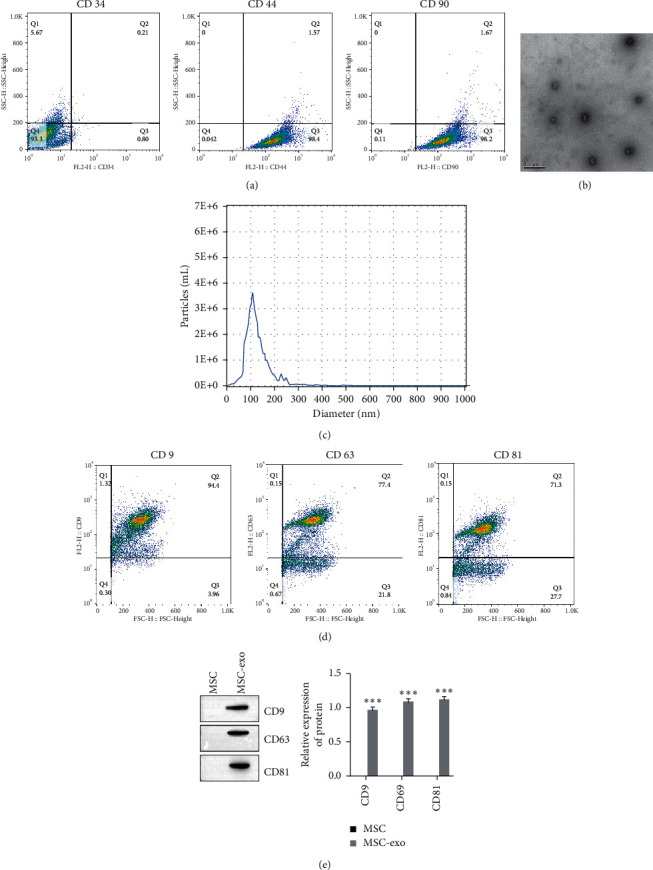
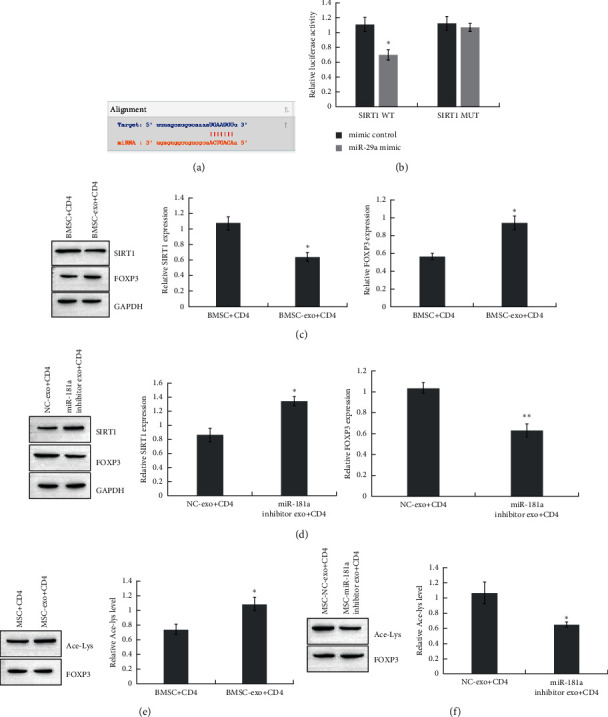
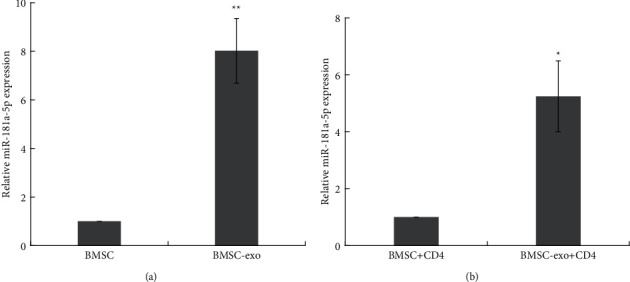
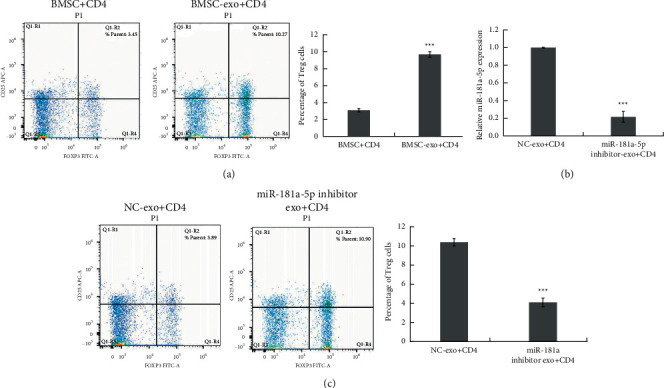
Bone marrow mesenchymal stem cells (BMSCs) have been identified as a potential therapeutic approach to immune-related diseases. Here, we show that BMSC-derived exosomes promote FOXP3 expression and induce the conversion of CD4 T cells into CD4CD25FOXP3 Treg cells, which is significant for immunosuppressive activity. We found that miR-181a-5p is upregulated in BMSC-derived exosomes and can be transferred to CD4 T cells. In CD4 cells, miR-181a directly targets SIRT1 and suppresses its expression. Moreover, downregulated SIRT1 enhances FOXP3 via protein acetylation. In conclusion, our data demonstrated that BMSC-derived exosomal miR-181a is critical in the maintenance of immune tolerance. Furthermore, our results reveal that BMSC-derived exosomal miR-181a induces the production of CD4CD25FOXP3 Treg cells via SIRT1/acetylation/FOXP3.
骨髓间充质干细胞(BMSCs)已被确定为治疗免疫相关疾病的一种潜在方法。在此,我们表明BMSC来源的外泌体可促进FOXP3表达,并诱导CD4 T细胞转化为CD4CD25FOXP3调节性T细胞,这对免疫抑制活性具有重要意义。我们发现miR-181a-5p在BMSC来源的外泌体中上调,并可转移至CD4 T细胞。在CD4细胞中,miR-181a直接靶向沉默调节蛋白1(SIRT1)并抑制其表达。此外,下调的SIRT1通过蛋白质乙酰化增强FOXP3表达。总之,我们的数据表明BMSC来源的外泌体miR-181a在维持免疫耐受中起关键作用。此外,我们的结果揭示BMSC来源的外泌体miR-181a通过SIRT1/乙酰化/FOXP3诱导CD4CD25FOXP3调节性T细胞的产生。