Solis Oscar, Beccari Andrea R, Iaconis Daniela, Talarico Carmine, Ruiz-Bedoya Camilo A, Nwachukwu Jerome C, Cimini Annamaria, Castelli Vanessa, Bertini Riccardo, Montopoli Monica, Cocetta Veronica, Borocci Stefano, Prandi Ingrid G, Flavahan Kelly, Bahr Melissa, Napiorkowski Anna, Chillemi Giovanni, Ooka Masato, Yang Xiaoping, Zhang Shiliang, Xia Menghang, Zheng Wei, Bonaventura Jordi, Pomper Martin G, Hooper Jody E, Morales Marisela, Rosenberg Avi Z, Nettles Kendall W, Jain Sanjay K, Allegretti Marcello, Michaelides Michael
Biobehavioral Imaging and Molecular Neuropsychopharmacology Unit, National Institute on Drug Abuse Intramural Research Program, Baltimore, 21224, MD, USA.
EXSCALATE, Dompé farmaceutici S.p.A, Napoli, Italy.
bioRxiv. 2022 May 23:2022.05.21.492920. doi: 10.1101/2022.05.21.492920.
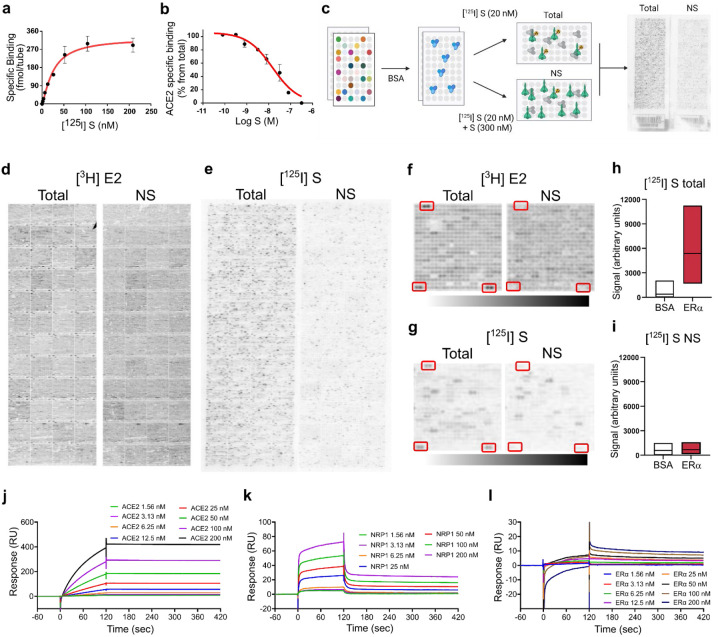
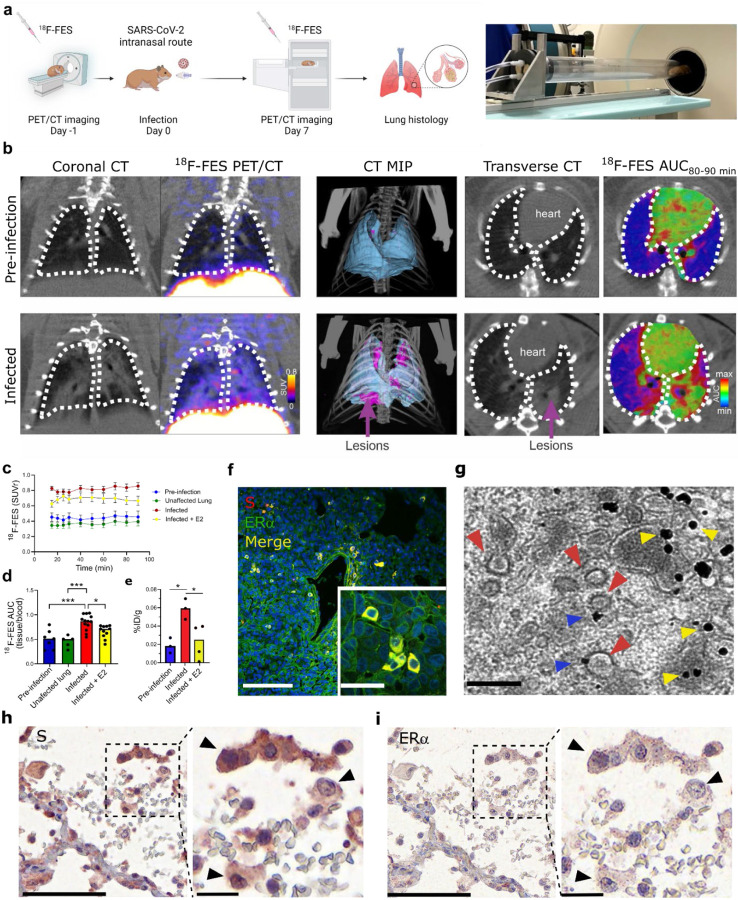
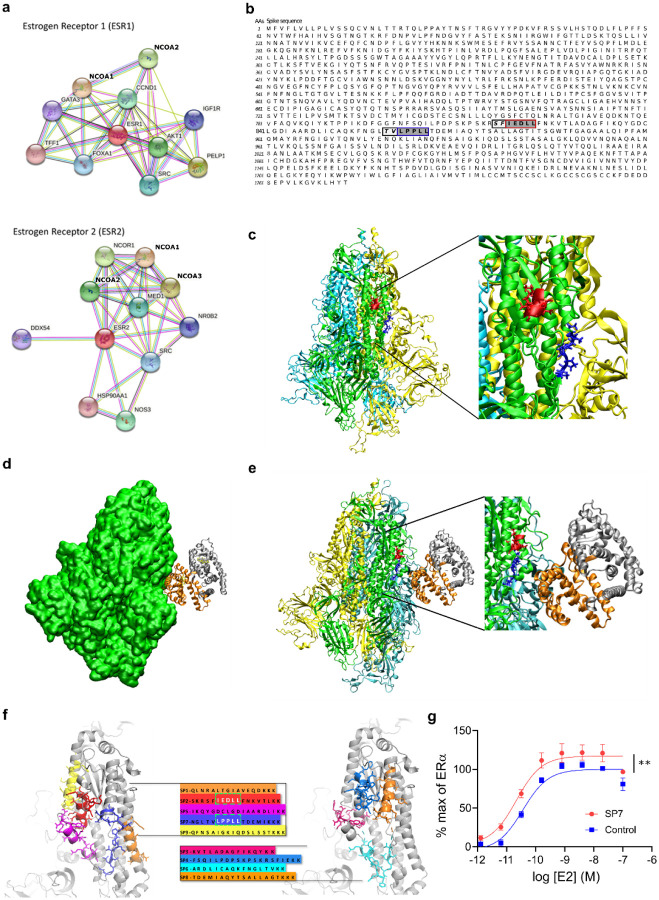
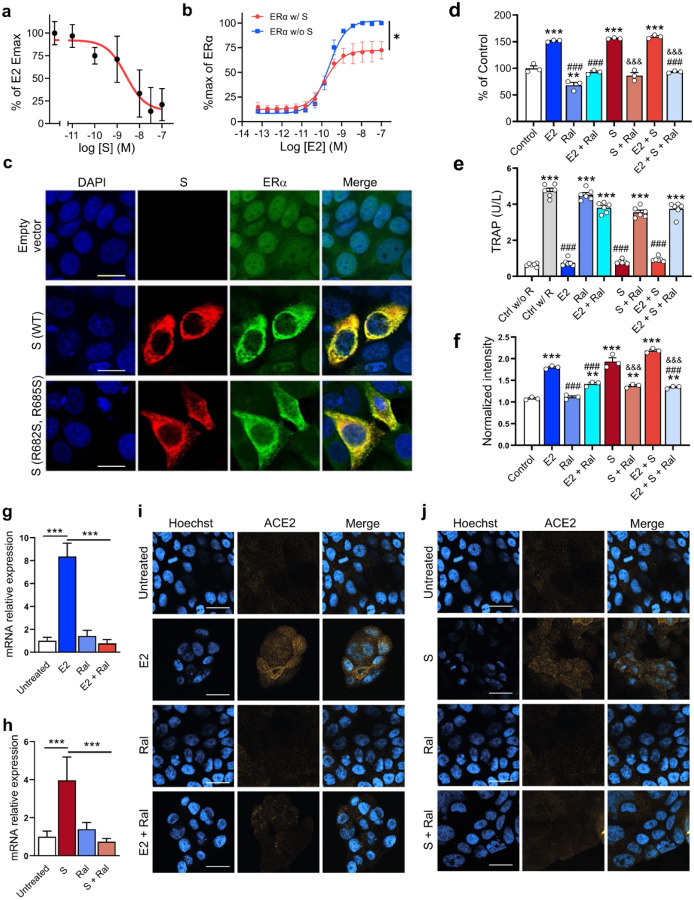
The severe acute respiratory syndrome coronavirus 2 (SARS-CoV-2) spike (S) protein binds angiotensin-converting enzyme 2 (ACE2) at the cell surface, which constitutes the primary mechanism driving SARS-CoV-2 infection. Molecular interactions between the transduced S and endogenous proteins likely occur post-infection, but such interactions are not well understood. We used an unbiased primary screen to profile the binding of full-length S against >9,000 human proteins and found significant S-host protein interactions, including one between S and human estrogen receptor alpha (ERα). After confirming this interaction in a secondary assay, we used bioinformatics, supercomputing, and experimental assays to identify a highly conserved and functional nuclear receptor coregulator (NRC) LXD-like motif on the S2 subunit and an S-ERα binding mode. In cultured cells, S DNA transfection increased ERα cytoplasmic accumulation, and S treatment induced ER-dependent biological effects and ACE2 expression. Noninvasive multimodal PET/CT imaging in SARS-CoV-2-infected hamsters using [ F]fluoroestradiol (FES) localized lung pathology with increased ERα lung levels. Postmortem experiments in lung tissues from SARS-CoV-2-infected hamsters and humans confirmed an increase in cytoplasmic ERα expression and its colocalization with S protein in alveolar macrophages. These findings describe the discovery and characterization of a novel S-ERα interaction, imply a role for S as an NRC, and are poised to advance knowledge of SARS-CoV-2 biology, COVID-19 pathology, and mechanisms of sex differences in the pathology of infectious disease.
严重急性呼吸综合征冠状病毒2(SARS-CoV-2)刺突(S)蛋白在细胞表面与血管紧张素转换酶2(ACE2)结合,这是驱动SARS-CoV-2感染的主要机制。转导的S与内源性蛋白质之间的分子相互作用可能在感染后发生,但此类相互作用尚未得到充分了解。我们使用无偏向性的初次筛选来分析全长S与9000多种人类蛋白质的结合情况,发现了显著的S-宿主蛋白相互作用,包括S与人雌激素受体α(ERα)之间的相互作用。在二次检测中确认这种相互作用后,我们使用生物信息学、超级计算和实验检测方法,在S2亚基上鉴定出一个高度保守且具有功能的核受体共调节因子(NRC)LXD样基序以及S-ERα结合模式。在培养细胞中,S DNA转染增加了ERα在细胞质中的积累,S处理诱导了ER依赖性生物学效应和ACE2表达。使用[ F]氟雌二醇(FES)对感染SARS-CoV-2的仓鼠进行的非侵入性多模态PET/CT成像显示,肺部病理改变与肺中ERα水平升高有关。对感染SARS-CoV-2的仓鼠和人类肺组织进行的尸检实验证实,肺泡巨噬细胞中细胞质ERα表达增加且与S蛋白共定位。这些发现描述了一种新型S-ERα相互作用的发现和特征,暗示S作为一种NRC的作用,并有望推进对SARS-CoV-2生物学、COVID-19病理学以及传染病病理学中性别差异机制的认识。