Shirato Ken, Kizaki Takako
Department of Molecular Predictive Medicine and Sport Science, Kyorin University School of Medicine, 6-20-2 Shinkawa, Mitaka, Tokyo 181-8611, Japan.
Heliyon. 2021 Feb 2;7(2):e06187. doi: 10.1016/j.heliyon.2021.e06187. eCollection 2021 Feb.
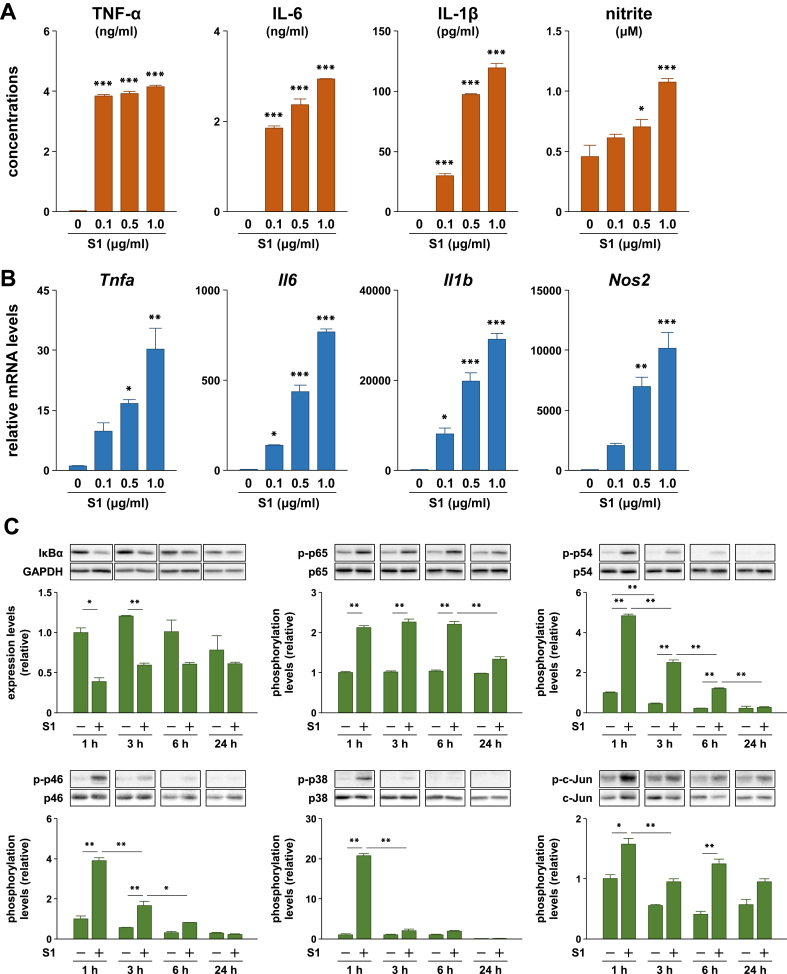
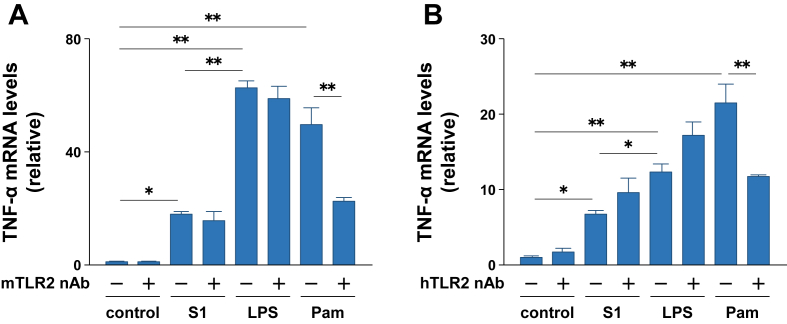
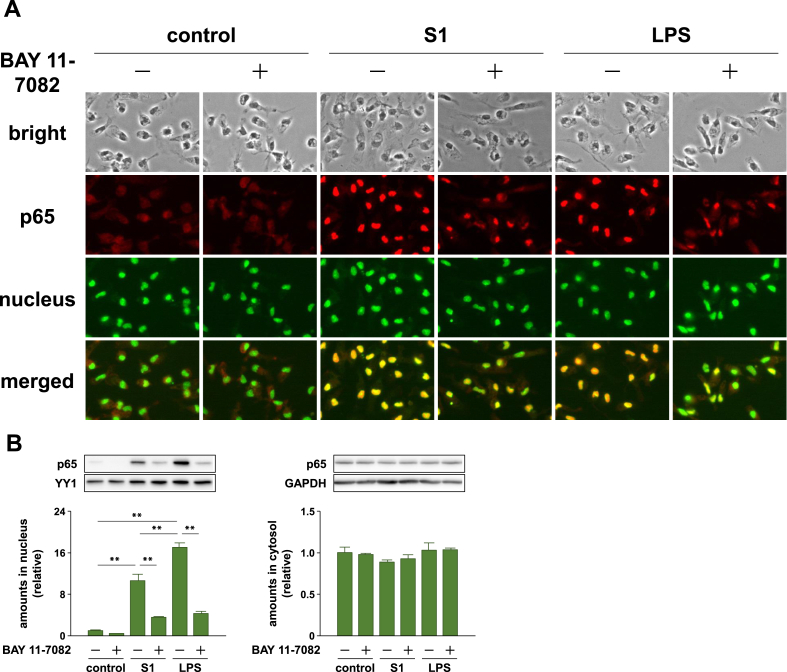
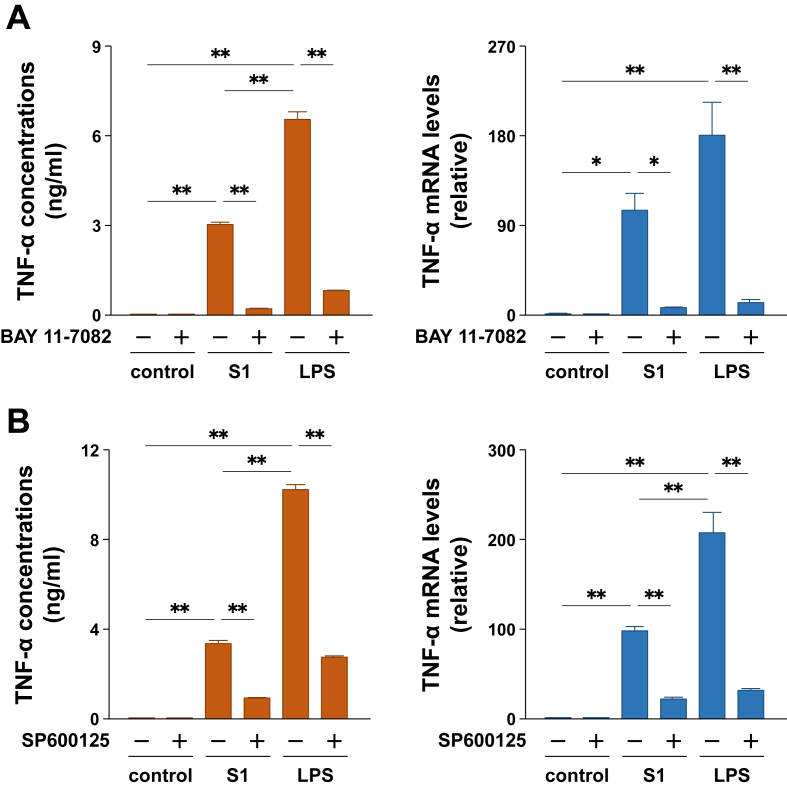
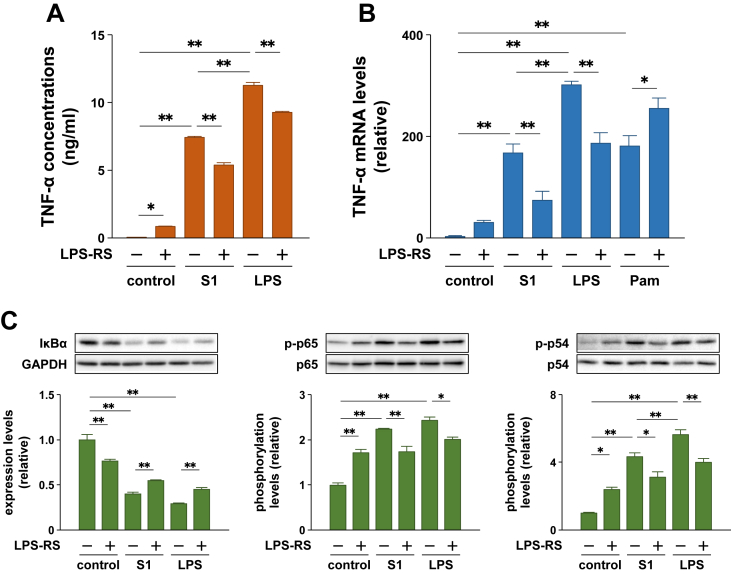
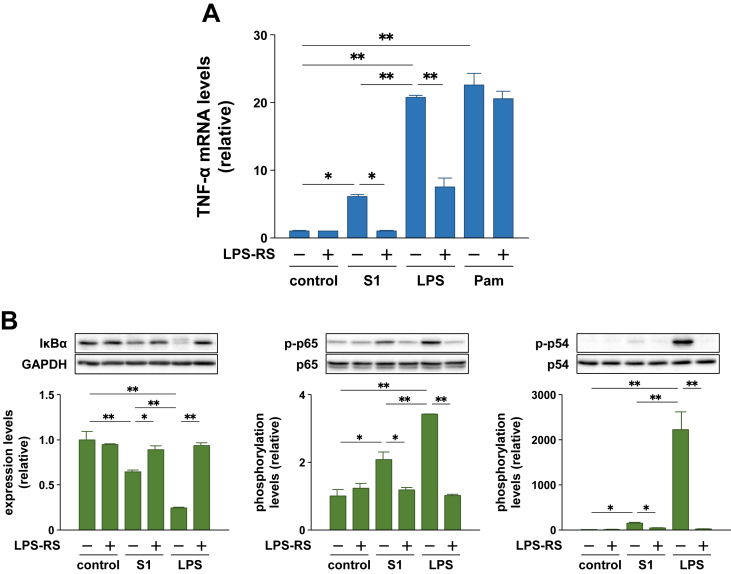
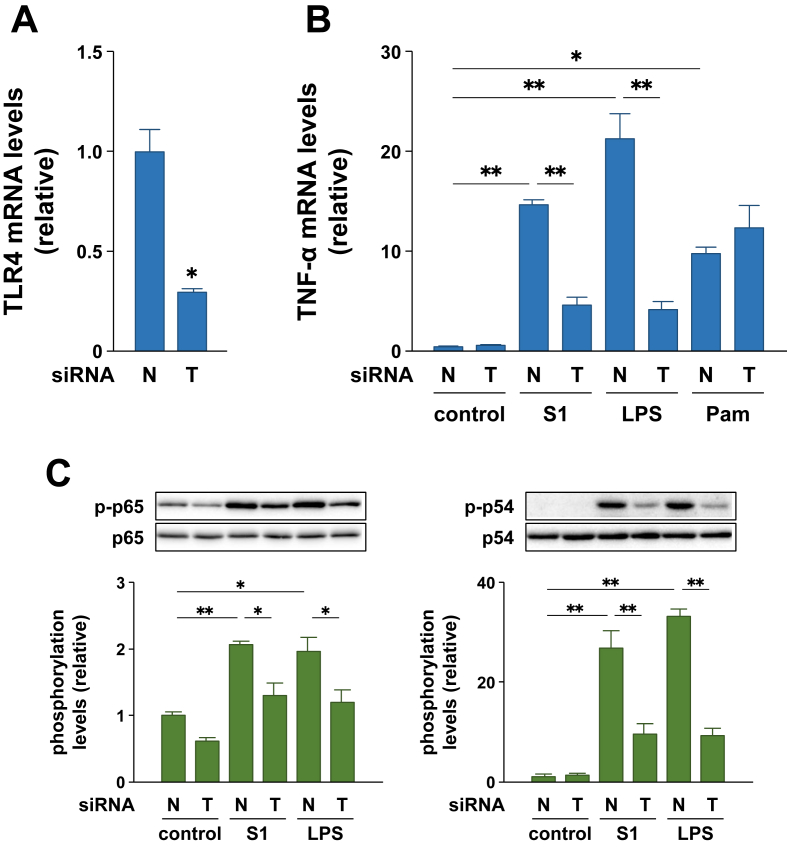
Coronavirus disease 2019 (COVID-19), an infectious disease caused by severe acute respiratory syndrome coronavirus 2 (SARS-CoV-2), has now spread globally. Some patients develop severe complications including multiple organ failure. It has been suggested that excessive inflammation associated with the disease plays major role in the severity and mortality of COVID-19. To elucidate the inflammatory mechanisms involved in COVID-19, we examined the effects of SARS-CoV-2 spike protein S1 subunit (hereafter S1) on the pro-inflammatory responses in murine and human macrophages. Murine peritoneal exudate macrophages produced pro-inflammatory mediators in response to S1 exposure. Exposure to S1 also activated nuclear factor-κB (NF-κB) and c-Jun N-terminal kinase (JNK) signaling pathways. Pro-inflammatory cytokine induction by S1 was suppressed by selective inhibitors of NF-κB and JNK pathways. Treatment of murine peritoneal exudate macrophages and human THP-1 cell-derived macrophages with a toll-like receptor 4 (TLR4) antagonist attenuated pro-inflammatory cytokine induction and the activation of intracellular signaling by S1 and lipopolysaccharide. Similar results were obtained in experiments using TLR4 siRNA-transfected murine RAW264.7 macrophages. In contrast, TLR2 neutralizing antibodies could not abrogate the S1-induced pro-inflammatory cytokine induction in either RAW264.7 or THP-1 cell-derived macrophages. These results suggest that SARS-CoV-2 spike protein S1 subunit activates TLR4 signaling to induce pro-inflammatory responses in murine and human macrophages. Therefore, TLR4 signaling in macrophages may be a potential target for regulating excessive inflammation in COVID-19 patients.
2019冠状病毒病(COVID-19)是由严重急性呼吸综合征冠状病毒2(SARS-CoV-2)引起的一种传染病,现已在全球范围内传播。一些患者会出现严重并发症,包括多器官功能衰竭。有人认为,与该疾病相关的过度炎症在COVID-19的严重程度和死亡率中起主要作用。为了阐明COVID-19所涉及的炎症机制,我们研究了SARS-CoV-2刺突蛋白S1亚基(以下简称S1)对小鼠和人类巨噬细胞促炎反应的影响。小鼠腹腔渗出巨噬细胞在暴露于S1后产生促炎介质。暴露于S1还激活了核因子κB(NF-κB)和c-Jun氨基末端激酶(JNK)信号通路。S1诱导的促炎细胞因子被NF-κB和JNK通路的选择性抑制剂所抑制。用Toll样受体4(TLR4)拮抗剂处理小鼠腹腔渗出巨噬细胞和人THP-1细胞衍生的巨噬细胞,可减弱S1和脂多糖诱导的促炎细胞因子以及细胞内信号的激活。在使用TLR4 siRNA转染的小鼠RAW264.7巨噬细胞的实验中也获得了类似结果。相比之下,TLR2中和抗体不能消除RAW264.7或THP-1细胞衍生的巨噬细胞中S1诱导的促炎细胞因子诱导。这些结果表明,SARS-CoV-2刺突蛋白S1亚基激活TLR4信号,以诱导小鼠和人类巨噬细胞中的促炎反应。因此,巨噬细胞中的TLR4信号可能是调节COVID-19患者过度炎症的潜在靶点。