Department of Periodontics and Oral Medicine, University of Michigan School of Dentistry, Ann Arbor, MI, 48109, USA.
University of Michigan Rogel Cancer Center, Ann Arbor, MI, 48109, USA.
J Exp Clin Cancer Res. 2022 Jun 7;41(1):196. doi: 10.1186/s13046-022-02405-2.
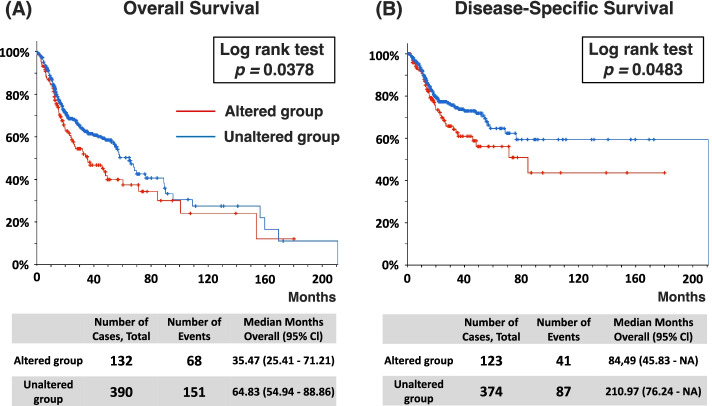
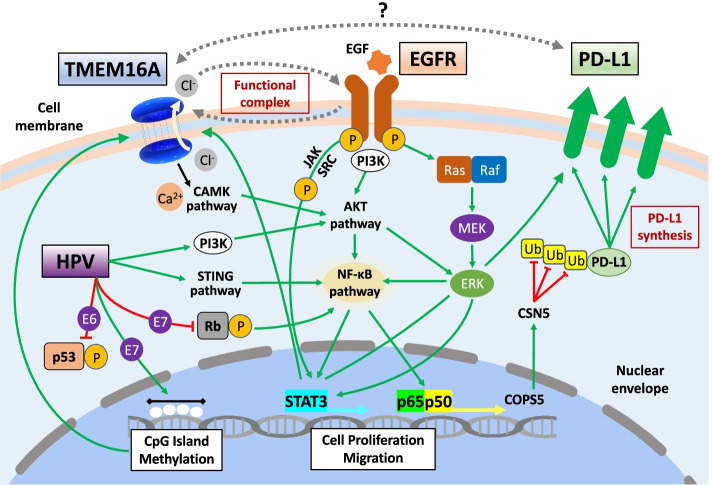
Transmembrane protein 16A (TMEM16A) forms a plasma membrane-localized Ca-activated Cl- channel. Its gene has been mapped to an area on chromosome 11q13, which is amplified in head and neck squamous cell carcinoma (HNSCC). In HNSCC, TMEM16A overexpression is associated with not only high tumor grade, metastasis, low survival, and poor prognosis, but also deterioration of clinical outcomes following platinum-based chemotherapy. Recent study revealed the interaction between TMEM16A and transforming growth factor-β (TGF-β) has an indirect crosstalk in clarifying the mechanism of TMEM16A-induced epithelial-mesenchymal transition. Moreover, human papillomavirus (HPV) infection can modulate TMEM16A expression along with epidermal growth factor receptor (EGFR), whose phosphorylation has been reported as a potential co-biomarker of HPV-positive cancers. Considering that EGFR forms a functional complex with TMEM16A and is a co-biomarker of HPV, there may be crosstalk between TMEM16A expression and HPV-induced HNSCC. EGFR activation can induce programmed death ligand 1 (PD-L1) synthesis via activation of the nuclear factor kappa B pathway and JAK/STAT3 pathway. Here, we describe an interplay among EGFR, PD-L1, and TMEM16A. Combination therapy using TMEM16A and PD-L1 inhibitors may improve the survival rate of HNSCC patients, especially those resistant to anti-EGFR inhibitor treatment. To the best of our knowledge, this is the first review to propose a biological validation that combines immune checkpoint inhibition with TMEM16A inhibition.
跨膜蛋白 16A(TMEM16A)形成位于质膜上的 Ca2+激活的 Cl-通道。其基因已被定位到染色体 11q13 上的一个区域,该区域在头颈部鳞状细胞癌(HNSCC)中扩增。在 HNSCC 中,TMEM16A 的过表达不仅与高肿瘤分级、转移、低生存率和预后不良有关,还与铂类化疗后的临床结局恶化有关。最近的研究揭示了 TMEM16A 与转化生长因子-β(TGF-β)之间的相互作用,在阐明 TMEM16A 诱导的上皮-间充质转化的机制方面具有间接的串扰。此外,人乳头瘤病毒(HPV)感染可以调节 TMEM16A 的表达,同时还可以调节表皮生长因子受体(EGFR)的表达,已有报道称 EGFR 的磷酸化是 HPV 阳性癌症的潜在共同生物标志物。考虑到 EGFR 与 TMEM16A 形成功能性复合物,并且是 HPV 的共同生物标志物,因此 TMEM16A 表达与 HPV 诱导的 HNSCC 之间可能存在串扰。EGFR 激活可通过激活核因子 kappa B 途径和 JAK/STAT3 途径诱导程序性死亡配体 1(PD-L1)的合成。在这里,我们描述了 EGFR、PD-L1 和 TMEM16A 之间的相互作用。使用 TMEM16A 和 PD-L1 抑制剂的联合治疗可能会提高 HNSCC 患者的生存率,尤其是那些对抗 EGFR 抑制剂治疗耐药的患者。据我们所知,这是第一篇提出将免疫检查点抑制与 TMEM16A 抑制相结合的生物学验证的综述。