Institute of Infection, Immunity & Inflammation, University of Glasgow, Glasgow, United Kingdom.
Nuffield Department of Clinical Neurosciences, University of Oxford, Oxford, United Kingdom.
J Clin Invest. 2022 Jul 15;132(14). doi: 10.1172/JCI158524.
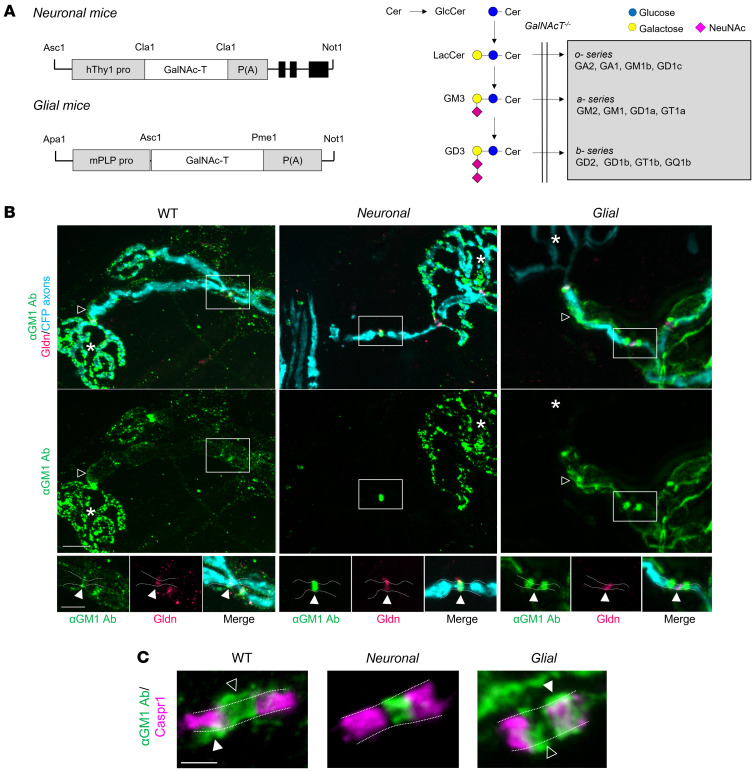
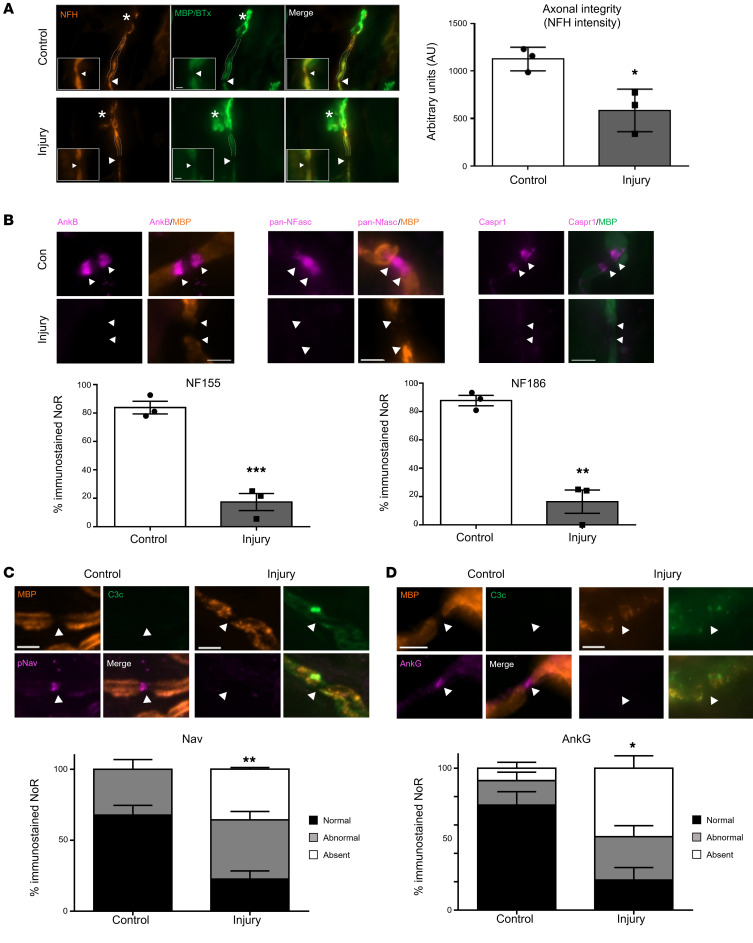
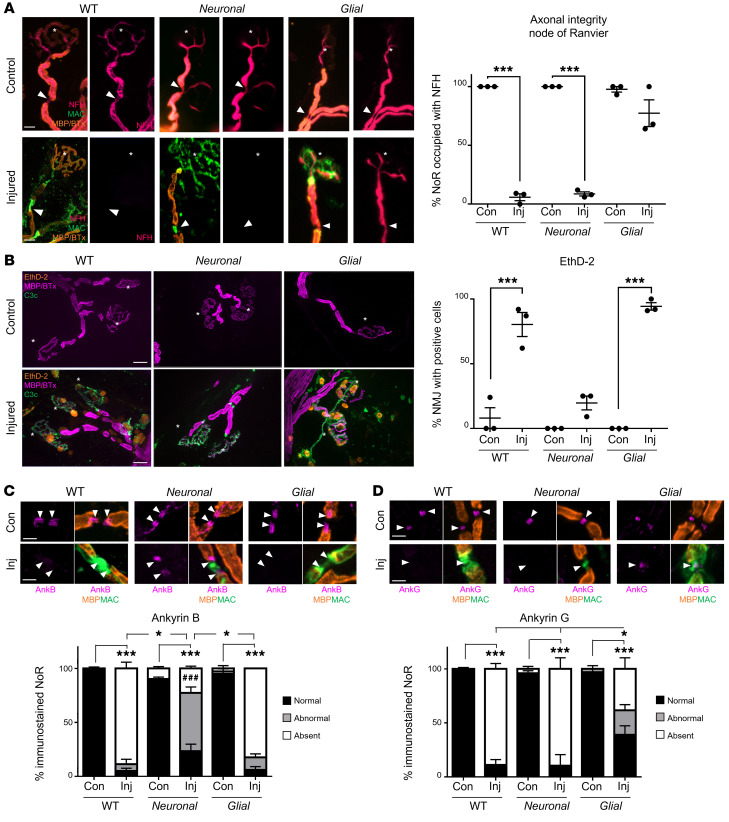
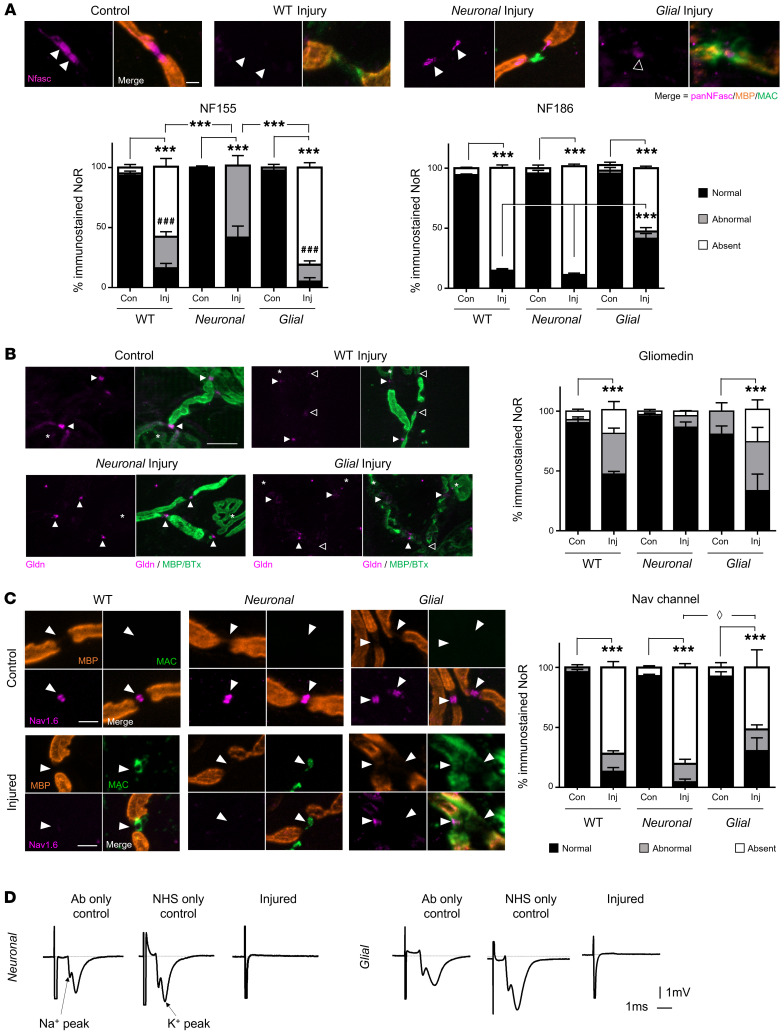
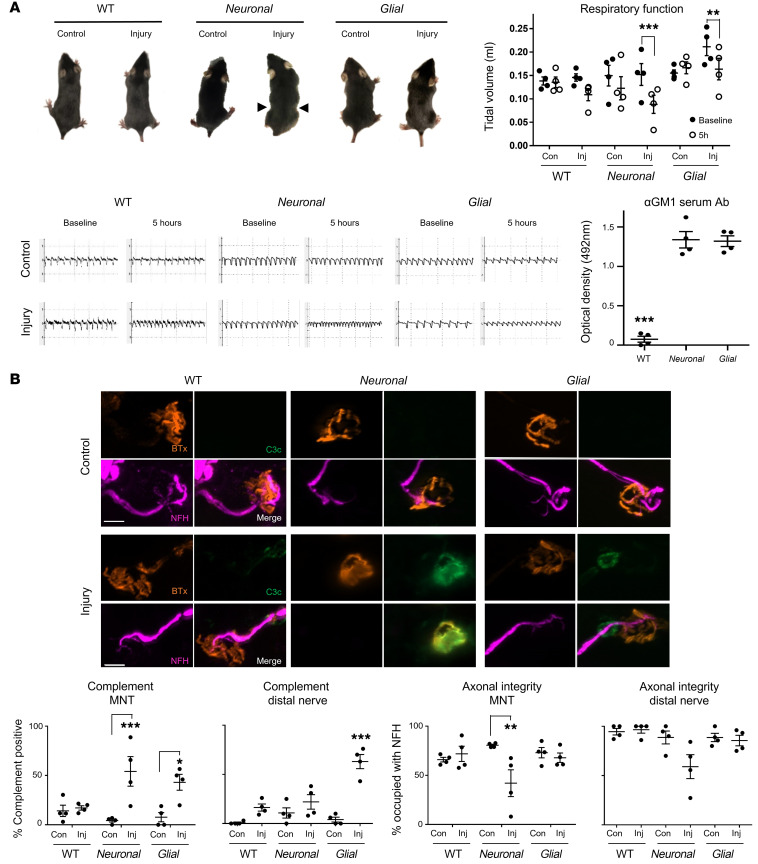
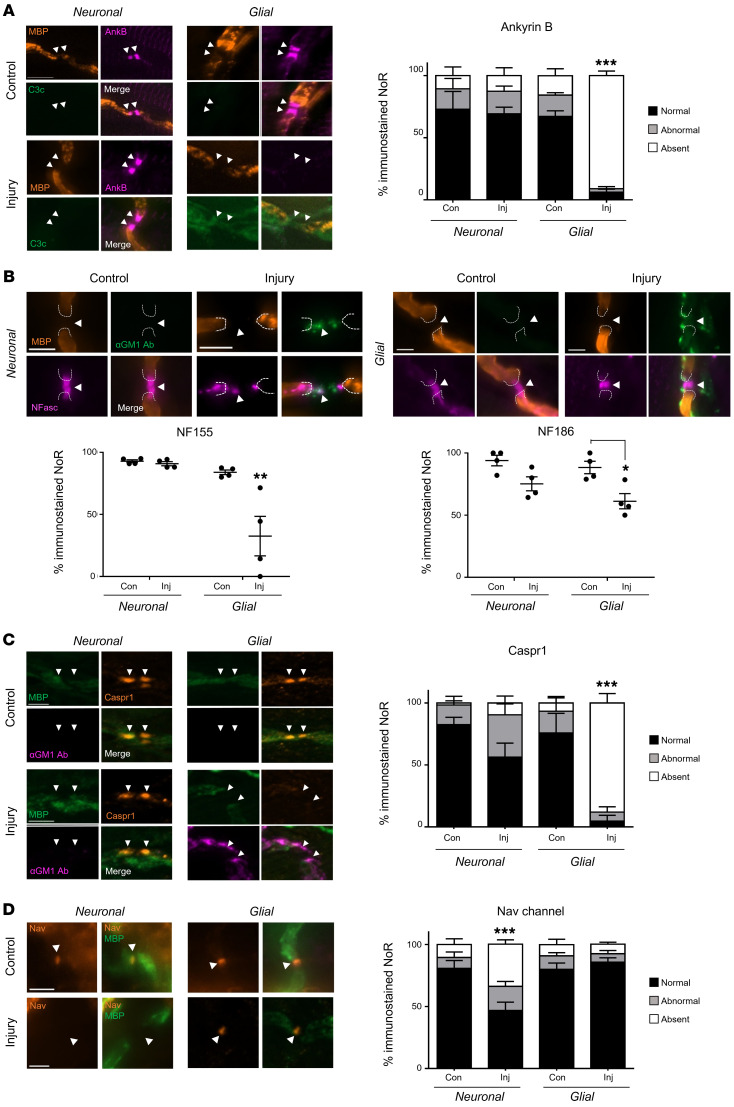
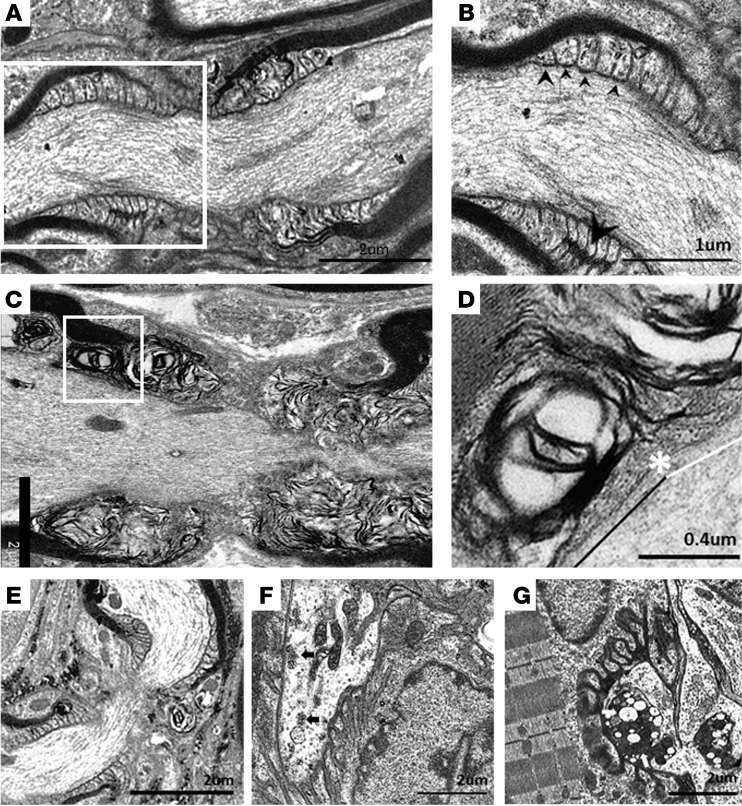
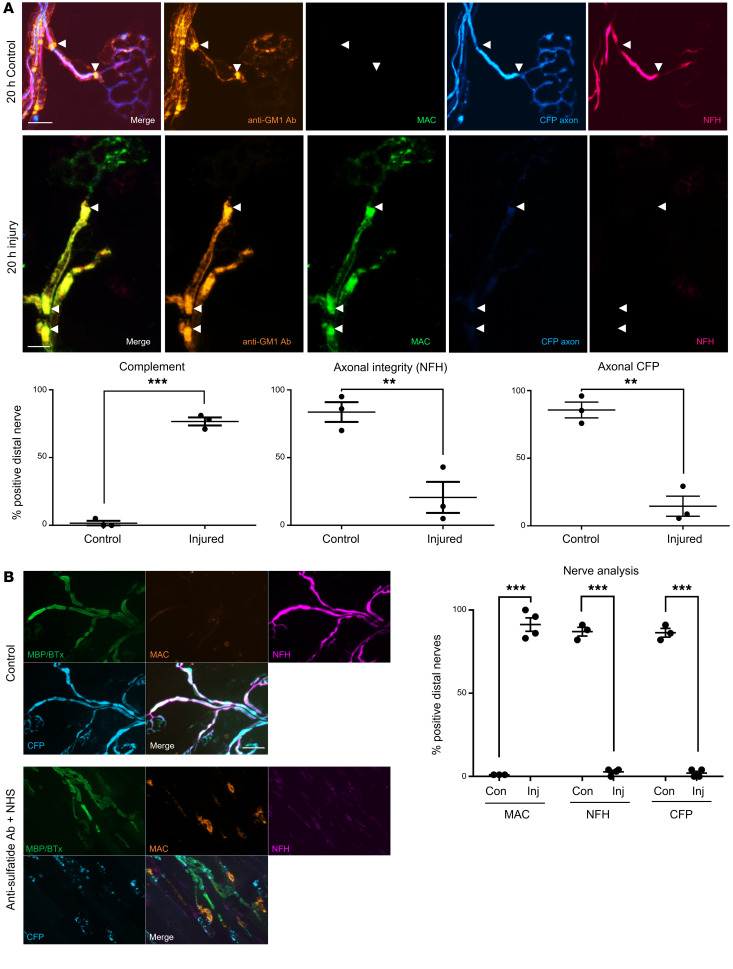
In Guillain-Barré syndrome (GBS), both axonal and demyelinating variants can be mediated by complement-fixing anti-GM1 ganglioside autoantibodies that target peripheral nerve axonal and Schwann cell (SC) membranes, respectively. Critically, the extent of axonal degeneration in both variants dictates long-term outcome. The differing pathomechanisms underlying direct axonal injury and the secondary bystander axonal degeneration following SC injury are unresolved. To investigate this, we generated glycosyltransferase-disrupted transgenic mice that express GM1 ganglioside either exclusively in neurons [GalNAcT-/--Tg(neuronal)] or glia [GalNAcT-/--Tg(glial)], thereby allowing anti-GM1 antibodies to solely target GM1 in either axonal or SC membranes, respectively. Myelinated-axon integrity in distal motor nerves was studied in transgenic mice exposed to anti-GM1 antibody and complement in ex vivo and in vivo injury paradigms. Axonal targeting induced catastrophic acute axonal disruption, as expected. When mice with GM1 in SC membranes were targeted, acute disruption of perisynaptic glia and SC membranes at nodes of Ranvier (NoRs) occurred. Following glial injury, axonal disruption at NoRs also developed subacutely, progressing to secondary axonal degeneration. These models differentiate the distinctly different axonopathic pathways under axonal and glial membrane targeting conditions, and provide insights into primary and secondary axonal injury, currently a major unsolved area in GBS research.
在吉兰-巴雷综合征(GBS)中,轴突和脱髓鞘变体均可由补体结合的抗 GM1 神经节苷脂自身抗体介导,这些自身抗体分别针对周围神经轴突和施万细胞(SC)膜。至关重要的是,两种变体中的轴突退化程度决定了长期预后。直接轴突损伤和 SC 损伤后继发性旁观者轴突退化的不同发病机制仍未解决。为了研究这一点,我们生成了糖基转移酶缺失的转基因小鼠,这些转基因小鼠在神经元中特异性表达 GM1 神经节苷脂[GalNAcT--/-Tg(神经元)]或在神经胶质中表达 GM1 神经节苷脂[GalNAcT--/-Tg(神经胶质)],从而允许抗 GM1 抗体分别仅针对轴突或 SC 膜中的 GM1。在体外和体内损伤模型中,研究了暴露于抗 GM1 抗体和补体的转基因小鼠中远端运动神经的髓鞘轴突完整性。如预期的那样,轴突靶向诱导灾难性急性轴突破坏。当靶向 SC 膜中 GM1 的小鼠时,Ranvier 结(NoR)处的突触旁胶质和 SC 膜的急性破坏发生。在神经胶质损伤后,NoR 处的轴突破坏也会亚急性发生,进展为继发性轴突退化。这些模型区分了在轴突和神经胶质膜靶向条件下明显不同的轴突病途径,并为原发性和继发性轴突损伤提供了深入了解,这是 GBS 研究中的一个主要未解决领域。