University Psychiatric Clinics Basel, University of Basel,, Basel, Switzerland.
Department of Psychiatry, University of British Columbia, Vancouver, Canada.
Harm Reduct J. 2022 Jun 7;19(1):63. doi: 10.1186/s12954-022-00644-2.
Traditional heroin-assisted treatment in Switzerland consists of oral and injectable diacetylmorphine (pharmaceutical heroin) administration. To date, no suitable treatment option is available for patients who crave rapid onset ("rush") but are either unable to inject or primarily sniff or inhale illicit heroin. We present a patient who successfully switched to intranasal heroin-assisted treatment following several unsuccessful treatment attempts.
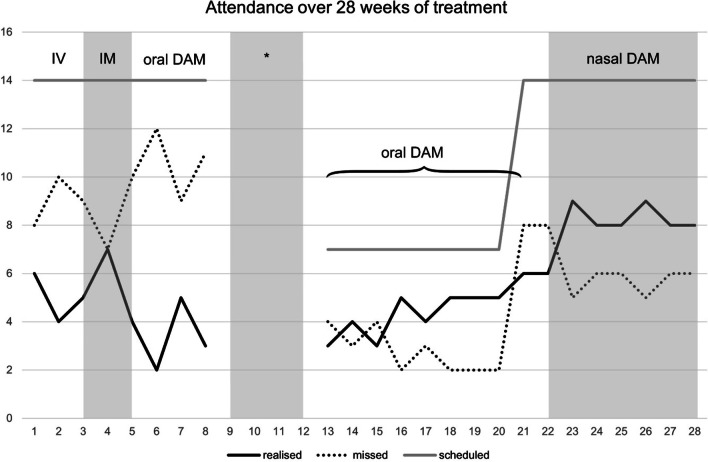
A 29-year-old male with severe opioid use disorder, injection substance use, and concomitant cocaine use, previously prescribed slow-release oral morphine, was started on intravenous diacetylmorphine. Due to complications and harms associated with intravenous injections, nasal diacetylmorphine was prescribed. With this novel route of administration, the patient who had previously been unable to adhere to other OAT options remained in treatment. Health outcomes improved by reduction of injection-related harms, increased adherence to the heroin-assisted treatment regimen, and increased collaboration with the therapeutic staff.
Nasal heroin-assisted treatment can be a feasible therapeutic option for individuals with severe opioid use disorder who crave the fast onset of effect of diacetylmorphine but are unable to inject intravenously.
瑞士传统的海洛因辅助治疗包括口服和注射二乙酰吗啡(药用海洛因)。迄今为止,对于渴望快速起效(“快感”)但无法注射或主要吸食或吸入非法海洛因的患者,尚无合适的治疗选择。我们介绍了一位患者,他在多次治疗尝试失败后成功转为鼻内海洛因辅助治疗。
一位 29 岁男性,患有严重的阿片类药物使用障碍、注射物质使用障碍,以及同时使用可卡因,曾被开处缓释口服吗啡,随后开始使用静脉注射二乙酰吗啡。由于静脉注射相关并发症和危害,开处了鼻内二乙酰吗啡。通过这种新的给药途径,以前无法坚持其他 OAT 选择的患者继续接受治疗。治疗结果改善包括减少与注射相关的危害、增加对海洛因辅助治疗方案的坚持和增加与治疗人员的合作。
鼻内海洛因辅助治疗可能是一种可行的治疗选择,适用于渴望快速起效的二乙酰吗啡但无法静脉注射的严重阿片类药物使用障碍患者。