Schwarz Tanja, Akartuna Deniz, Busch Martin, Krausz R Michael, Uhl Alfred
Addiction Competence Centre, Austrian National Public Health Institute (Gesundheit Österreich GmbH, GOEG), Vienna, Austria.
Doctoral Programme Meduni Vienna, Medical University of Vienna, Vienna, Austria.
Harm Reduct J. 2024 Dec 4;21(1):217. doi: 10.1186/s12954-024-01102-x.
Injectable opioid agonist treatment (iOAT) is a valuable, patient-centred, evidence based intervention. However, limited information exists on contextual factors that may support or hinder iOAT implementation and sustainability. This study aims to examine existing research on iOAT using diacetylmorphine and hydromorphone, focusing on identifying the key barriers and facilitators to its successful implementation.
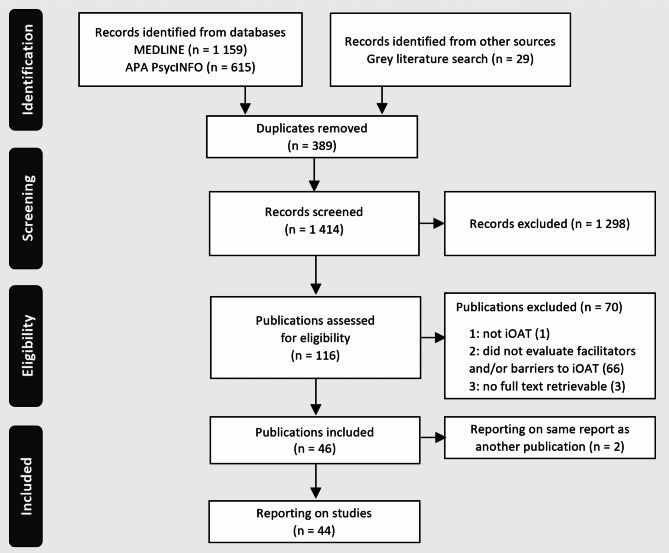
A systematic search was conducted in the MEDLINE and PsycInfo databases (via Ovid) from inception to February 2024, supplemented by a comprehensive grey literature search. No restrictions were applied regarding publication type, year, or geographic location. Articles were independently screened by two reviewers. Eligible articles described the feasibility, implementation, and/or evaluation of iOAT in one or more countries, presenting perspectives on receiving, administering, or governing iOAT.
Forty-four publications were selected for inclusion. Barriers identified through thematic analysis included public acceptance concerns such as medication diversion, increased crime, and the Honey-Pot effect. Legal and ethical challenges identified involved enacting changes in law to make certain substances available as a medically controlled options for treatment, and addressing patient consent issues. Negative media coverage and public controversies were found to undermine acceptance, and high start-up costs especially for security, facility access, and economic feasibility were seen as additional obstacles. Regulatory barriers and stringent protocols were the most frequently cited limiting factors by patients and providers. Facilitators included the integration of trial prescriptions into comprehensive drug policy strategies and publishing data for evidence-based debates, together with ethics committees ensuring compliance with ethical standards. Developing information strategies and addressing opponents' claims improved public perception. Cost-effectiveness evidence was found to support long-term implementation, while flexible treatment protocols, inclusive spaces, and affirming therapeutic relationships were seen as important facilitators to enhance patient engagement and treatment effectiveness.
Successful implementation of iOAT requires balancing political and social acceptability with scientific integrity, alongside strategic communication and public outreach. Further research is needed to enhance the transferability of findings across diverse socio-political contexts and address key influencing factors associated with iOAT programs.
注射用阿片类激动剂治疗(iOAT)是一种有价值的、以患者为中心的循证干预措施。然而,关于可能支持或阻碍iOAT实施及可持续性的背景因素的信息有限。本研究旨在审视关于使用二乙酰吗啡和氢吗啡酮进行iOAT的现有研究,重点识别其成功实施的关键障碍和促进因素。
从数据库创建至2024年2月,在MEDLINE和PsycInfo数据库(通过Ovid)中进行了系统检索,并辅以全面的灰色文献检索。对出版物类型、年份或地理位置未设限制。文章由两名评审员独立筛选。符合条件的文章描述了iOAT在一个或多个国家的可行性、实施情况和/或评估情况,呈现了关于接受、给予或管理iOAT的观点。
选取了44篇出版物纳入研究。通过主题分析确定的障碍包括公众接受度方面的担忧,如药物转移、犯罪率上升和“蜜罐”效应。确定的法律和伦理挑战涉及通过法律变革使某些物质作为医学管控的治疗选择可用,并解决患者同意问题。负面媒体报道和公众争议被发现会削弱接受度,而高昂的启动成本,尤其是安全、设施准入和经济可行性方面的成本,被视为额外障碍。监管障碍和严格的方案是患者和提供者最常提及的限制因素。促进因素包括将试验性处方纳入全面的药物政策战略并公布数据以供循证辩论,以及伦理委员会确保符合伦理标准。制定信息战略并回应反对者的主张改善了公众认知。成本效益证据被发现支持长期实施,而灵活的治疗方案、包容的空间和积极肯定的治疗关系被视为增强患者参与度和治疗效果的重要促进因素。
iOAT的成功实施需要在政治和社会可接受性与科学完整性之间取得平衡,同时进行战略沟通和公众宣传。需要进一步研究以提高研究结果在不同社会政治背景下的可转移性,并解决与iOAT项目相关的关键影响因素。