Department of Neurosurgery, Tongji Hospital of Tongji Medical College, Huazhong University of Science and Technology, Wuhan, Hubei, China.
Department of Medical Genetics, School of Basic Medicine, Tongji Medical College, Huazhong University of Science and Technology, Wuhan, Hubei, China.
Theranostics. 2022 May 16;12(9):4221-4236. doi: 10.7150/thno.69605. eCollection 2022.
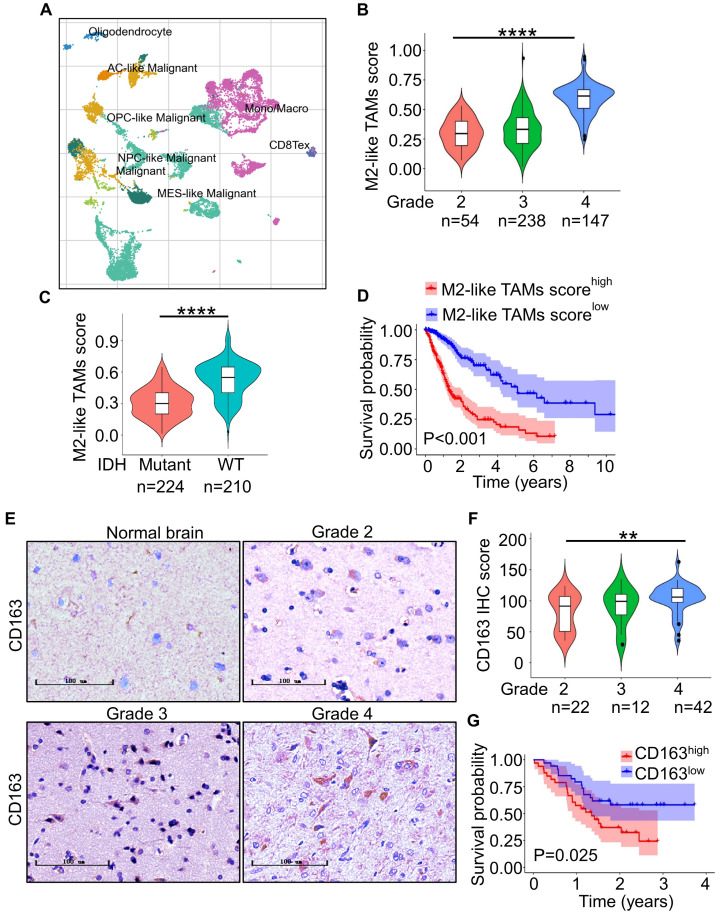
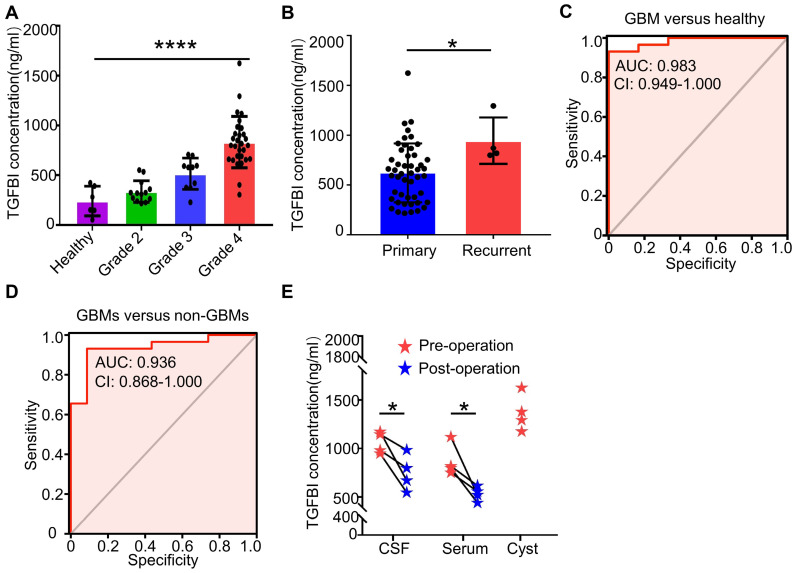
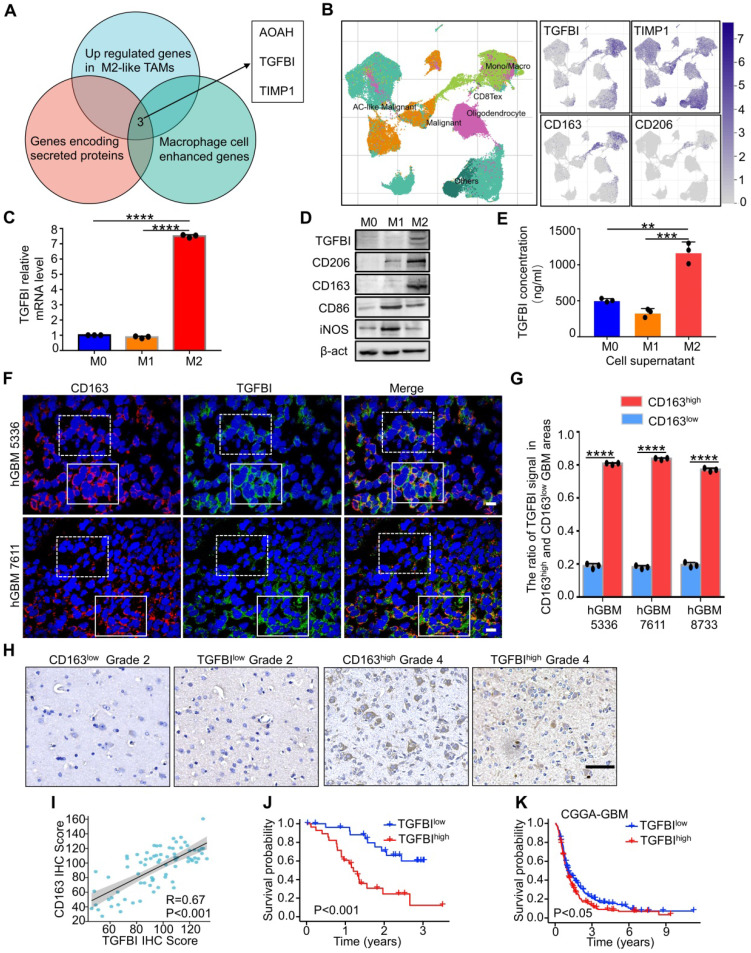
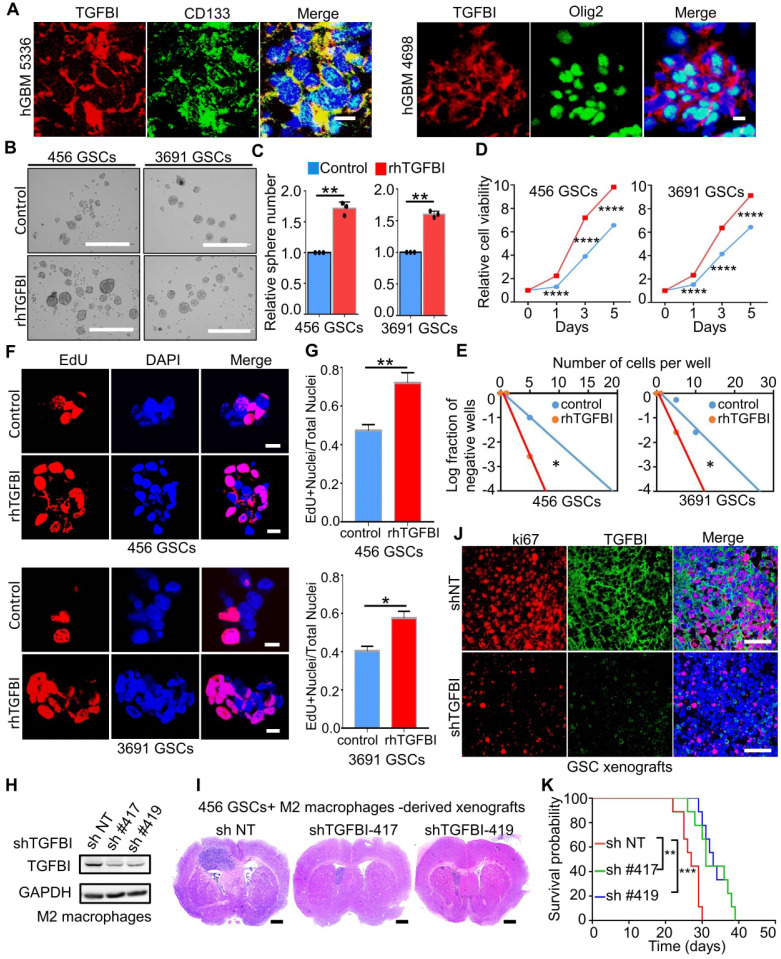
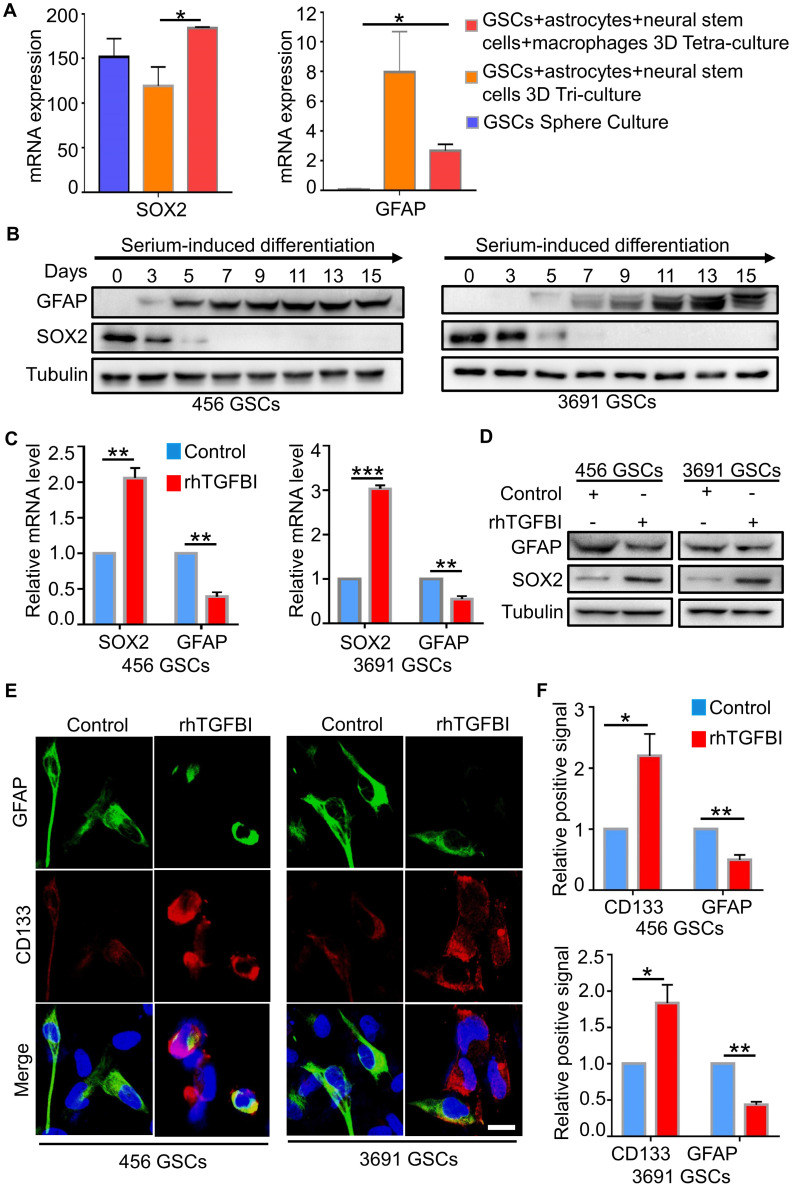
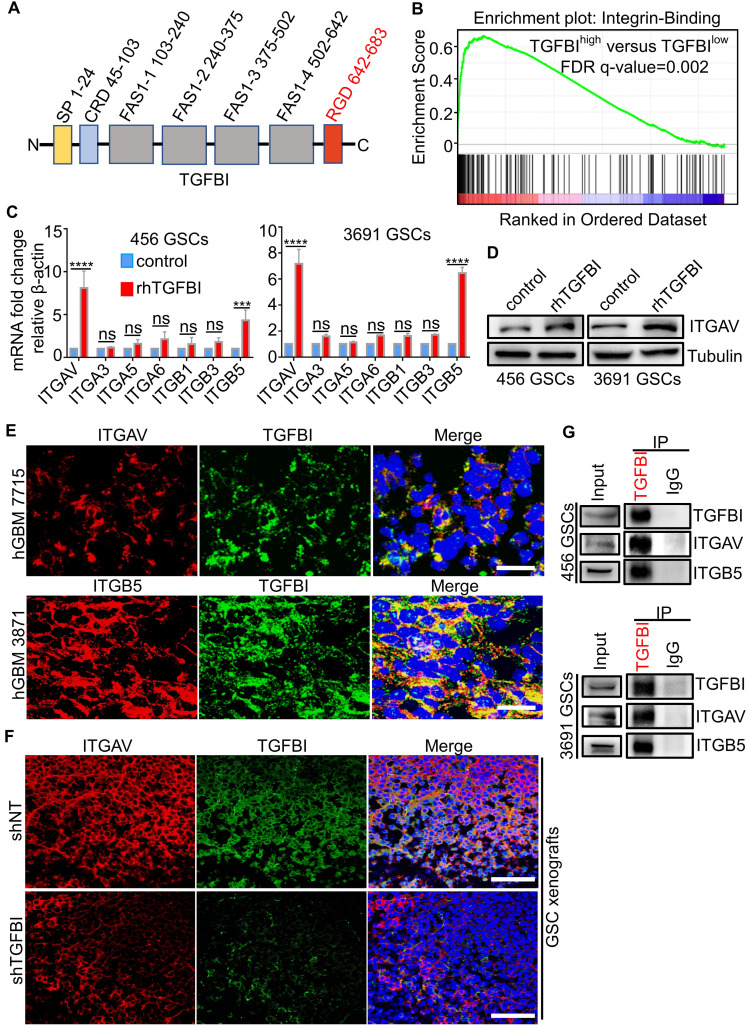
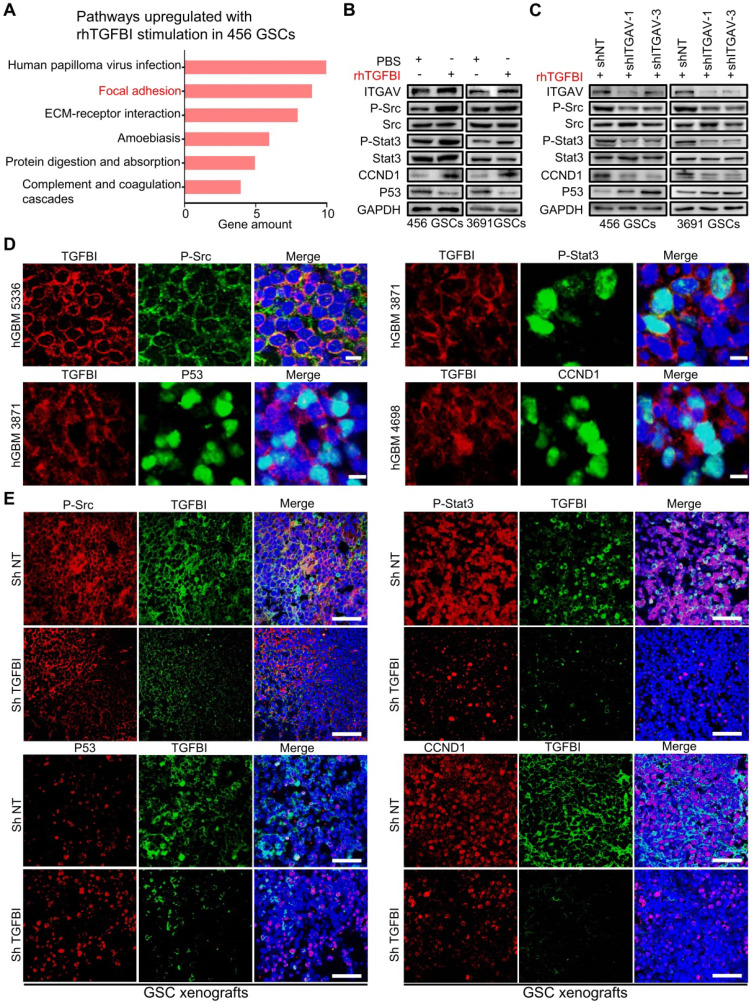
In the glioblastoma (GBM) microenvironment, tumor-associated macrophages (TAMs) are prominent components and facilitate tumor growth. The exact molecular mechanisms underlying TAMs' function in promoting glioma stem cells (GSCs) maintenance and tumor growth remain largely unknown. We found a candidate molecule, transforming growth factor beta-induced (TGFBI), that was specifically expressed by TAMs and extremely low in GBM and GSC cells, and meanwhile closely related to glioma WHO grades and patient prognosis. The exact mechanism of TGFBI linking TAM functions to GSC-driven tumor growth was explored. Western blot, quantitative real-time PCR (qRT-PCR), enzyme-linked immunosorbent assay (ELISA), immunofluorescence (IF), immunohistochemistry staining (IHC) and public datasets were used to evaluate TGFBI origin and level in GBM. The response of GSCs to recombinant human TGFBI was assessed and orthotopic xenografts were established to investigate the function and mechanism . M2-like TAMs infiltration was elevated in high-grade gliomas. TGFBI was preferentially secreted by M2-like TAMs and associated with a poor prognosis for patients with GBM. TGFBI promoted the maintenance of GSCs and GBM malignant growth through integrin αvβ5-Src-Stat3 signaling and . Of clinical relevance, TGFBI was enriched in the serum and CSF of GBM patients and significantly decreased after tumor resection. TAM-derived TGFBI promotes GSC-driven tumor growth through integrin αvβ5-Src-Stat3 signaling. High serum or CSF TGFBI may serve as a potential diagnostic and prognostic bio-index for GBMs.
在胶质母细胞瘤(GBM)微环境中,肿瘤相关巨噬细胞(TAMs)是突出的组成部分,并促进肿瘤生长。TAMs 促进神经胶质瘤干细胞(GSCs)维持和肿瘤生长的功能的确切分子机制在很大程度上仍然未知。我们发现了一种候选分子转化生长因子β诱导(TGFBI),它仅由 TAMs 特异性表达,在 GBM 和 GSC 细胞中极低,同时与胶质瘤 WHO 分级和患者预后密切相关。探索了 TGFBI 将 TAM 功能与 GSC 驱动的肿瘤生长联系起来的确切机制。Western blot、定量实时 PCR(qRT-PCR)、酶联免疫吸附试验(ELISA)、免疫荧光(IF)、免疫组织化学染色(IHC)和公共数据集用于评估 GBM 中 TGFBI 的来源和水平。评估了 GSCs 对重组人 TGFBI 的反应,并建立了原位异种移植以研究其功能和机制。高级别神经胶质瘤中 M2 样 TAMs 的浸润增加。TGFBI 优先由 M2 样 TAMs 分泌,并与 GBM 患者的预后不良相关。TGFBI 通过整合素 αvβ5-Src-Stat3 信号促进 GSCs 的维持和 GBM 恶性生长。具有临床相关性的是,TGFBI 在 GBM 患者的血清和 CSF 中富集,并在肿瘤切除后显著降低。TAM 衍生的 TGFBI 通过整合素 αvβ5-Src-Stat3 信号促进 GSC 驱动的肿瘤生长。高血清或 CSF TGFBI 可能作为 GBM 的潜在诊断和预后生物指标。