School of Economics, University of Cape Town, Rondebosch, Cape Town, 7701, South Africa.
Environ Sci Pollut Res Int. 2022 Nov;29(51):77199-77237. doi: 10.1007/s11356-022-21107-y. Epub 2022 Jun 8.
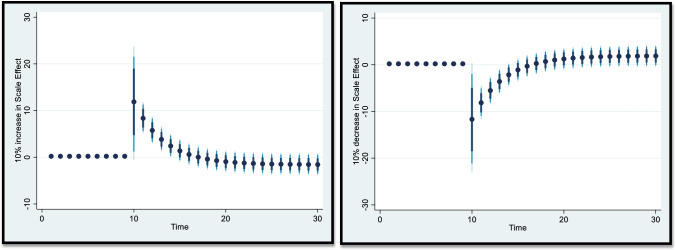
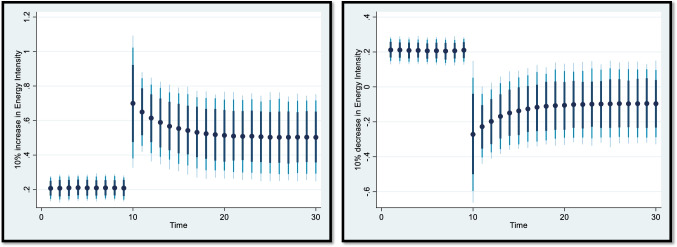
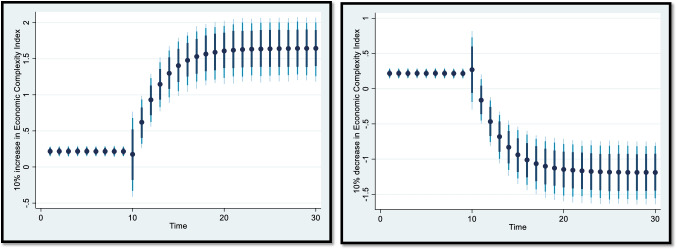
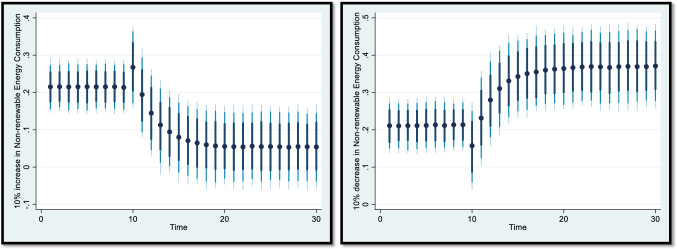
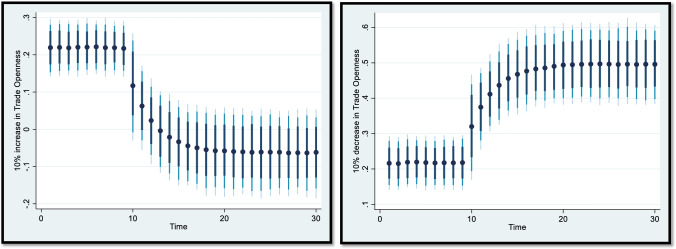
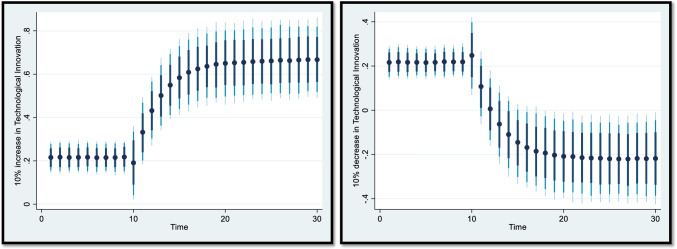
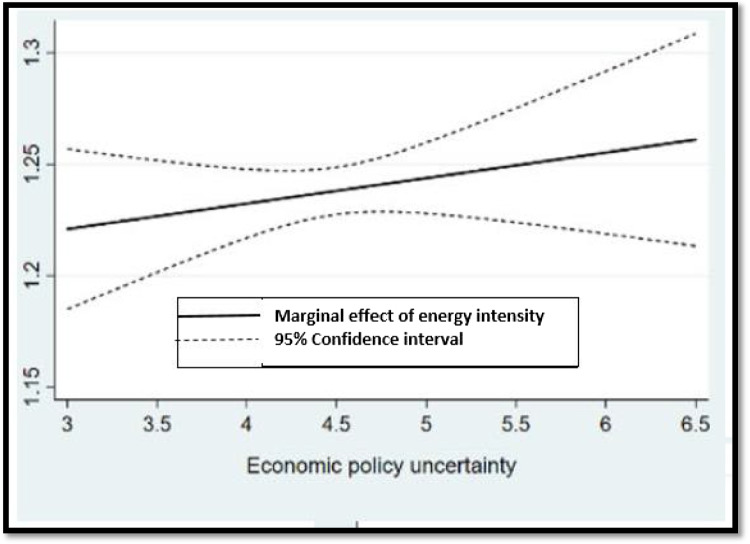
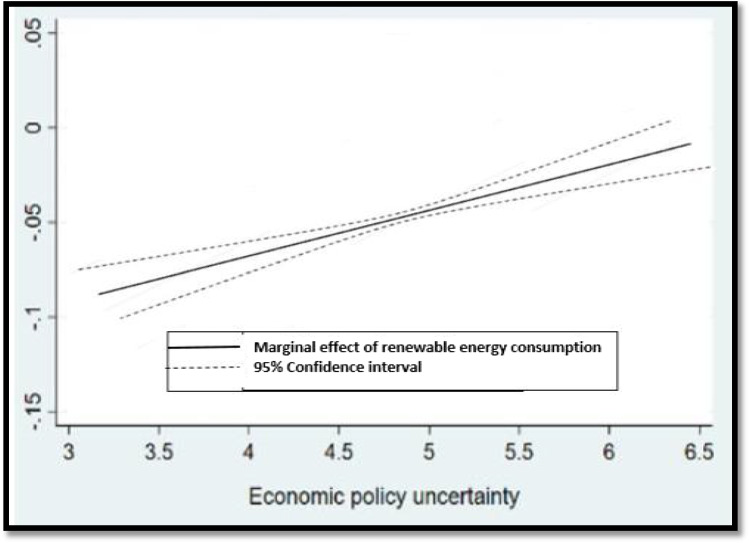
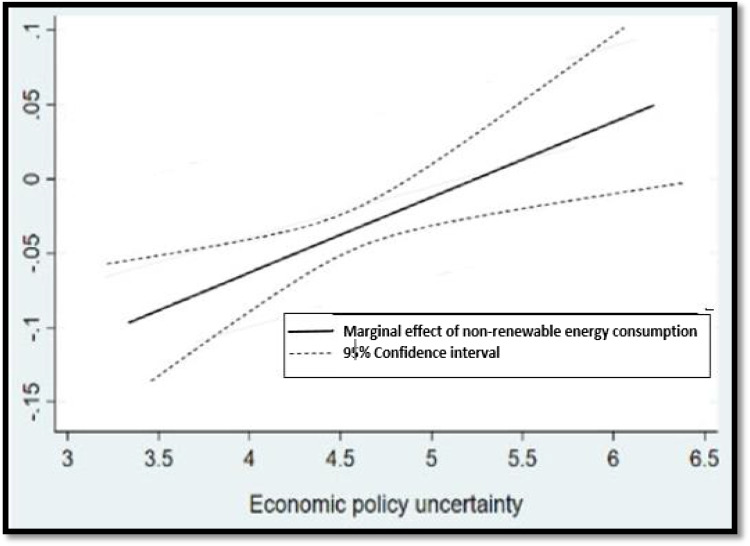
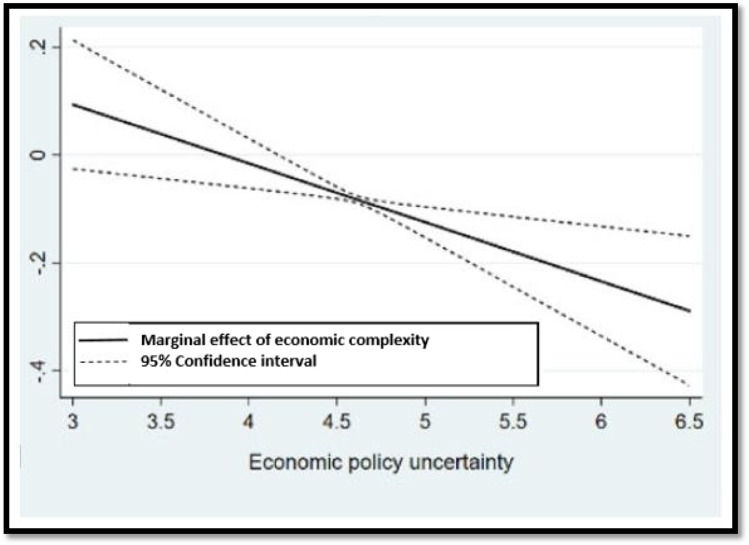
South Africa, one of the emerging markets and fast-developing economies in Sub-Saharan Africa recognised for varying world's natural assets on the international market, has recorded significant economic growth in the previous several years. However, aside from the ecological repercussions of energy generation, how economic uncertainties moderate the effects of energy intensity, renewable and non-renewable energy usage, and economic complexity on the environment has largely gone unnoticed. As a result, this paper addresses an important empirical vacuum by exploring the moderating influence of economic policy uncertainty in the environmental Kuznets curve for South Africa from 1960 to 2020. Results from the novel dynamic autoregressive distributed lag simulations framework reveal the following key findings: (i) economic policy uncertainty accelerates environmental degradation in both the short and long run; (ii) economic growth (as measured by the scale effect) increases environmental degradation, whereas the square of economic growth (as measured by the technique effect) slows it down, confirming the presence of the environmental Kuznets curve (EKC) hypothesis; (iii) environmental quality is deteriorated by energy intensity, economic complexity, non-renewable energy usage, and trade openness; (iv) the use of renewable energy and technological innovation increase environmental quality; (v) whereas the moderating effects of economic policy uncertainty on the environmental impacts of energy intensity, renewable and non-renewable energy consumption result in an increase in environmental destruction, its moderating effect on environmental implication of economic complexity plays an important role in improving environmental quality. These findings permit us to draw important policy recommendations for South Africa for improving environmental quality.
南非是撒哈拉以南非洲地区新兴市场和快速发展经济体之一,以其在国际市场上多样化的世界自然资产而闻名,在过去几年中录得了显著的经济增长。然而,除了能源生产的生态影响外,经济不确定性如何缓和能源强度、可再生和不可再生能源使用以及经济复杂性对环境的影响,在很大程度上尚未得到关注。因此,本文通过探讨经济政策不确定性在 1960 年至 2020 年期间对南非环境库兹涅茨曲线的调节作用,填补了这一重要的实证空白。新颖的动态自回归分布滞后模拟框架的结果揭示了以下关键发现:(i)经济政策不确定性在短期和长期内都加速了环境恶化;(ii)经济增长(以规模效应衡量)会加剧环境恶化,而经济增长的平方(以技术效应衡量)则会减缓环境恶化,证实了环境库兹涅茨曲线(EKC)假说的存在;(iii)能源强度、经济复杂性、不可再生能源使用和贸易开放度会降低环境质量;(iv)可再生能源的使用和技术创新会提高环境质量;(v)尽管经济政策不确定性对能源强度、可再生和不可再生能源消费的环境影响的调节作用会导致环境破坏的增加,但它对经济复杂性的环境影响的调节作用在改善环境质量方面发挥着重要作用。这些发现使我们能够为南非提出改善环境质量的重要政策建议。