State Key Laboratory of Bioreactor Engineering, Shanghai Key Laboratory of New Drug Design, East China University of Science and Technology, 130 Mei Long Road, Shanghai, 200237, China.
College of Pharmacy, Dali University, 5 Wan Hua Road, Dali, 671000, Yunnan, China.
Sci Rep. 2022 Jun 8;12(1):9439. doi: 10.1038/s41598-022-13524-3.
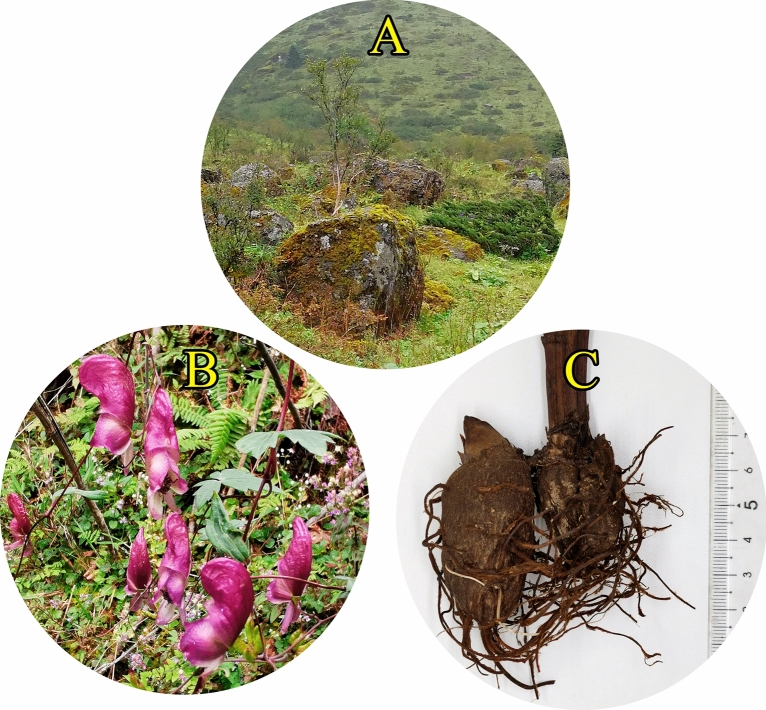
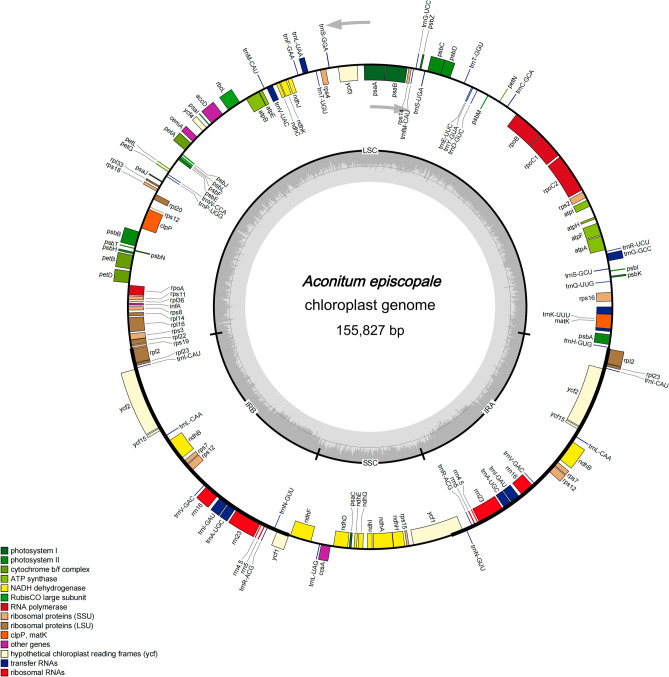
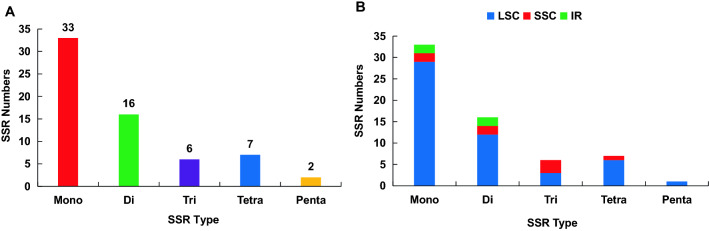
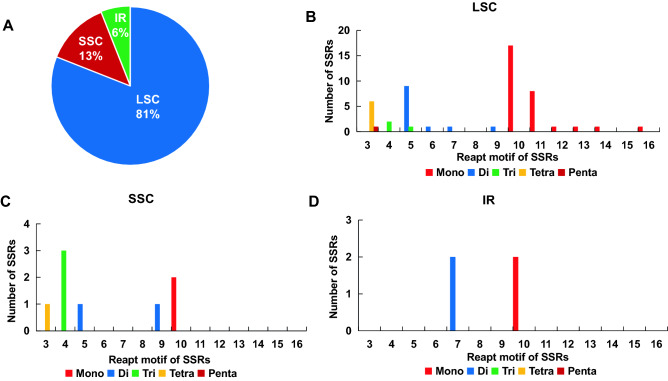
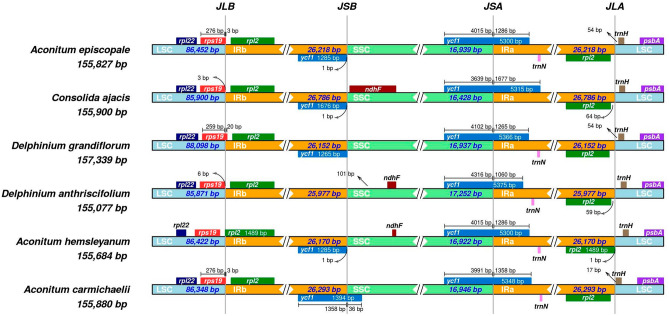
Aconitum episcopale Leveille is an important medicinal plant from the genus Aconitum L. of Ranunculaceae family and has been used as conventional medicine in Bai, Yi, and other ethnic groups of China. According to the available data and Ethno folk applications, A. episcopale is the only Aconitum species that has detoxifying and antialcoholic property. It can detoxify opium, especially the poisoning of Aconitum plants. Aconitum species have been widely used for their medicinal properties, and it is important to be noted that many of the species of this plant are reported to be toxic also. Distinguishing the species of this plant based on the morphology is a tough task and there are also no significant differences in the chemical composition. Therefore, before application of this plant for medicinal usage, it is very important to identify the species which could be life-threatening and exclude them. In this paper, the complete chloroplast (cp) genome sequence of A. episcopale was acquired by Illumina paired-end (PE) sequencing technology and compared with other species in the same family and genus. Herein, we report the complete cp genome of A. episcopale. The whole circular cp genome of A. episcopale has been found to be of 155,827 bp in size and contains a large single-copy region (LSC) of 86,452 bp, a small single-copy region (SSC) of 16,939 bp, and two inverted repeat regions (IRs) of 26,218 bp. The A. episcopale cp genome was found to be comprised of 132 genes, including 85 protein-coding genes (PCGs), 37 transfer RNA genes (tRNAs), eight ribosomal RNA genes (rRNAs), and two pseudogenes. A total of 20 genes contained introns, of which 14 genes contained a single intron and two genes had two introns. The chloroplast genome of A. episcopale contained 64 codons encoding 20 amino acids, with the number of codons encoding corresponding amino acids ranging from 22 to 1068. The Met and Trp amino acids have only one codon, and other amino acids had 2-6 codons. A total of 64 simple sequence repeats (SSRs) were identified, among which mononucleotide sequences accounted for the most. Phylogenetic analysis showed that A. episcopale is closely related with A. delavayi. Cumulatively the results of this study provided an essential theoretical basis for the molecular identification and phylogeny of A. episcopale.
主教乌头(Aconitum episcopale Leveille)是毛茛科乌头属的一种重要药用植物,在中国白族、彝族等民族中已被用作传统药物。根据现有数据和民族民间应用,主教乌头是唯一具有解毒和抗酒精作用的乌头属物种。它可以解毒鸦片,特别是乌头植物的中毒。乌头属植物因其药用特性而被广泛使用,但需要注意的是,该植物的许多物种也被报道具有毒性。基于形态学区分该植物的物种是一项艰巨的任务,而且化学成分也没有显著差异。因此,在将该植物用于药用之前,非常重要的是要识别可能危及生命的物种并将其排除。在本文中,我们通过 Illumina 配对末端 (PE) 测序技术获得了主教乌头的完整叶绿体 (cp) 基因组序列,并与同科同属的其他物种进行了比较。在此,我们报告了主教乌头的完整 cp 基因组。主教乌头的整个圆形 cp 基因组大小为 155827 bp,包含一个 86452 bp 的大单拷贝区 (LSC)、一个 16939 bp 的小单拷贝区 (SSC) 和两个 26218 bp 的反向重复区 (IR)。主教乌头的 cp 基因组由 132 个基因组成,包括 85 个蛋白编码基因 (PCGs)、37 个转移 RNA 基因 (tRNAs)、8 个核糖体 RNA 基因 (rRNAs) 和 2 个假基因。共有 20 个基因包含内含子,其中 14 个基因包含一个内含子,两个基因包含两个内含子。主教乌头的叶绿体基因组包含 64 个密码子编码 20 种氨基酸,对应的氨基酸编码密码子数量从 22 到 1068 不等。Met 和 Trp 氨基酸只有一个密码子,而其他氨基酸有 2-6 个密码子。总共鉴定出 64 个简单重复序列 (SSRs),其中单核苷酸序列占比最大。系统发育分析表明,主教乌头与 A. delavayi 关系密切。综上所述,本研究结果为 A. episcopale 的分子鉴定和系统发育提供了重要的理论基础。