School of Health, Federation University, 333 Ann St, Brisbane, QLD, 4000, Australia.
Department of Public Health, College of Health Sciences, Qatar University, Doha, Qatar.
J Racial Ethn Health Disparities. 2023 Jun;10(3):1508-1517. doi: 10.1007/s40615-022-01336-0. Epub 2022 Jun 8.
Given health disparities and increased rates of obesity and non-communicable diseases seen in Indigenous populations worldwide and the evidence connecting sociocultural knowledge with physical activity, health, and wellbeing, this research was undertaken to understand the social and cultural components contributing to obesity in the Indigenous Fijian rural areas.
This research is a community-based participatory research (CBPR) project, which engaged community members from a rural iTaukei village in the Fiji Islands. Data collection was carried out through community consultation and semi-structured interviews. The data was analysed using descriptive thematic analysis.
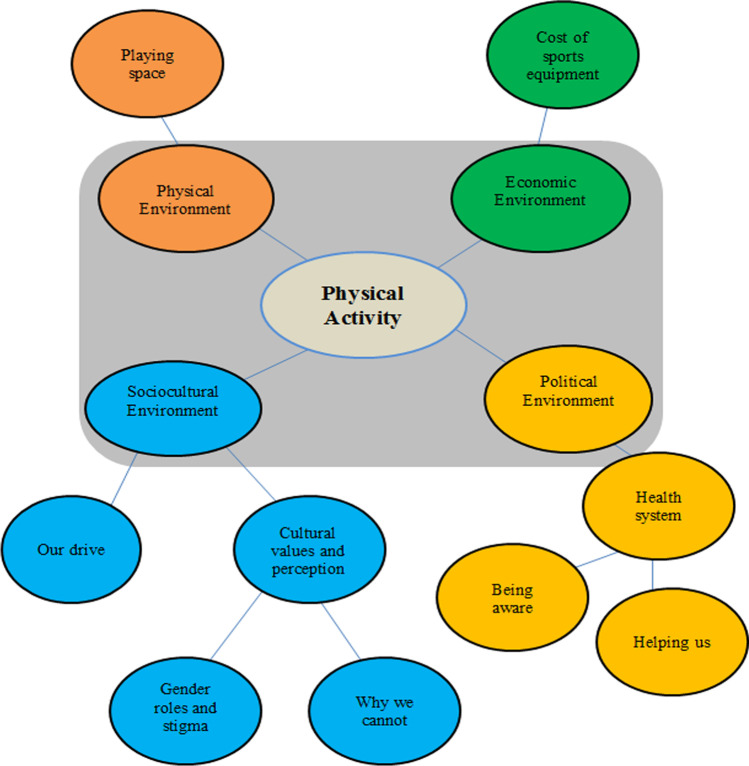
Four major themes emerged associated with sociocultural, economic, political, and physical environmental factors. Males emphasised sports and working on farmlands as preferred types of physical activity, while females focused on family activities and daily activities and support for females' separate playgrounds. There was a focus on previous health promotion programs that did not incorporate the cultural values, cultural competence beliefs, and traditional ways of the rural Indigenous Fijian community.
The healthcare providers and policymakers need to recognise the iTaukei community culture and appreciate traditional methods to promote equitable community participation in decision-making for health promotion. These findings should inform future research and community-based health programs to address the physical activity levels of the rural Indigenous community and may be relevant to other Indigenous peoples.
鉴于全球原住民群体中存在健康差距、肥胖率和非传染性疾病不断上升的情况,以及社会文化知识与身体活动、健康和幸福感之间存在关联的证据,本研究旨在了解导致原住民斐济农村地区肥胖的社会和文化因素。
这是一项基于社区的参与式研究(CBPR)项目,该项目与斐济群岛一个农村伊塔基村庄的社区成员合作。通过社区咨询和半结构化访谈进行数据收集。使用描述性主题分析对数据进行分析。
与社会文化、经济、政治和物理环境因素相关的四大主题浮现出来。男性强调体育活动和农田劳作是他们首选的身体活动类型,而女性则侧重于家庭活动和日常活动,并支持为女性设立单独的游乐场地。研究还关注了之前的健康促进计划,这些计划没有融入农村斐济原住民社区的文化价值观、文化能力信念和传统方式。
医疗保健提供者和政策制定者需要认识到伊塔基社区的文化,并重视传统方法,以促进公平的社区参与健康促进决策。这些发现应该为未来的研究和基于社区的健康计划提供信息,以解决农村原住民社区的身体活动水平问题,这些发现可能与其他原住民群体有关。