Comparative Cognition, Messerli Research Institute, University of Veterinary Medicine Vienna, Vienna, Austria.
Medical University Vienna, Vienna, Austria.
Behav Res Methods. 2023 Jun;55(4):1513-1536. doi: 10.3758/s13428-022-01788-6. Epub 2022 Jun 9.
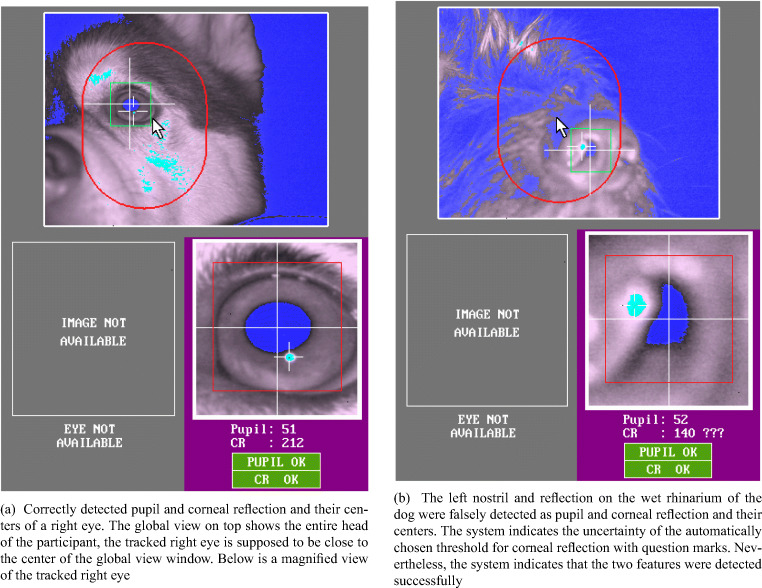
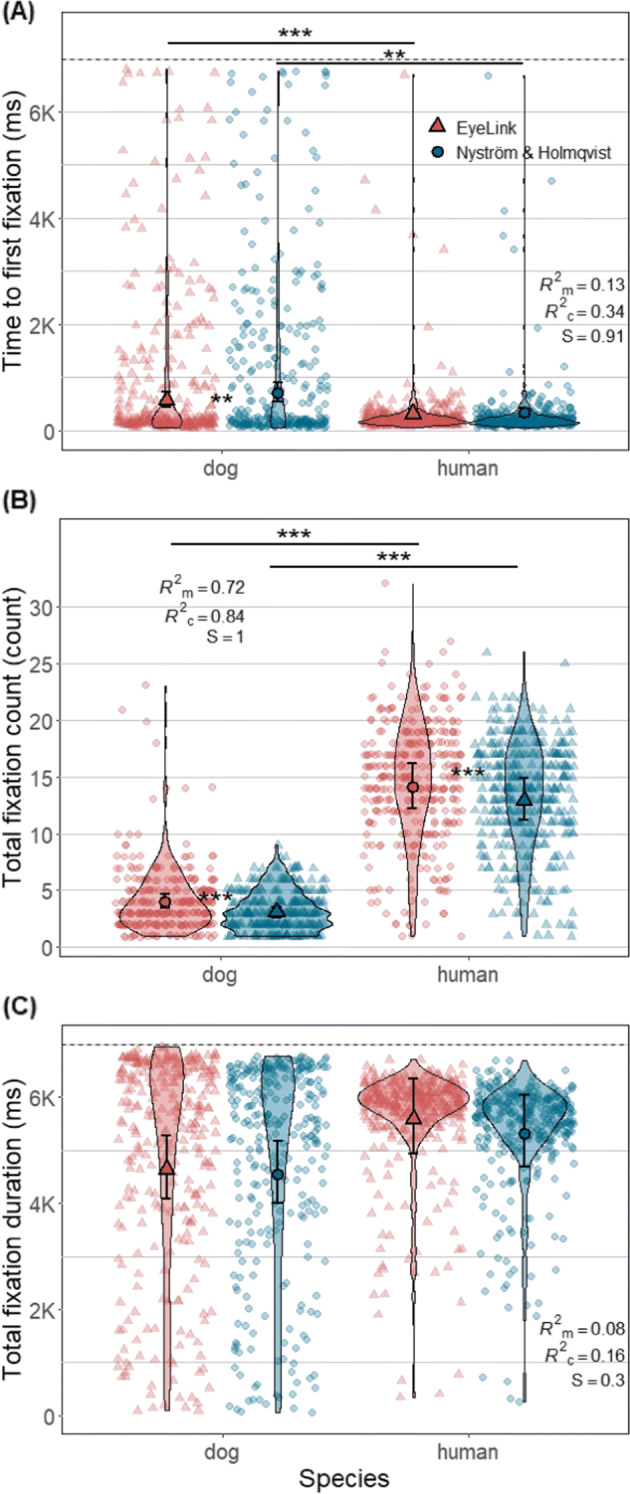
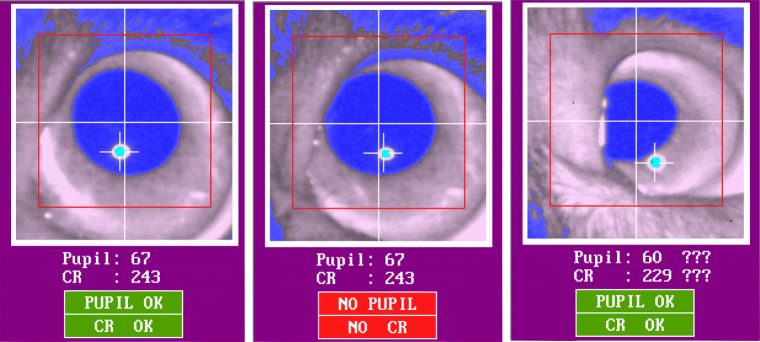
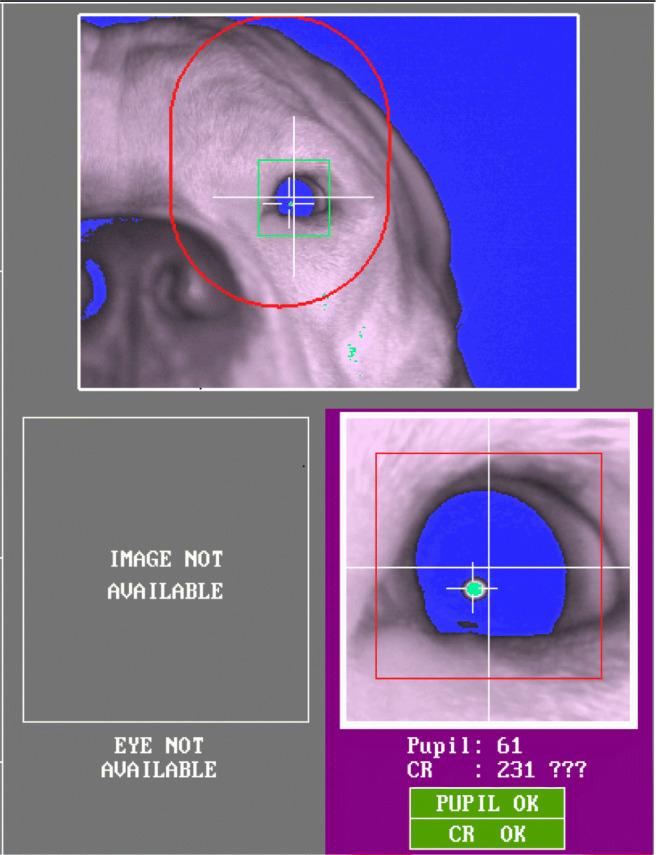
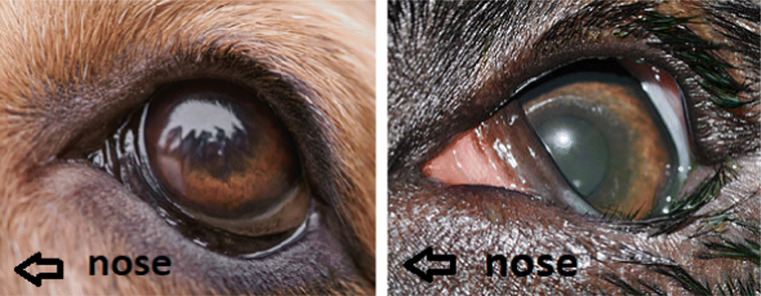
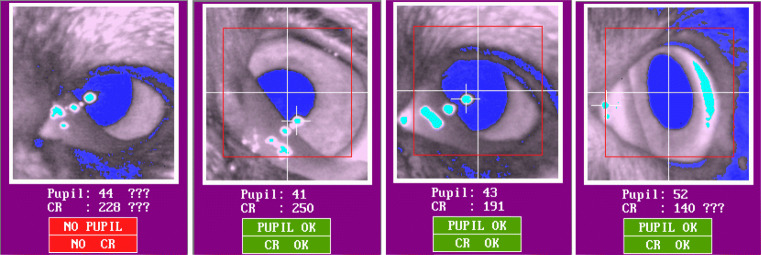
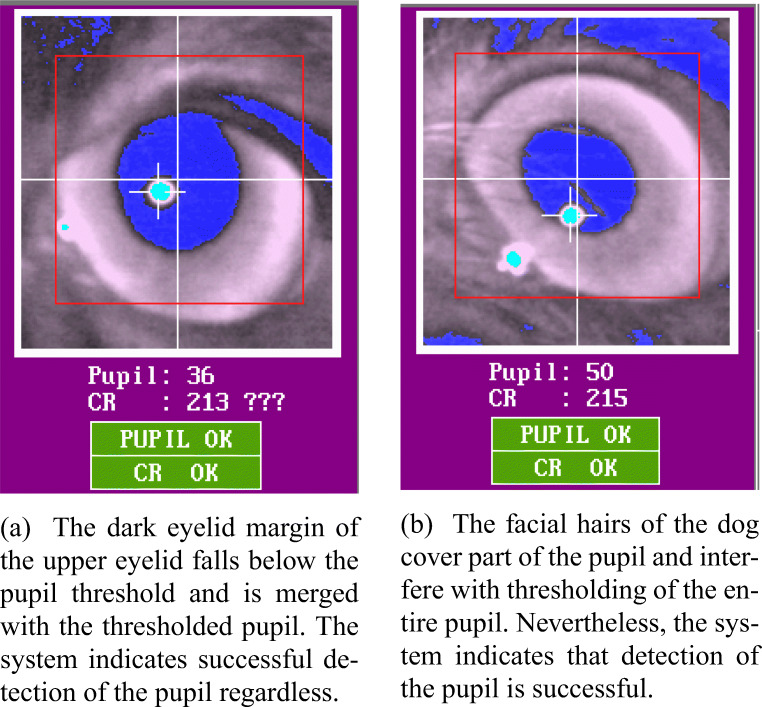
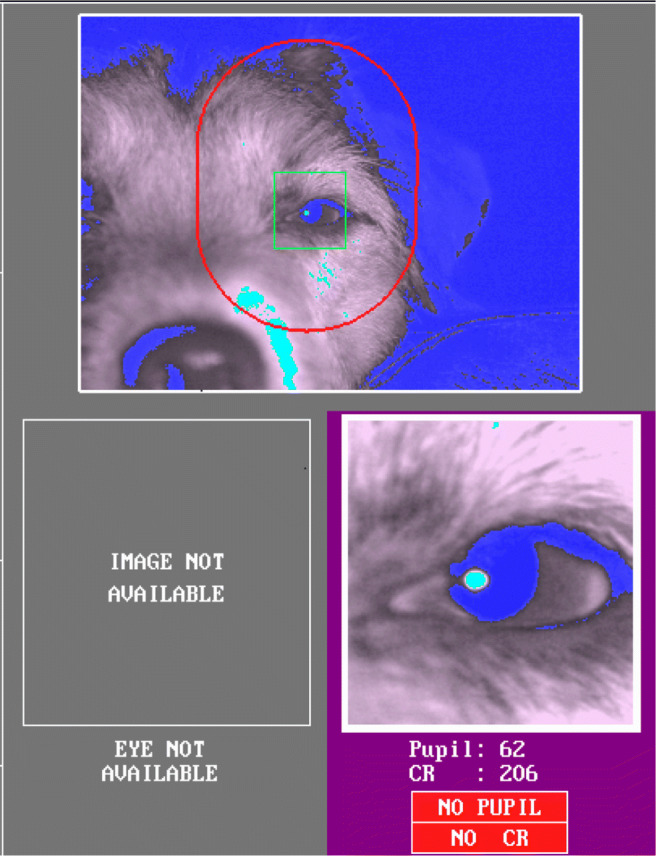
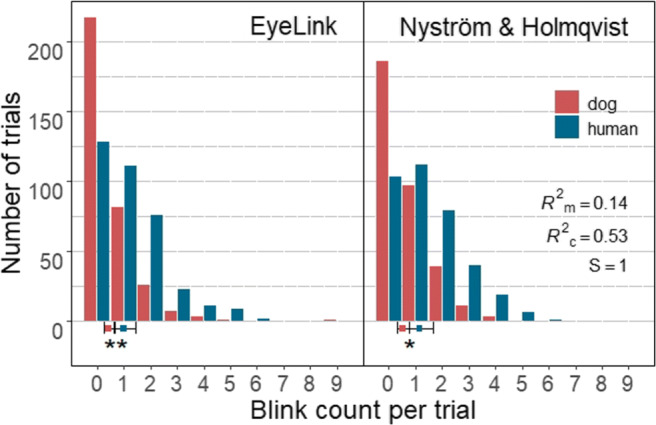
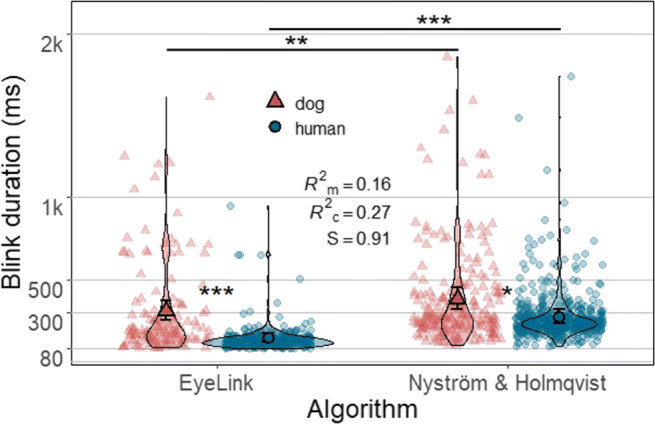
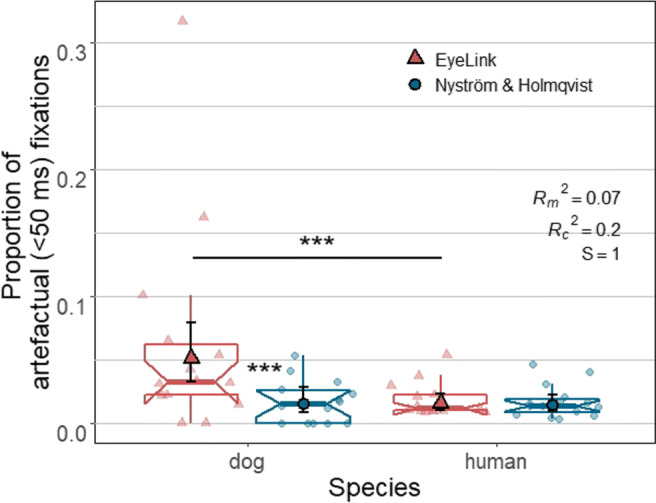
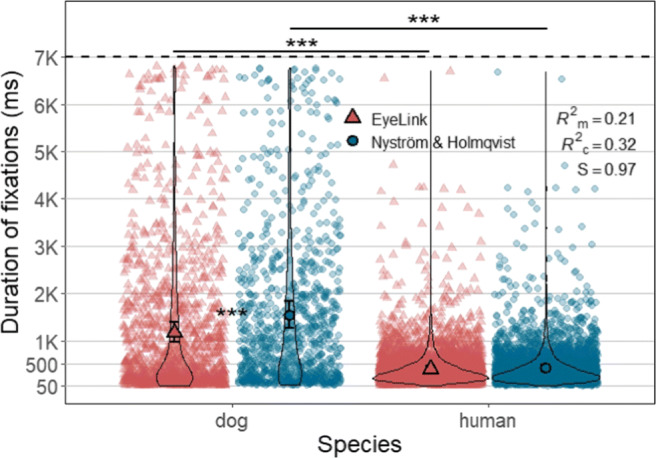
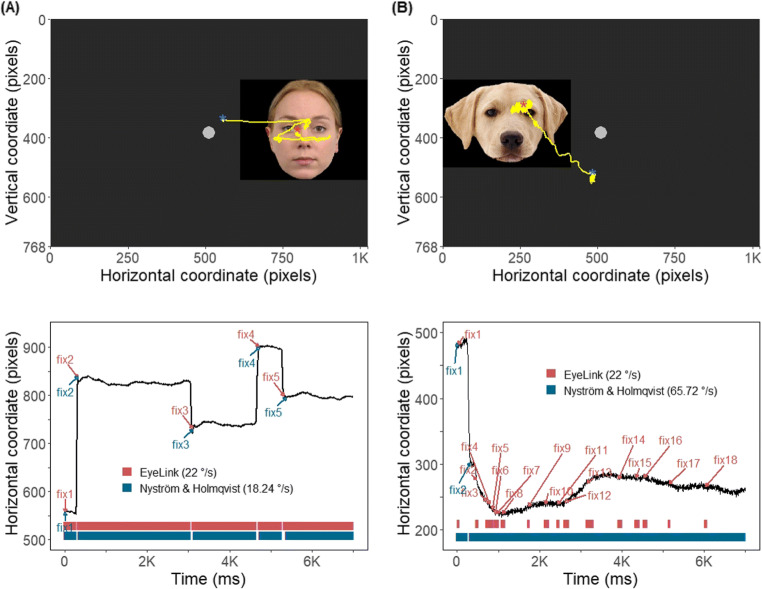
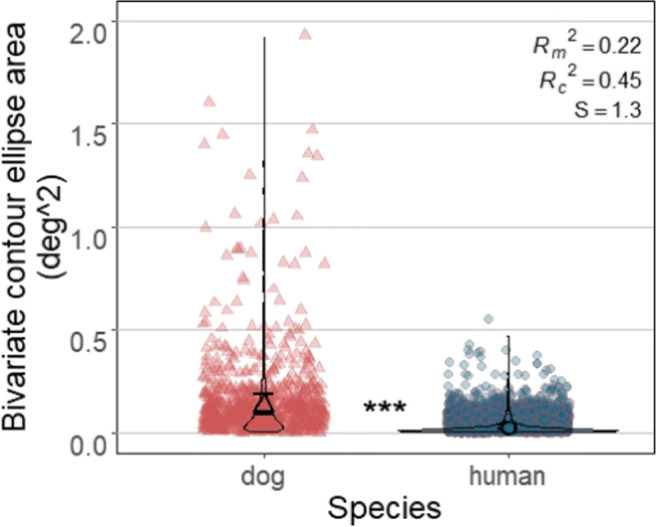
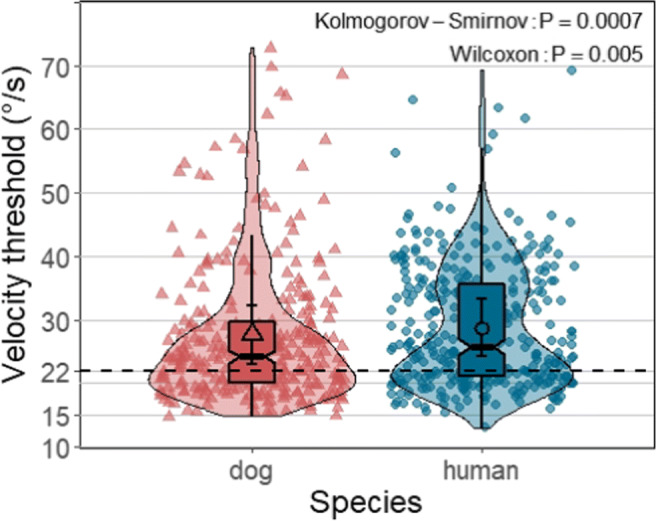
Pupil-corneal reflection (P-CR) eye tracking has gained a prominent role in studying dog visual cognition, despite methodological challenges that often lead to lower-quality data than when recording from humans. In the current study, we investigated if and how the morphology of dogs might interfere with tracking of P-CR systems, and to what extent such interference, possibly in combination with dog-unique eye-movement characteristics, may undermine data quality and affect eye-movement classification when processed through algorithms. For this aim, we have conducted an eye-tracking experiment with dogs and humans, and investigated incidences of tracking interference, compared how they blinked, and examined how differential quality of dog and human data affected the detection and classification of eye-movement events. Our results show that the morphology of dogs' face and eye can interfere with tracking methods of the systems, and dogs blink less often but their blinks are longer. Importantly, the lower quality of dog data lead to larger differences in how two different event detection algorithms classified fixations, indicating that the results of key dependent variables are more susceptible to choice of algorithm in dog than human data. Further, two measures of the Nyström & Holmqvist (Behavior Research Methods, 42(4), 188-204, 2010) algorithm showed that dog fixations are less stable and dog data have more trials with extreme levels of noise. Our findings call for analyses better adjusted to the characteristics of dog eye-tracking data, and our recommendations help future dog eye-tracking studies acquire quality data to enable robust comparisons of visual cognition between dogs and humans.
瞳孔角膜反射(P-CR)眼动追踪在研究犬类视觉认知方面发挥了重要作用,尽管该方法存在一些挑战,导致数据质量往往低于人类记录的数据。在当前的研究中,我们调查了犬类的形态是否以及如何干扰 P-CR 系统的跟踪,以及这种干扰程度,可能与犬类独特的眼球运动特征相结合,可能会对数据质量产生影响,并在通过算法处理时影响眼球运动分类。为此,我们对犬类和人类进行了眼动追踪实验,调查了跟踪干扰的发生率,比较了它们眨眼的情况,并研究了犬类和人类数据质量的差异如何影响眼球运动事件的检测和分类。我们的结果表明,犬类面部和眼睛的形态会干扰系统的跟踪方法,而且犬类眨眼的频率较低,但眨眼时间较长。重要的是,犬类数据质量较低会导致两种不同的事件检测算法对注视点的分类产生更大的差异,这表明在犬类数据中,关键因变量的结果更易受算法选择的影响。此外,Nyström & Holmqvist(行为研究方法,42(4),188-204,2010)算法的两个指标表明,犬类的注视点不太稳定,且犬类数据中有更多试验存在极端噪声水平。我们的研究结果呼吁对犬类眼动追踪数据的特征进行更好的分析,并为未来的犬类眼动追踪研究提供了建议,以获取高质量的数据,从而能够在犬类和人类之间进行稳健的视觉认知比较。