Department of Child and Adolescent Psychiatry, Psychosomatics and Psychotherapy, University Hospital Essen, University of Duisburg-Essen, Essen, Germany.
Center for Translational Neuro- and Behavioral Sciences, University Hospital Essen, University of Duisburg-Essen, Essen, Germany.
Transl Psychiatry. 2022 Jun 9;12(1):241. doi: 10.1038/s41398-022-02018-5.
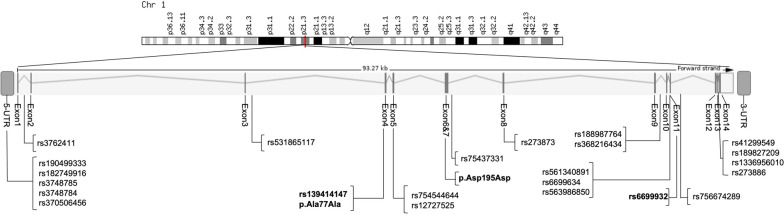
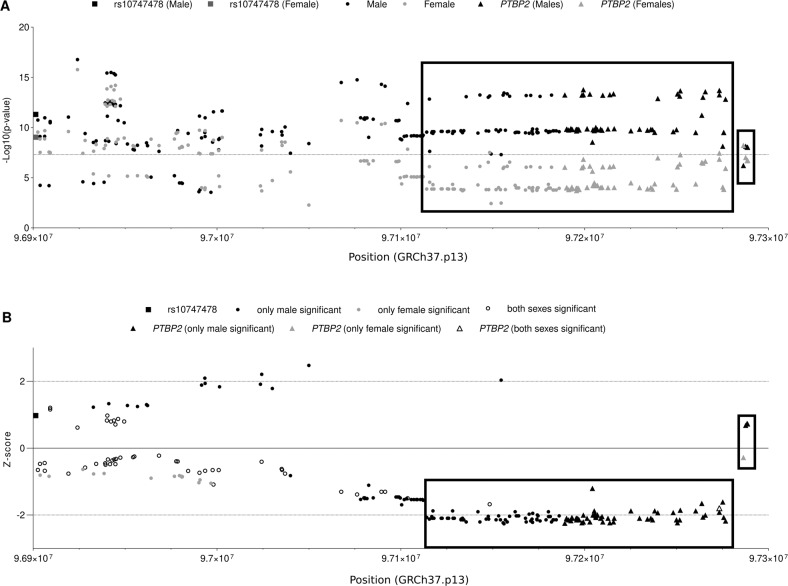
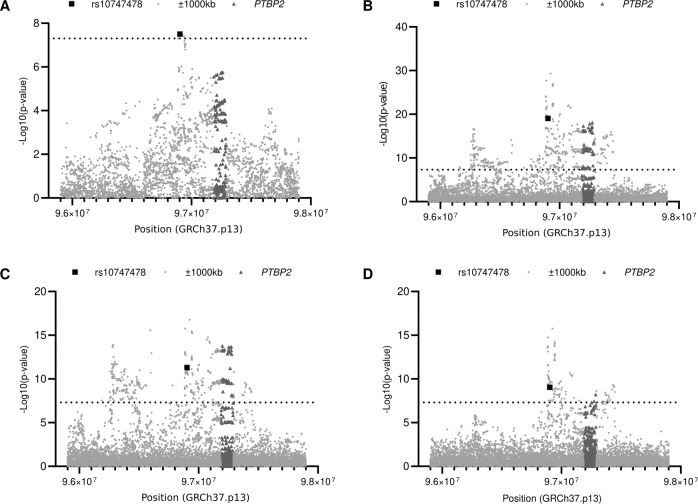
Genetic factors are relevant for both eating disorders and body weight regulation. A recent genome-wide association study (GWAS) for anorexia nervosa (AN) detected eight genome-wide significant chromosomal loci. One of these loci, rs10747478, was also genome-wide and significantly associated with body mass index (BMI). The nearest coding gene is the Polypyrimidine Tract Binding Protein 2 gene (PTBP2). To detect mutations in PTBP2, Sanger sequencing of the coding region was performed in 192 female patients with AN (acute or recovered) and 191 children or adolescents with (extreme) obesity. Twenty-five variants were identified. Twenty-three of these were predicted to be pathogenic or functionally relevant in at least one in silico tool. Two novel synonymous variants (p.Ala77Ala and p.Asp195Asp), one intronic SNP (rs188987764), and the intronic deletion (rs561340981) located in the highly conserved region of PTBP2 may have functional consequences. Ten of 20 genes interacting with PTBP2 were studied for their impact on body weight regulation based on either previous functional studies or GWAS hits for body weight or BMI. In a GWAS for BMI (Pulit et al. 2018), the number of genome-wide significant associations at the PTBP2 locus was different between males (60 variants) and females (two variants, one of these also significant in males). More than 65% of these 61 variants showed differences in the effect size pertaining to BMI between sexes (absolute value of Z-score >2, two-sided p < 0.05). One LD block overlapping 5'UTR and all coding regions of PTBP2 comprises 56 significant variants in males. The analysis based on sex-stratified BMI GWAS summary statistics implies that PTBP2 may have a more pronounced effect on body weight regulation in males than in females.
遗传因素与饮食失调和体重调节都有关。最近一项针对神经性厌食症(AN)的全基因组关联研究(GWAS)检测到了八个全基因组显著染色体位置。其中一个位置 rs10747478 也与体重指数(BMI)全基因组显著相关。最近的编码基因是多嘧啶 tract 结合蛋白 2 基因(PTBP2)。为了检测 PTBP2 中的突变,对 192 名急性或恢复期 AN 女性患者和 191 名患有(极度)肥胖的儿童或青少年的编码区进行了 Sanger 测序。确定了 25 种变体。其中 23 种在至少一种计算机工具中被预测为致病性或具有功能相关性。两个新的同义变体(p.Ala77Ala 和 p.Asp195Asp)、一个内含子 SNP(rs188987764)和位于 PTBP2 高度保守区域的内含子缺失(rs561340981)可能具有功能后果。根据之前的功能研究或体重或 BMI 的 GWAS 命中,研究了与 PTBP2 相互作用的 20 个基因中 10 个基因对体重调节的影响。在 BMI 的 GWAS 中(Pulit 等人,2018 年),PTBP2 基因座的全基因组显著关联数量在男性(60 个变体)和女性(两个变体,其中一个在男性中也显著)之间有所不同。这些 61 个变体中有超过 65%的变体在性别间 BMI 的效应大小上存在差异(Z 分数绝对值>2,双侧 p<0.05)。一个重叠 PTBP2 5'UTR 和所有编码区域的 LD 块包含 56 个男性显著变体。基于性别分层 BMI GWAS 汇总统计数据的分析表明,PTBP2 对男性体重调节的影响可能比女性更为明显。