Department of Pathogenic Biology, Army Medical University (Third Military Medical University), Chongqing, 400038, China.
Key Laboratory of Extreme Environmental Medicine, Ministry of Education of China, Chongqing, 400038, China.
Nat Commun. 2022 Jun 9;13(1):3208. doi: 10.1038/s41467-022-30988-z.
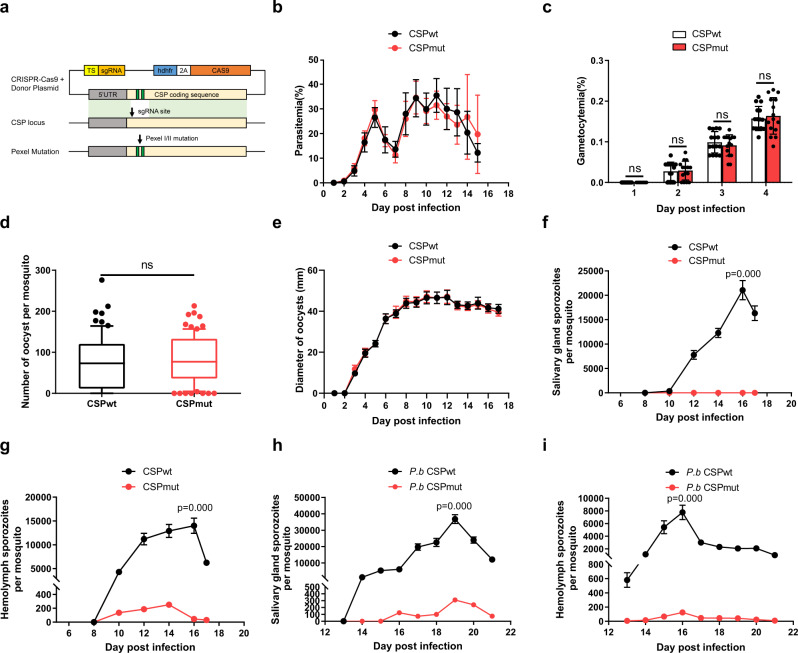
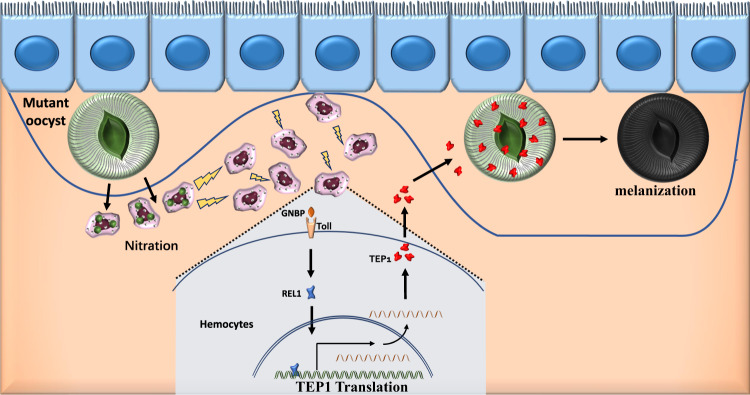
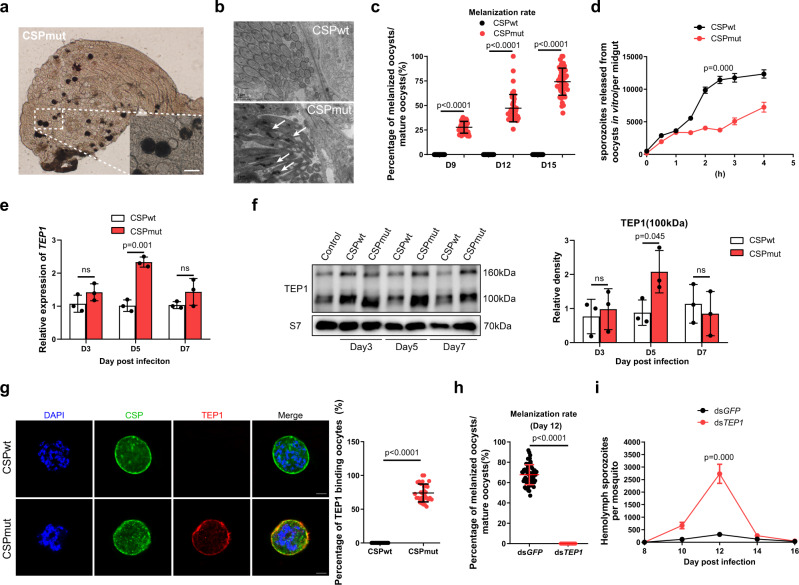
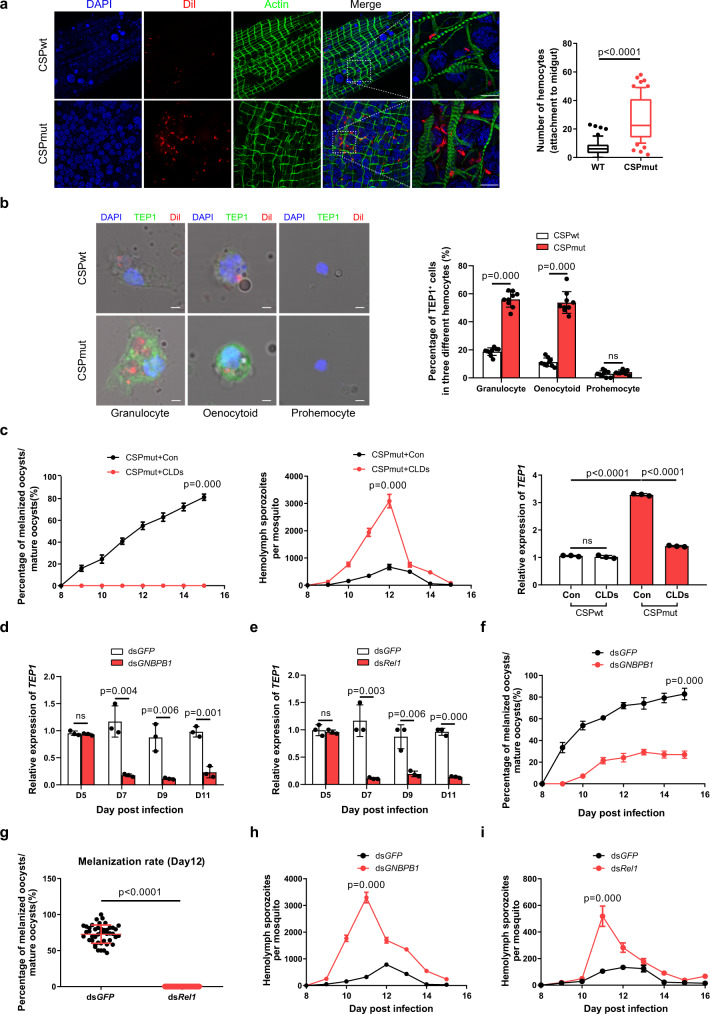
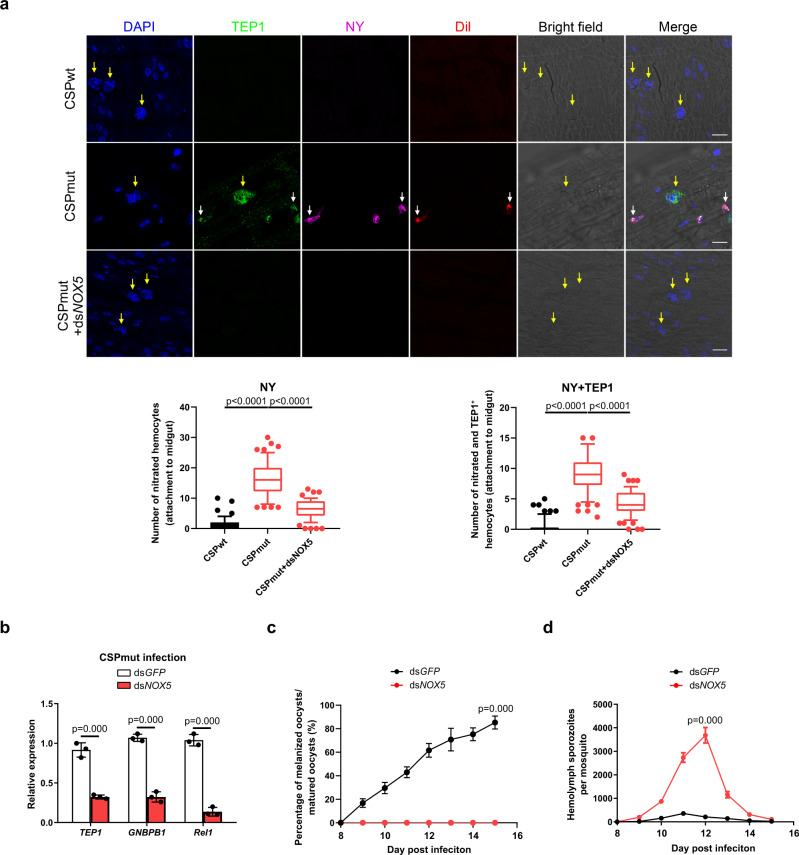
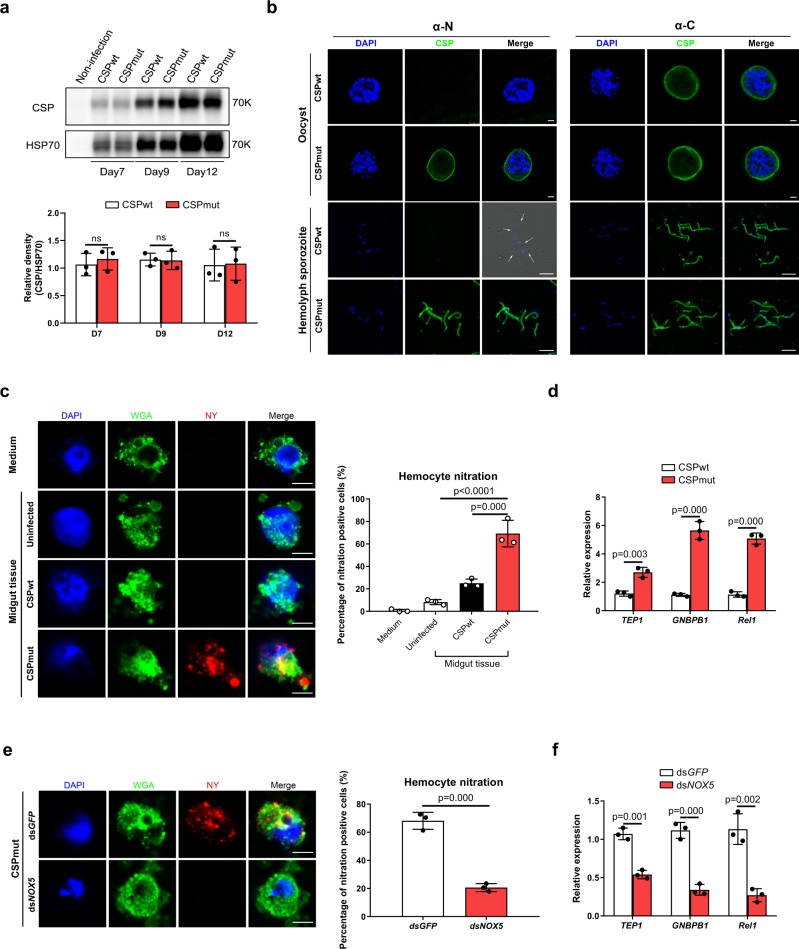
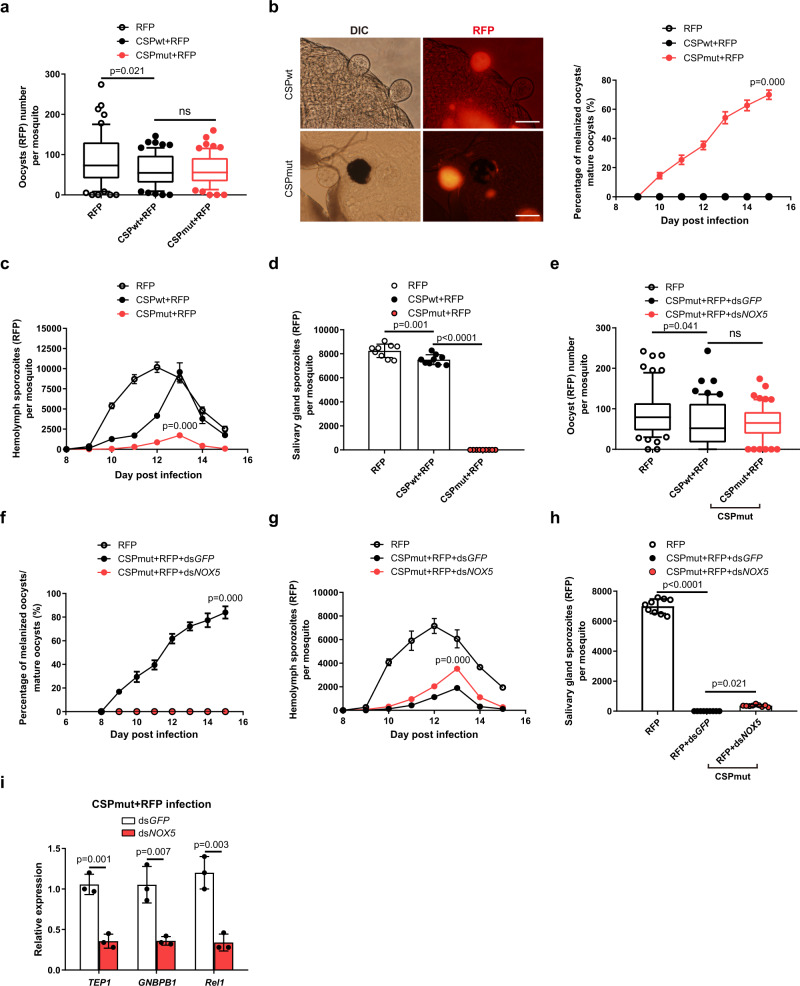
Malaria parasites are less vulnerable to mosquito immune responses once ookinetes transform into oocysts, facilitating parasite development in the mosquito. However, the underlying mechanisms of oocyst resistance to mosquito defenses remain unclear. Here, we show that circumsporozoite protein (CSP) is required for rodent malaria oocysts to avoid mosquito defenses. Mosquito infection with CSP parasites (mutation in the CSP pexel I/II domains) induces nicotinamide adenine dinucleotide phosphate (NADPH) oxidase 5 (NOX5)-mediated hemocyte nitration, thus activating Toll pathway and melanization of mature oocysts, upregulating hemocyte TEP1 expression, and causing defects in the release of sporozoites from oocysts. The pre-infection of mosquitoes with the CSP parasites reduces the burden of infection when re-challenged with CSP parasites by inducing hemocyte nitration. Thus, we demonstrate why oocysts are invisible to mosquito immunity and reveal an unknown role of CSP in the immune evasion of oocysts, indicating it as a potential target to block malaria transmission.
疟原虫在卵囊形成后对蚊子的免疫反应的敏感性降低,从而促进了寄生虫在蚊子体内的发育。然而,卵囊对蚊子防御机制的抵抗的潜在机制尚不清楚。在这里,我们发现裂殖子表面蛋白(CSP)对于鼠疟原虫卵囊逃避蚊子防御至关重要。蚊子感染 CSP 突变体(在 CSP pexel I/II 结构域发生突变)会诱导烟酰胺腺嘌呤二核苷酸磷酸(NADPH)氧化酶 5(NOX5)介导的血淋巴细胞硝化,从而激活 Toll 途径和成熟卵囊的黑化,上调血淋巴细胞 TEP1 的表达,并导致从卵囊中释放子孢子的缺陷。在蚊子感染 CSP 寄生虫之前,通过诱导血淋巴细胞硝化,可以减少再次感染 CSP 寄生虫时的感染负担。因此,我们证明了为什么卵囊对蚊子的免疫力是不可见的,并揭示了 CSP 在卵囊免疫逃避中的未知作用,表明它是阻断疟疾传播的一个潜在靶点。