Wongnen Chantira, Ruzzama Naiya, Chaijan Manat, Cheong Ling-Zhi, Panpipat Worawan
Food Technology and Innovation Research Center of Excellence, School of Agricultural Technology and Food Industry, Walailak University, Nakhon Si Thammarat 80160, Thailand.
Department of Pharmacy, International Islamic University Chittagong, Kumira 4318, Bangladesh.
Foods. 2022 May 25;11(11):1547. doi: 10.3390/foods11111547.
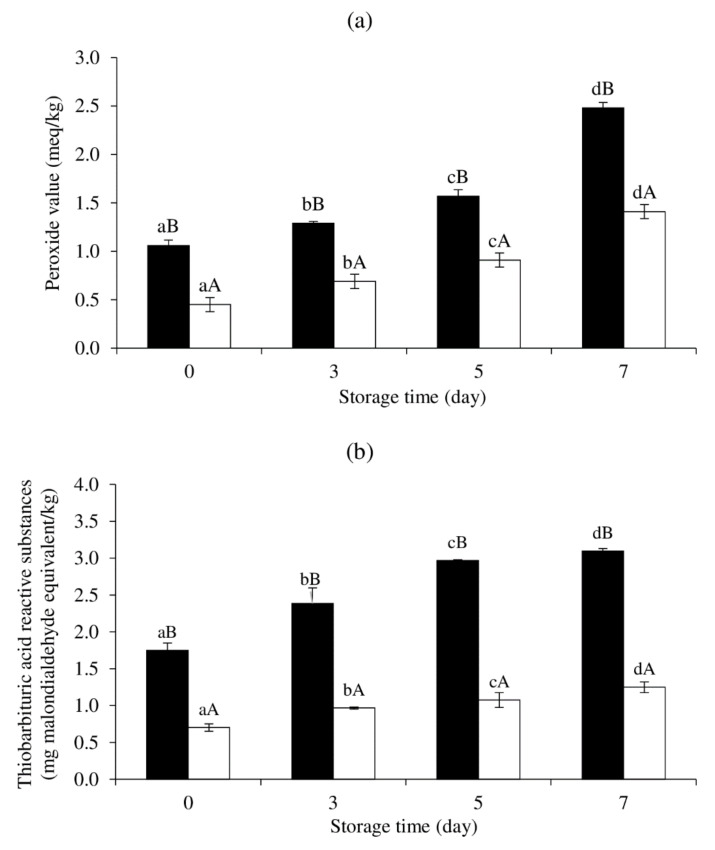
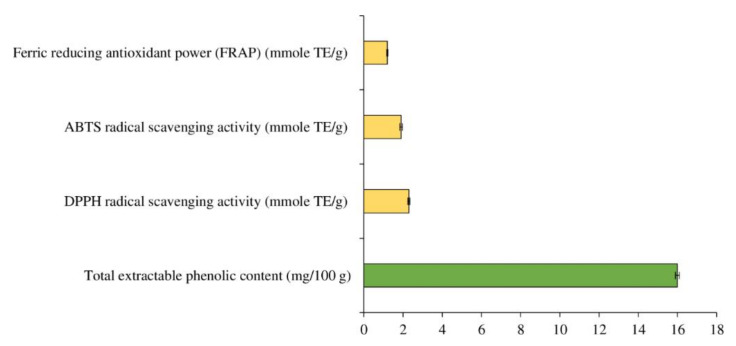
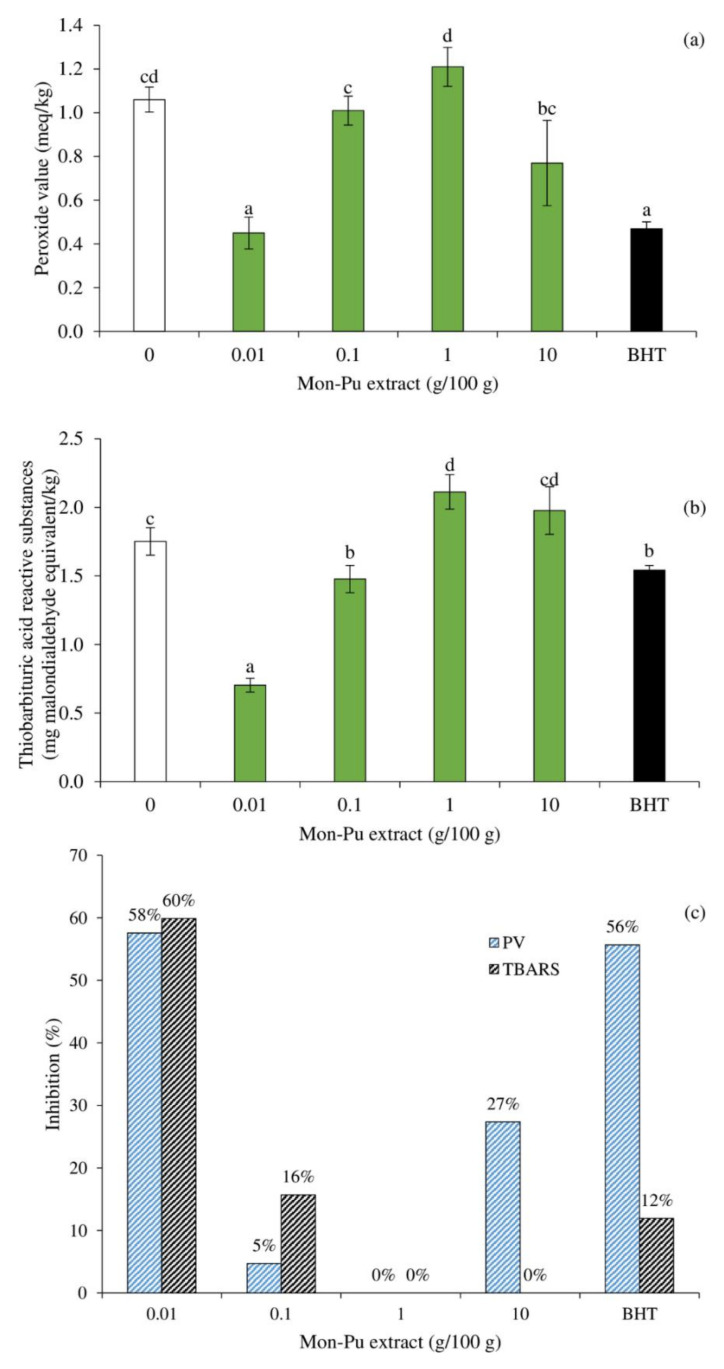
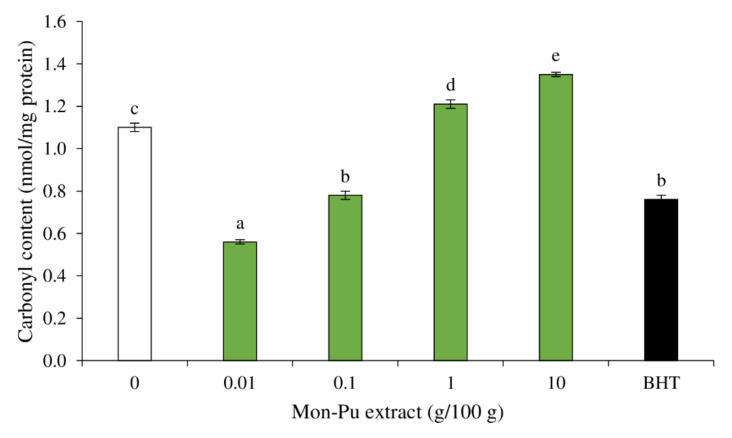
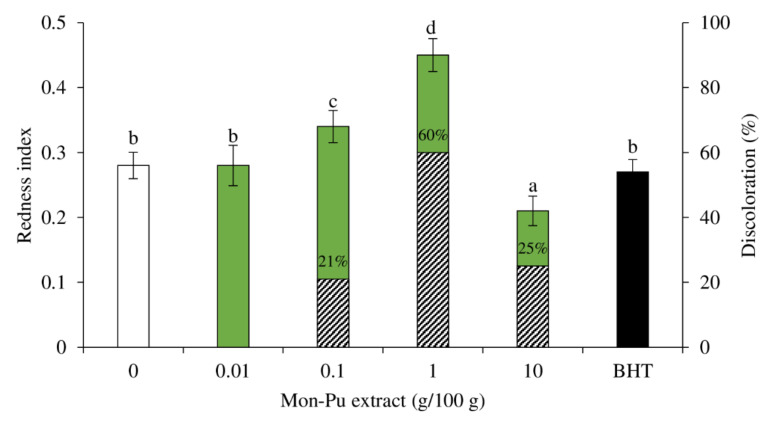
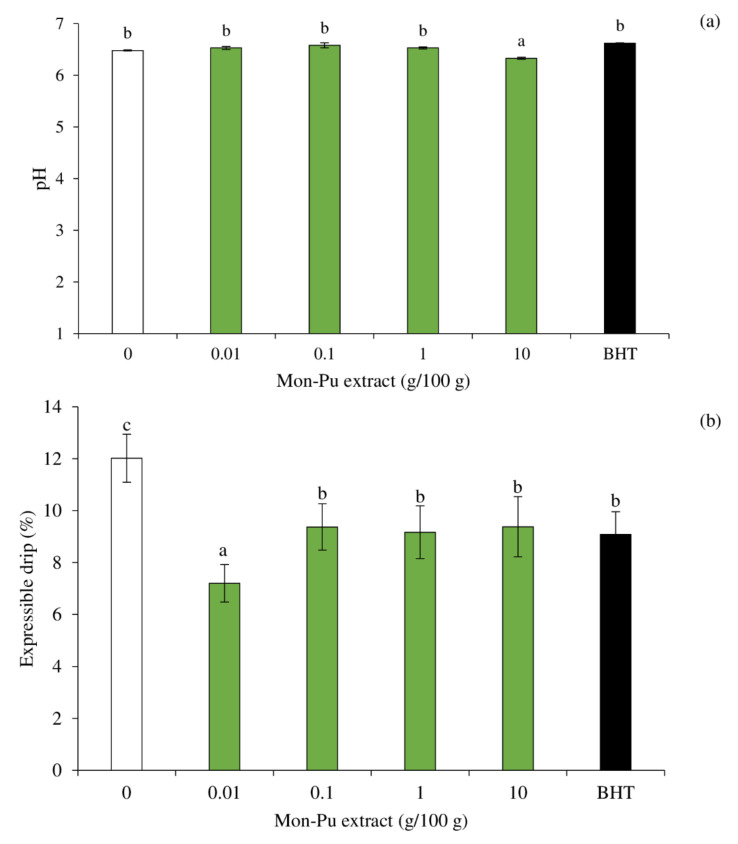
This study highlighted the role of an 80% ethanolic Mon-Pu (Glochidion wallichianum) leaf extract (MPE), a novel natural antioxidative ingredient, in controlling the oxidative stability and physicochemical properties of a cooked sausage model system (SMS). MPE had a total extractable phenolic content of 16 mg/100 g, with DPPH● scavenging activity, ABTS●+ scavenging activity, and ferric reducing antioxidant power of 2.3, 1.9, and 1.2 mmole Trolox equivalents (TE)/g, respectively. The effects of different concentrations of MPE (0.01−10%, w/w) formulated into SMS on lipid oxidation, protein oxidation, and discoloration were compared to synthetic butylated hydroxyl toluene (BHT; 0.003%, w/w) and a control (without antioxidant). The peroxide value (PV), thiobarbituric acid reactive substances (TBARS), and protein carbonyl contents of SMS tended to increase with increasing MPE concentration (p < 0.05), indicating that high MPE excipient has a pro-oxidative effect. The lowest lipid oxidation (PV and TBARS) and protein carbonyl contents were observed when 0.01% MPE was used to treat SMS (p < 0.05), which was comparable or even greater than BHT-treated SMS. High concentrations (1−10%) of MPE incorporation led to increases in the discoloration of SMS (p < 0.05) with a negligible change in pH of SMS. The water exudate was reduced when MPE was incorporated into SMS compared to control (p < 0.05). Furthermore, MPE at 0.01% significantly reduced lipid oxidation in cooked EMS during refrigerated storage. According to the findings, a low amount of MPE, particularly at 0.01%, in a formulation could potentially maintain the oxidative stability and physicochemical qualities of cooked SMS that are comparable to or better than synthetic BHT.
本研究强调了80%乙醇提取的蒙自蒲桃(Glochidion wallichianum)叶提取物(MPE)这一新型天然抗氧化成分在控制熟香肠模型体系(SMS)的氧化稳定性和理化性质方面的作用。MPE的总可提取酚含量为16毫克/100克,其对二苯基苦味酰基自由基(DPPH●)的清除活性、对阳离子自由基(ABTS●+)的清除活性以及铁还原抗氧化能力分别为2.3、1.9和1.2毫摩尔 Trolox 当量(TE)/克。将不同浓度(0.01−10%,w/w)的MPE添加到SMS中,与合成抗氧化剂丁基羟基甲苯(BHT;0.003%,w/w)和对照组(无抗氧化剂)相比,研究其对脂质氧化、蛋白质氧化和变色的影响。SMS的过氧化值(PV)、硫代巴比妥酸反应性物质(TBARS)和蛋白质羰基含量随MPE浓度的增加而升高(p < 0.05),表明高浓度的MPE辅料具有促氧化作用。当使用0.01%的MPE处理SMS时,观察到最低的脂质氧化(PV和TBARS)和蛋白质羰基含量(p < 0.05), 其效果与BHT处理的SMS相当甚至更好。高浓度(1−10%)的MPE添加导致SMS变色增加(p < 0.05),而SMS的pH值变化可忽略不计。与对照组相比,将MPE添加到SMS中可减少水分渗出(p < 0.05)。此外,0.01%的MPE在冷藏储存期间能显著降低熟EMS中的脂质氧化。根据研究结果,配方中低含量的MPE,尤其是0.01%,可能维持熟SMS的氧化稳定性和理化性质,其效果与合成BHT相当或更好。