College of Economics, Sichuan Agricultural University, Chengdu 611130, China.
Int J Environ Res Public Health. 2022 May 24;19(11):6384. doi: 10.3390/ijerph19116384.
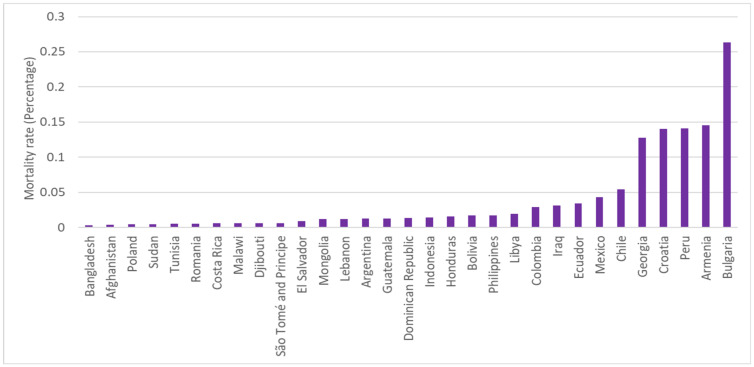
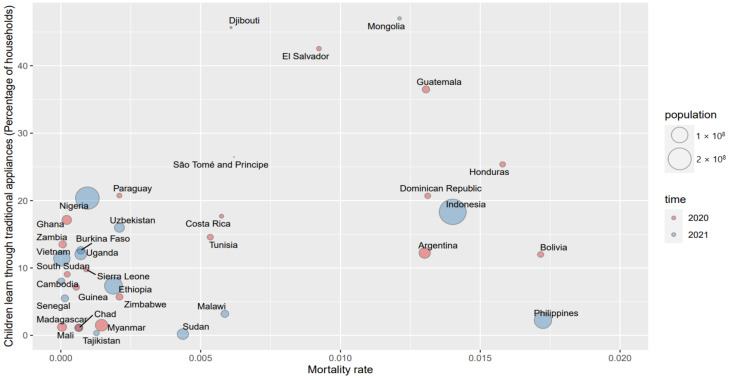
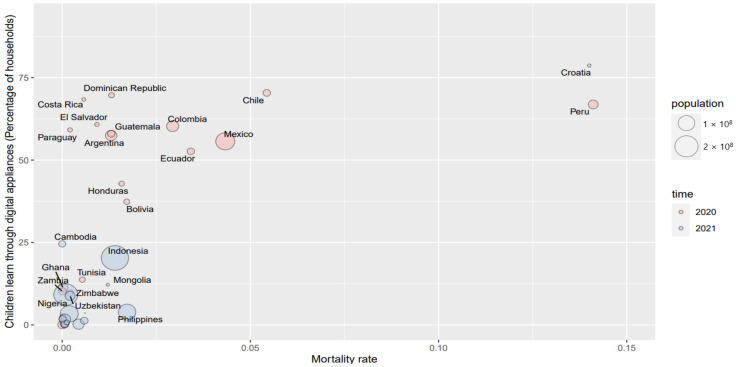
Educational disruptions from the COVID-19 pandemic during school closures have become a remarkable social issue, particularly among the developing countries. Ample literature has verified the adverse effects of the long-lasing epidemic on school education. However, rare studies seek to understand the association between the severity of COVID-19 and distance learning, an alternative education pattern, and foster policy designs to promote educational transition, particularly targeting the post-crisis phase of the COVID-19. By combining four data surveys, this article empirically examines the impacts of COVID-19 on children's distance education with the application of various appliances across 60 developing countries. The results suggest that, after controlling socio-economic, geographic, and demographic variables, a higher level of mortality rate of COVID-19 contributes to more households participating in distance education. In particular, this positive term is larger for distance education by using TVs and radios compared with the usage of digital appliances. To explore the potential channel of the above linkage, this article argues that the positive association between mortality rate and the use of traditional appliances is weakened through higher levels of stringency in lockdown measures. Timely policies are, therefore, recommended to guide towards distance learning with economic and technological supports to guarantee a wave of inclusive educational recovery in the ongoing post-COVID-19 era.
新冠疫情期间学校关闭导致的教育中断已成为一个显著的社会问题,特别是在发展中国家。大量文献已经证实了长期疫情对学校教育的不利影响。然而,很少有研究试图了解新冠疫情严重程度与远程教育(一种替代教育模式)之间的关联,并制定促进教育转型的政策,特别是针对新冠疫情危机后的阶段。本文通过结合四项数据调查,应用多种方法,实证检验了新冠疫情对 60 个发展中国家儿童远程教育的影响。结果表明,在控制了社会经济、地理和人口变量后,新冠疫情死亡率越高,参与远程教育的家庭就越多。特别是,与使用数字设备相比,使用电视和收音机进行远程教育的效果更大。为了探究上述关联的潜在渠道,本文认为,通过更高水平的封锁措施严格度,可以减弱死亡率与传统设备使用之间的正相关关系。因此,建议及时出台政策,引导远程教育,并提供经济和技术支持,以保证在当前后新冠疫情时代实现一波包容性的教育复苏。