Li Sijia, Chen Wenning, Bhandari Krishna Singh, Jung Dong Won, Chen Xuewen
Department of Mechanical Engineering, Jeju National University, Jeju-si 63243, Korea.
School of Materials Science and Engineering, Henan University of Science and Technology, 263 Kaiyuan Avenue, Luoyang 471023, China.
Materials (Basel). 2022 May 26;15(11):3788. doi: 10.3390/ma15113788.
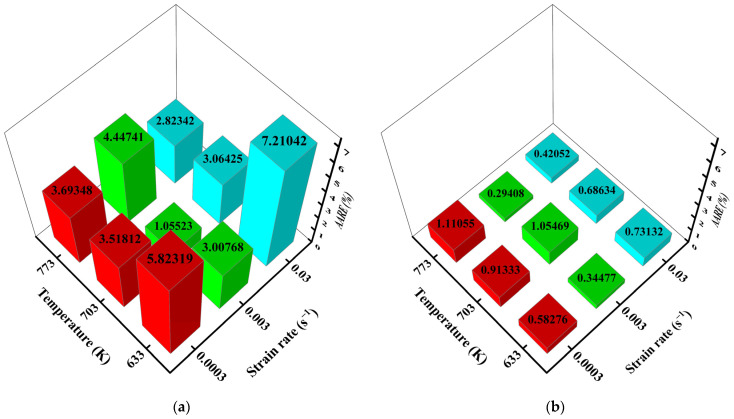
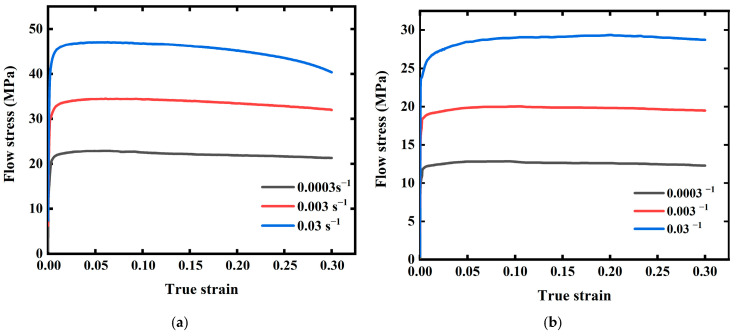
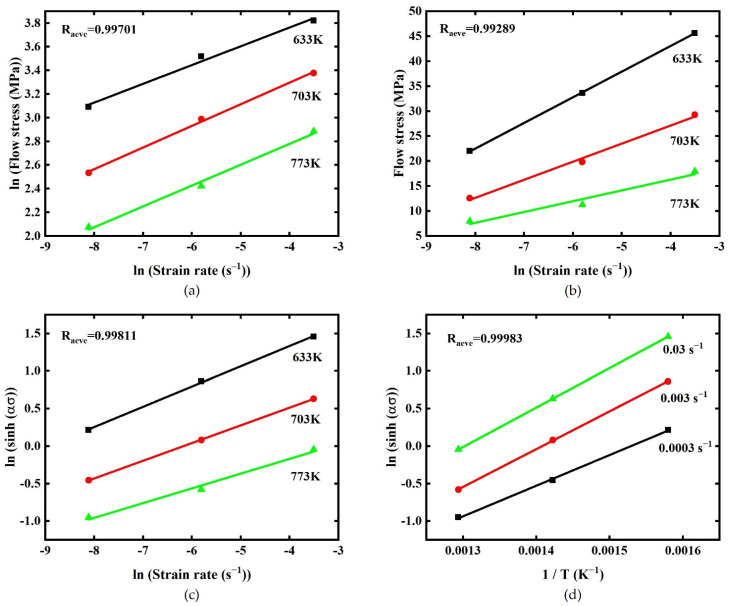
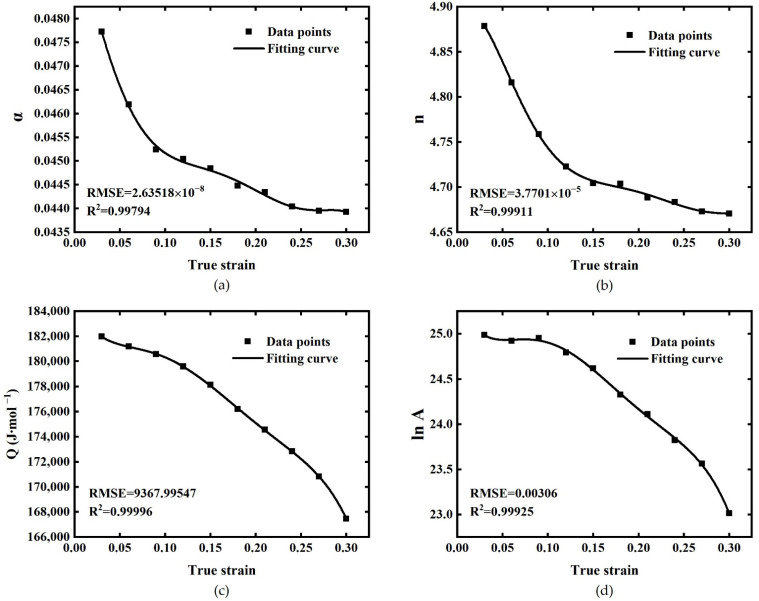
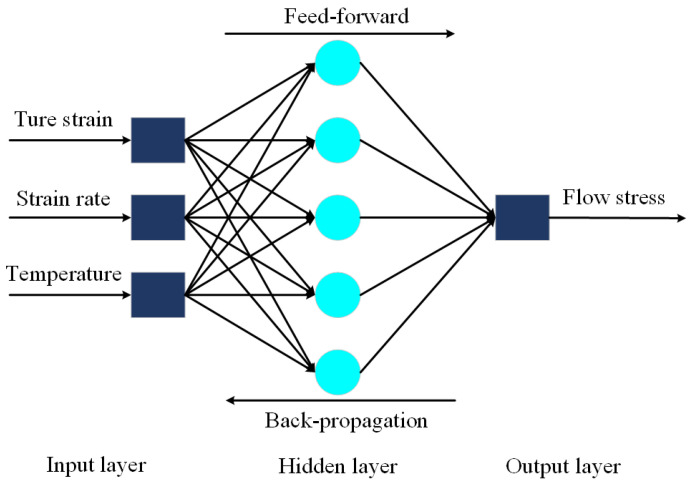
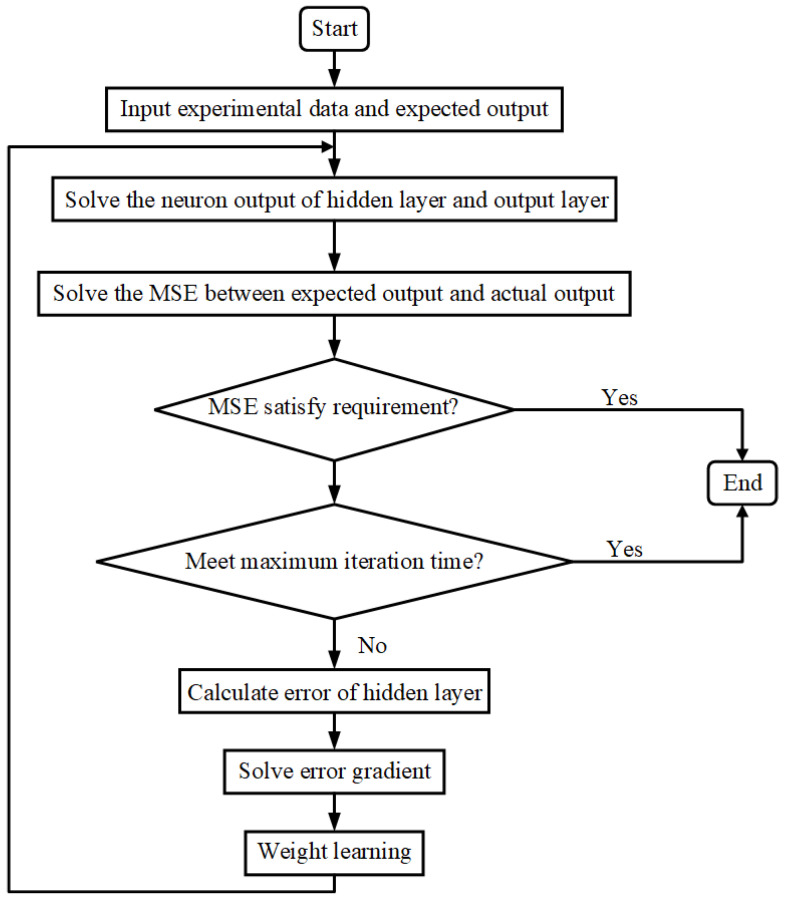
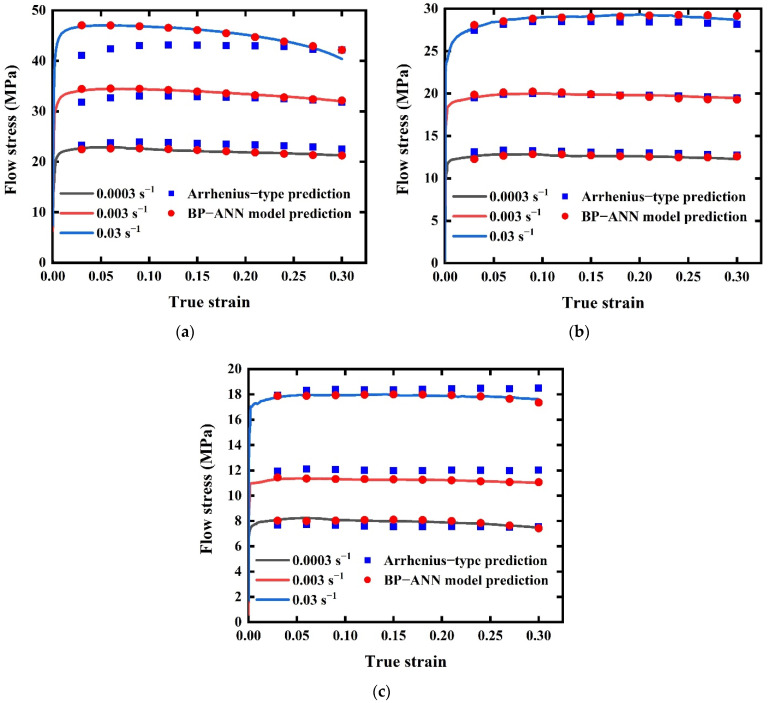
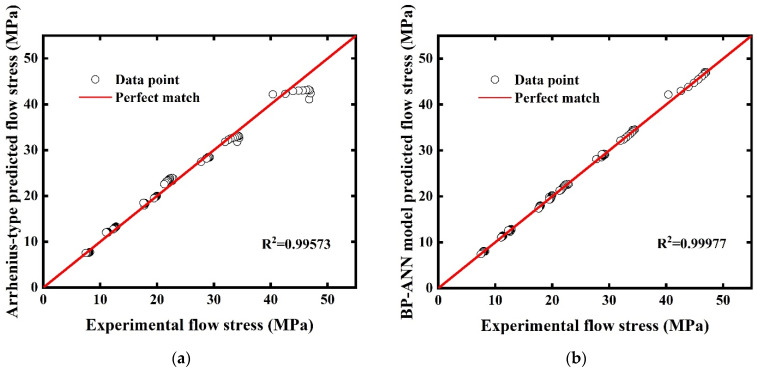
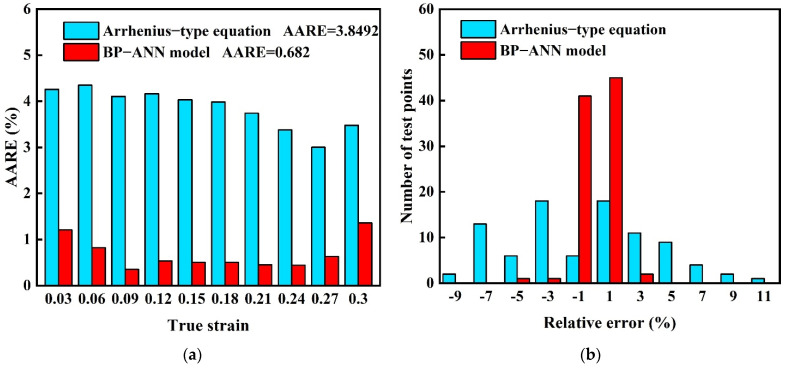
To realize the purpose of energy saving, materials with high weight are replaced by low-weight materials with eligible mechanical properties in all kinds of fields. Therefore, conducting research works on lightweight materials under specified work conditions is extremely important and profound. To understand the relationship of aluminum alloy AA5005 among flow stress, true strain, strain rate, and deformation temperature, hot isothermal tensile tests were conducted within the strain rate range 0.0003-0.03 s and temperature range 633-773 K. Based on the true stress-true strain curves obtained from the experiment, a traditional constitutive regression Arrhenius-type equation was utilized to regress flow behaviors. Meanwhile, the Arrhenius-type equation was optimized by a sixth-order polynomial function for compensating strain. Thereafter, a back propagation artificial neural network (BP-ANN) model based on supervised machine learning was also employed to regress and predict flow stress in diverse deform conditions. Ultimately, by introducing statistical analyses correlation coefficient (R), average absolute relative error (AARE), and relative error (δ) to the comparative study, it was found that the Arrhenius-type equation will lose accuracy in cases of high stress. Additionally, owning higher R, lower AARE, and more concentrative δ value distribution, the BP-ANN model is superior in regressing and predicting than the Arrhenius-type constitutive equation.
为实现节能目的,在各个领域中,具有高重量的材料被具有合格机械性能的低重量材料所取代。因此,在特定工作条件下开展轻质材料的研究工作极为重要且意义深远。为了解铝合金AA5005的流变应力、真应变、应变速率和变形温度之间的关系,在应变速率范围为0.0003 - 0.03 s以及温度范围为633 - 773 K内进行了热等温拉伸试验。基于从实验中获得的真应力 - 真应变曲线,利用传统的本构回归阿累尼乌斯型方程来回归流变行为。同时,通过六阶多项式函数对阿累尼乌斯型方程进行优化以补偿应变。此后,还采用了基于监督机器学习的反向传播人工神经网络(BP - ANN)模型来回归和预测不同变形条件下的流变应力。最终,通过将统计分析相关系数(R)、平均绝对相对误差(AARE)和相对误差(δ)引入对比研究,发现阿累尼乌斯型方程在高应力情况下会失去准确性。此外,BP - ANN模型具有更高的R、更低的AARE以及更集中的δ值分布,在回归和预测方面比阿累尼乌斯型本构方程更具优势。