Mubaraki Manal Q, Moaleem Mohammed M Al, Alzahrani Abdulrahman H, Shariff Mansoor, Alqahtani Saeed M, Porwal Amit, Al-Sanabani Fuad A, Bhandi Shilpa, Tribst João Paulo Mendes, Heboyan Artak, Patil Shankargouda
Saudi Board Prosthodontic PGY3, College of Dentistry, King Khalid University, Abha 62529, Saudi Arabia.
Department of Prosthetic Dental Science, College of Dentistry, Jazan University, Jazan 45142, Saudi Arabia.
Materials (Basel). 2022 May 28;15(11):3868. doi: 10.3390/ma15113868.
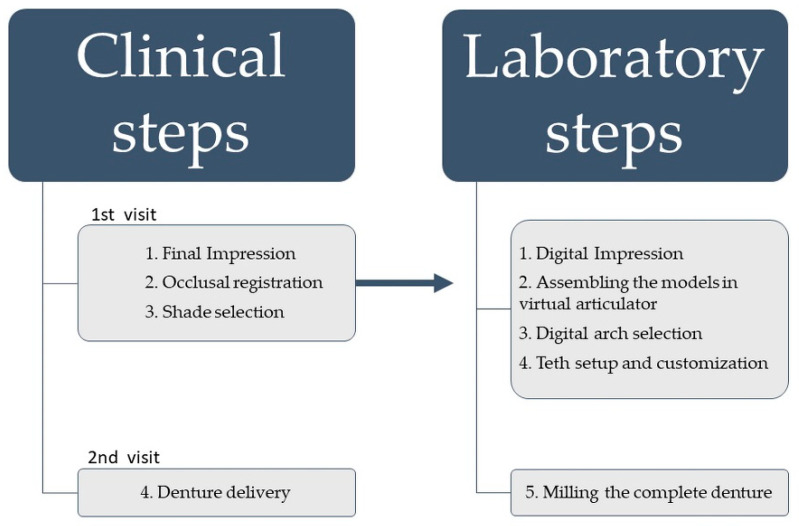
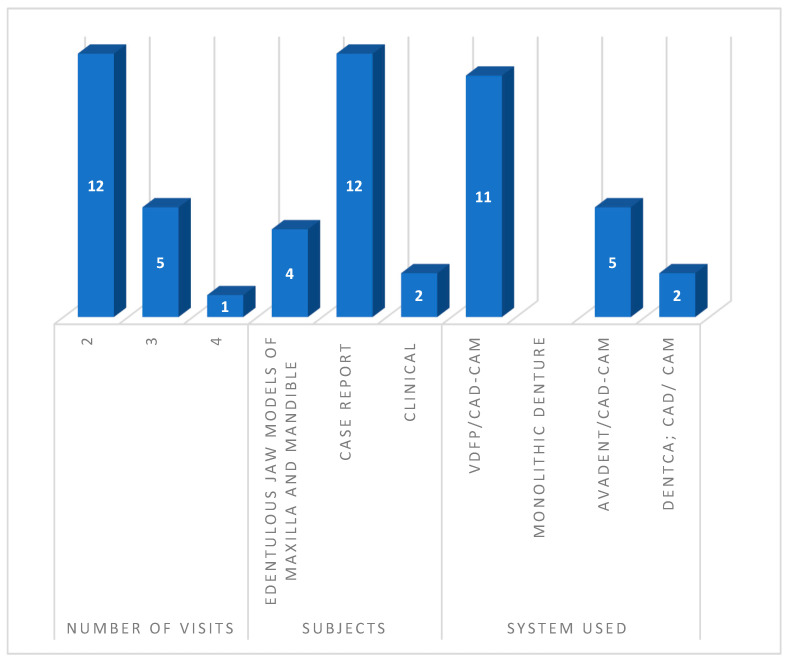
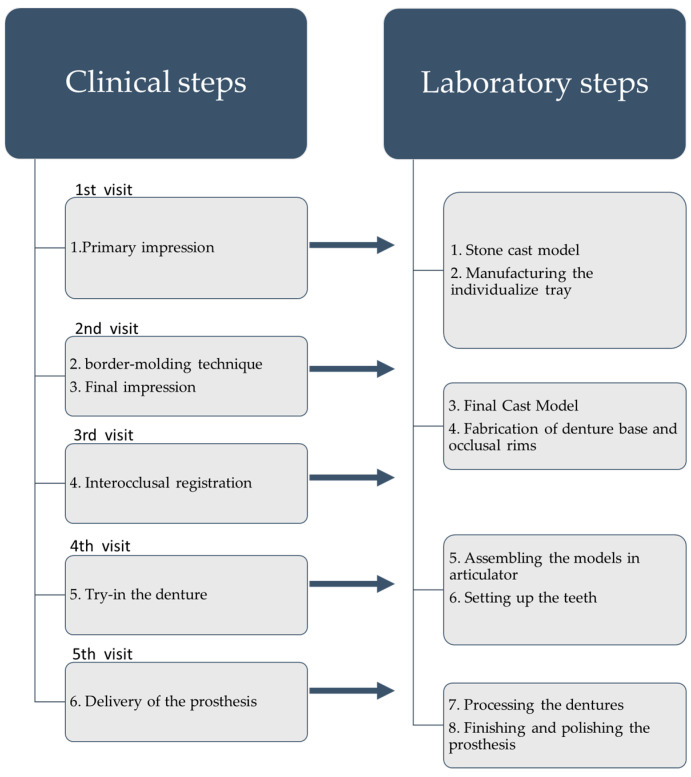
CAD/CAM technology is gaining popularity and replacing archaic conventional procedures for fabricating dentures. CAD/CAM supports using a digital workflow reduce the number of visits, chair time, and laboratory time, making it attractive to patients. This study aimed to provide a comparative review of complete dentures manufactured using CAD/CAM and conventional methods. The PubMed/Medline, Science Direct, Cochrane, and Google Scholar databases were searched for studies published in English within the last 11 years (from 2011 to 2021). The keywords used were "computer-engineered complete dentures", "CAD/CAM complete dentures", "computer-aided engineering complete dentures", and "digital complete dentures". The search yielded 102 articles. Eighteen relevant articles were included in this review. Overall, computer-engineered complete dentures have several advantages over conventional dentures. Patients reported greater satisfaction with computer-engineered complete dentures (CECDs) due to better fit, reduced chair time, shorter appointments, and fewer post-insertion visits. CAD/CAM allows for precision and reproducibility with fewer procedures compared to conventional dentures. Polymethyl methacrylate is used as the denture base material for conventional dentures. For CECDs, the resin can be modified and cross-linked to improve its mechanical properties. The advantages of CECDs include a reduced number of appointments, saving chairside time, a digital workflow allowing easy reproducibility and greater patient satisfaction with a better fit.
CAD/CAM技术正日益普及,并正在取代制作假牙的陈旧传统方法。CAD/CAM支持使用数字化工作流程,减少就诊次数、椅旁时间和实验室时间,这使其对患者具有吸引力。本研究旨在对使用CAD/CAM和传统方法制作的全口义齿进行比较性综述。我们在PubMed/Medline、Science Direct、Cochrane和谷歌学术数据库中搜索了过去11年(2011年至2021年)以英文发表的研究。使用的关键词为“计算机设计的全口义齿”、“CAD/CAM全口义齿”、“计算机辅助工程全口义齿”和“数字化全口义齿”。搜索结果有102篇文章。本综述纳入了18篇相关文章。总体而言,计算机设计的全口义齿比传统义齿有几个优点。患者报告称,由于贴合度更好、椅旁时间减少、就诊时间缩短以及义齿插入后复诊次数减少,对计算机设计的全口义齿(CECDs)满意度更高。与传统义齿相比,CAD/CAM能够以更少的步骤实现精确性和可重复性。聚甲基丙烯酸甲酯用作传统义齿的基托材料。对于CECDs,树脂可以进行改性和交联以改善其机械性能。CECDs的优点包括就诊次数减少、节省椅旁时间、数字化工作流程便于实现可重复性以及患者因贴合度更好而满意度更高。