Fundación Renal Íñigo Álvarez de Toledo, 28003 Madrid, Spain.
Servicio de Hemodialisis, Complejo Hospitalario Universitario A Coruña, 15006 A Coruna, Spain.
Nutrients. 2022 Jun 5;14(11):2354. doi: 10.3390/nu14112354.
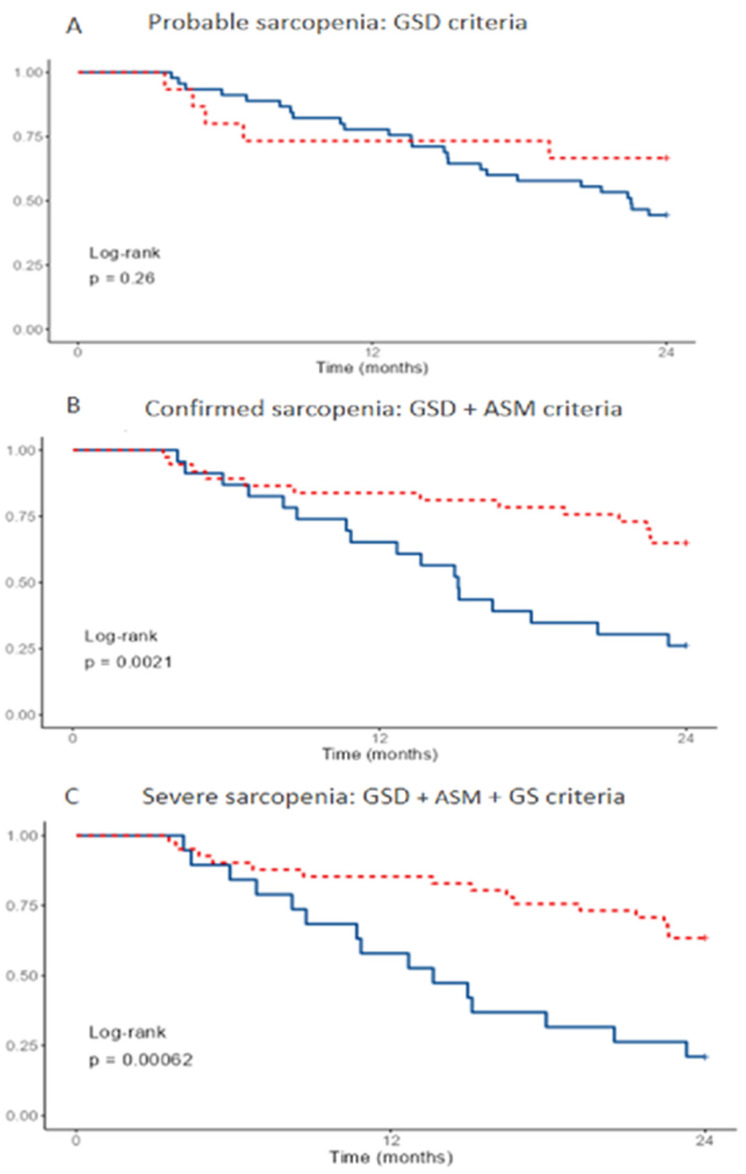
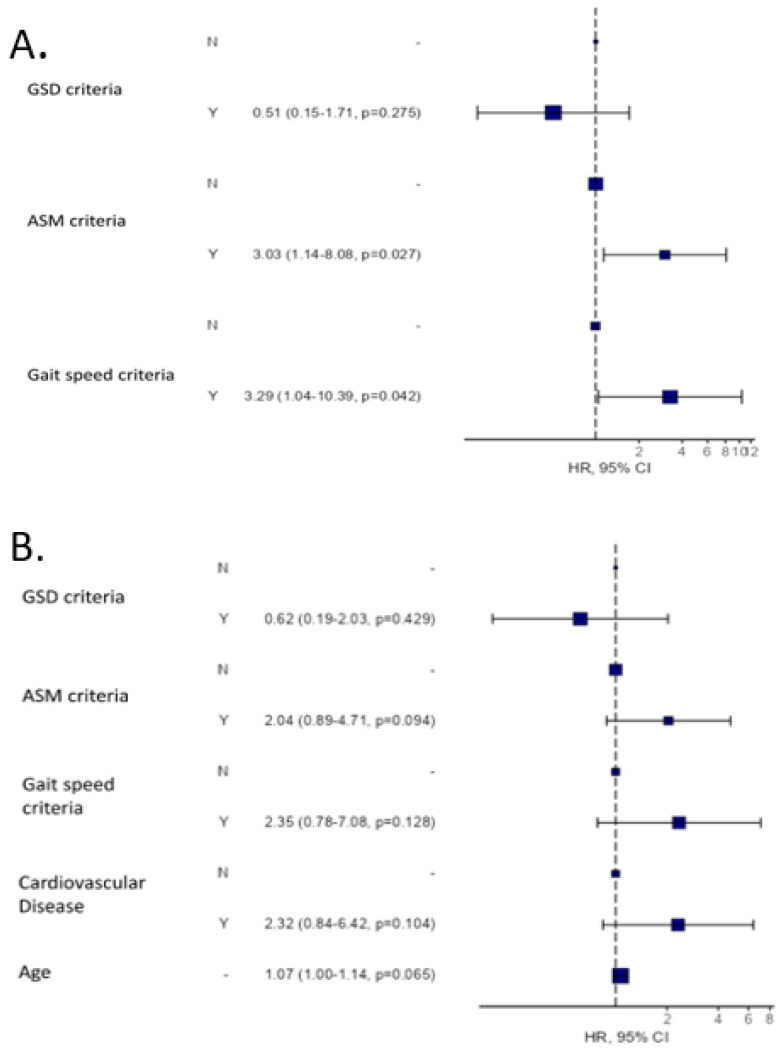
(1) Sarcopenia is a progressive loss of skeletal muscle mass and strength. The aim of this study was to determine the association of sarcopenia, defined according to the Working Group on Sarcopenia in Older People (EWGSOP2) diagnostic criteria, with mortality at 24 months in very elderly hemodialysis patients. (2) A prospective study was conducted in 60 patients on chronic hemodialysis who were older than 75 years. Sarcopenia was diagnosed according to EWGSOP2 criteria. Additionally, clinical, anthropometric and analytical variables and body composition by bioimpedance were assessed. The date and cause of death were recorded during 2 years of follow-up. (3) Among study participants, 41 (68%) were men, the mean age 81.85 ± 5.58 years and the dialysis vintage was 49.88 ± 40.29 months. The prevalence of probable sarcopenia was 75% to 97%, depending on the criteria employed: confirmed sarcopenia ranged from 37 to 40%, and severe sarcopenia ranged from 18 to 37%. A total of 30 (50%) patients died over 24 months. Sarcopenia probability variables were not related to mortality. In contrast, sarcopenia confirmation (appendicular skeletal muscle mass, ASM) and severity (gait speed, GS) variables were associated with mortality. In multivariate analysis, the hazard ratio (95% confidence interval) for all-cause death was 3.03 (1.14-8.08, = 0.028) for patients fulfilling ASM sarcopenia criteria and 3.29 (1.04-10.39, = 0.042) for patients fulfilling GS sarcopenia criteria. (4) The diagnosis of sarcopenia by EWGSOP2 criteria is associated with an increased risk of all-cause death in elderly dialysis patients. Specifically, ASM and GS criteria could be used as mortality risk markers in elderly hemodialysis patients. Future studies should address whether the early diagnosis and treatment of sarcopenia improve outcomes.
(1) 肌少症是一种进行性的骨骼肌质量和力量丧失。本研究旨在确定根据老年人肌少症工作组(EWGSOP2)诊断标准定义的肌少症与非常老年血液透析患者 24 个月时死亡率的关系。(2) 对 60 名年龄超过 75 岁的慢性血液透析患者进行了一项前瞻性研究。根据 EWGSOP2 标准诊断肌少症。此外,评估了临床、人体测量和分析变量以及生物阻抗的身体成分。在 2 年的随访期间记录了死亡日期和原因。(3) 在研究参与者中,41 名(68%)为男性,平均年龄 81.85 ± 5.58 岁,透析龄为 49.88 ± 40.29 个月。根据所使用的标准,可能肌少症的患病率为 75%至 97%:确认肌少症的范围为 37%至 40%,严重肌少症的范围为 18%至 37%。共有 30 名(50%)患者在 24 个月内死亡。肌少症可能性变量与死亡率无关。相反,肌少症的确认(四肢骨骼肌质量,ASM)和严重程度(步态速度,GS)变量与死亡率相关。在多变量分析中,符合 ASM 肌少症标准的患者全因死亡的危险比(95%置信区间)为 3.03(1.14-8.08, = 0.028),符合 GS 肌少症标准的患者为 3.29(1.04-10.39, = 0.042)。(4) 根据 EWGSOP2 标准诊断肌少症与老年透析患者全因死亡风险增加相关。具体来说,ASM 和 GS 标准可作为老年血液透析患者的死亡风险标志物。未来的研究应探讨早期诊断和治疗肌少症是否能改善结局。