Department of Chemical and Biomolecular Engineering, Tulane University, New Orleans, LA 70118, USA.
Department of Chemical Engineering, Carnegie Mellon University, Pittsburgh, PA 15213, USA.
Molecules. 2022 May 31;27(11):3529. doi: 10.3390/molecules27113529.
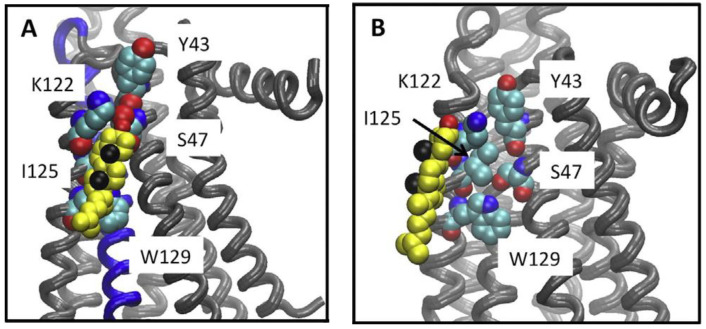
Membrane cholesterol dysregulation has been shown to alter the activity of the adenosine A receptor (AR), a G protein-coupled receptor, thereby implicating cholesterol levels in diseases such as Alzheimer's and Parkinson's. A limited number of AR crystal structures show the receptor interacting with cholesterol, as such molecular simulations are often used to predict cholesterol interaction sites.
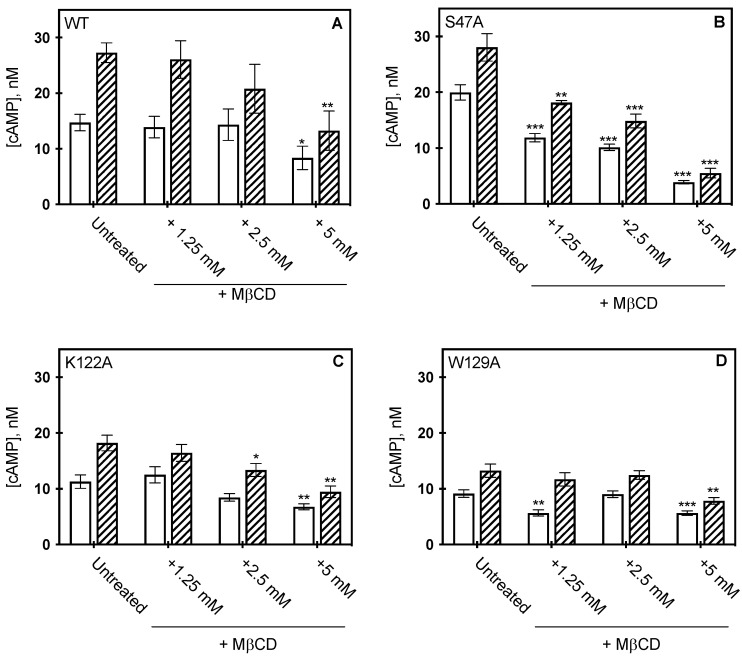
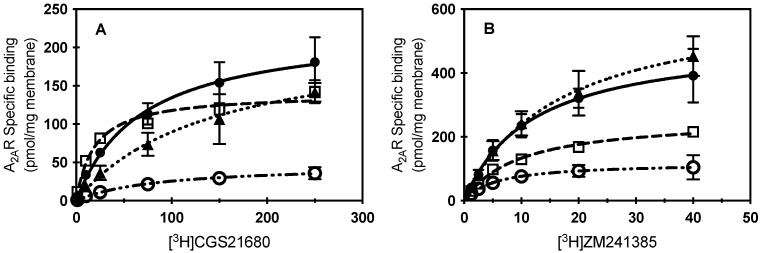
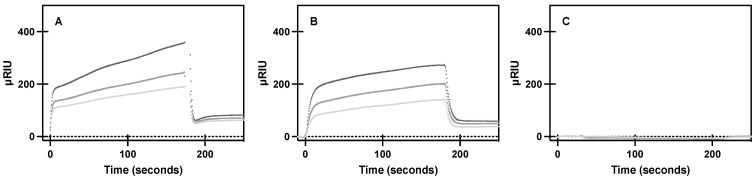
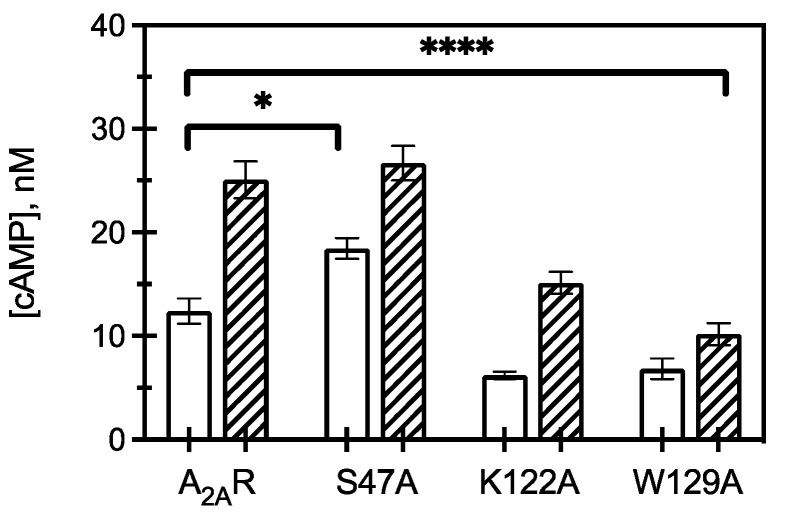
Here, we use experimental methods to determine whether a specific interaction between amino acid side chains in the cholesterol consensus motif (CCM) of full length, wild-type human AR, and cholesterol modulates activity of the receptor by testing the effects of mutational changes on functional consequences, including ligand binding, G protein coupling, and downstream activation of cyclic AMP.
Our data, taken with previously published studies, support a model of receptor state-dependent binding between cholesterol and the CCM, whereby cholesterol facilitates both G protein coupling and downstream signaling of AR.
已有研究表明,膜胆固醇失调会改变腺苷 A 受体(AR)的活性,而 AR 是一种 G 蛋白偶联受体,这表明胆固醇水平与阿尔茨海默病和帕金森病等疾病有关。少数 AR 晶体结构显示该受体与胆固醇相互作用,因此经常使用分子模拟来预测胆固醇相互作用位点。
在这里,我们使用实验方法来确定全长野生型人 AR 中胆固醇共识基序(CCM)中氨基酸侧链之间的特定相互作用是否通过测试突变对功能后果的影响来调节受体的活性,包括配体结合、G 蛋白偶联和下游环 AMP 的激活。
我们的数据以及之前发表的研究支持胆固醇与 CCM 之间的受体状态依赖性结合模型,其中胆固醇促进 AR 的 G 蛋白偶联和下游信号转导。