Smith Lindsey A, Goodman Anthoni M, McMahon Lori L
Cell, Developmental, and Integrative Biology, University of Alabama at Birmingham, Birmingham, AL, United States.
Front Synaptic Neurosci. 2022 May 24;14:826601. doi: 10.3389/fnsyn.2022.826601. eCollection 2022.
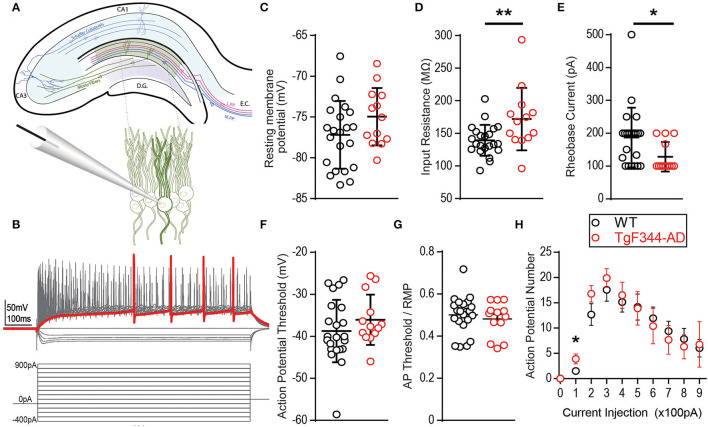
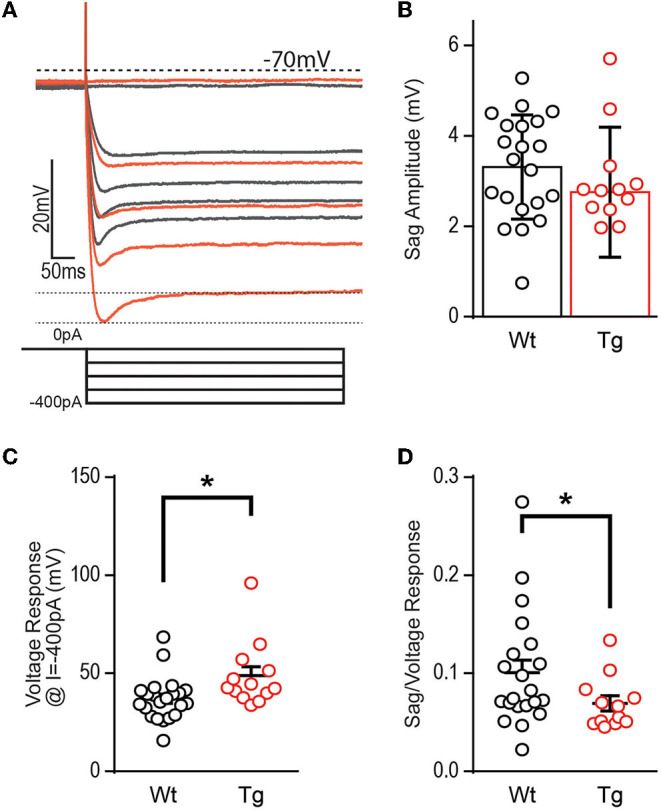
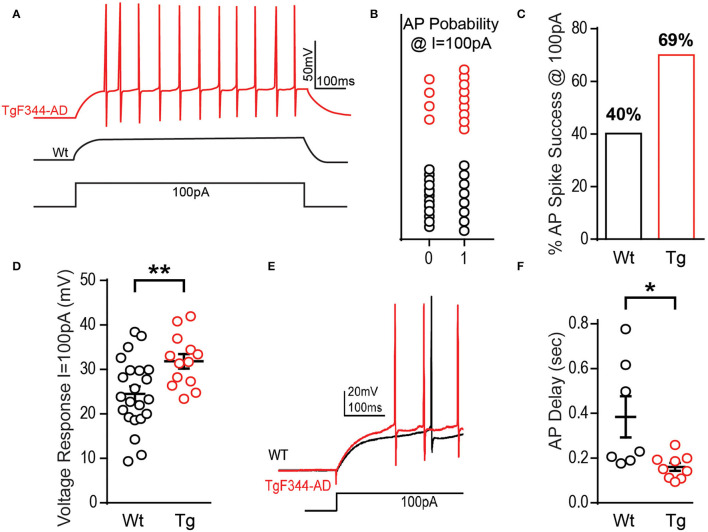
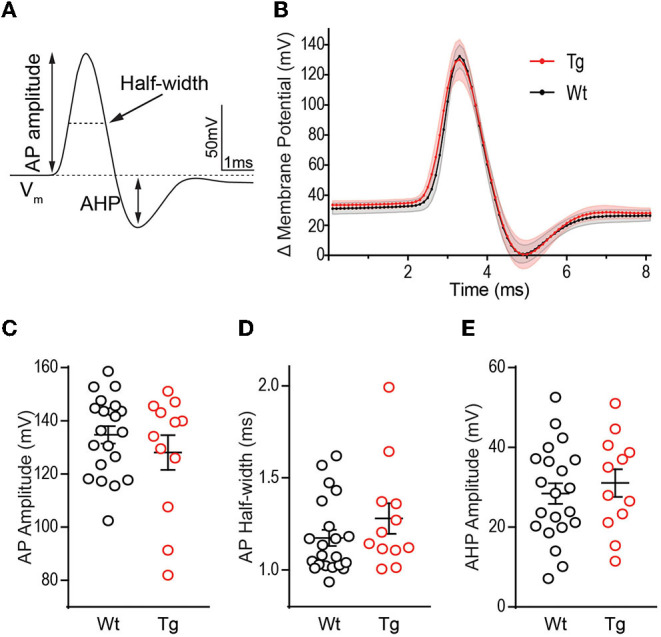
The dentate gyrus is both a critical gatekeeper for hippocampal signal processing and one of the first brain regions to become dysfunctional in Alzheimer's disease (AD). Accordingly, the appropriate balance of excitation and inhibition through the dentate is a compelling target for mechanistic investigation and therapeutic intervention in early AD. Previously, we reported an increased long-term potentiation (LTP) magnitude at medial perforant path-dentate granule cell (MPP-DGC) synapses in slices from both male and acutely ovariectomized female TgF344-AD rats compared with wild type (Wt) as early as 6 months of age that is accompanied by an increase in steady-state postsynaptic depolarization during the high-frequency stimulation used to induce plasticity. Subsequently, we found that heightened function of β-adrenergic receptors (β-ARs) drives the increase in the LTP magnitude, but the increase in steady-state depolarization was only partially due to β-AR activation. As we previously reported no detectable difference in spine density or presynaptic release probability, we entertained the possibility that DGCs themselves might have modified passive or active membrane properties, which may contribute to the significant increase in charge transfer during high-frequency stimulation. Using brain slice electrophysiology from 6-month-old female rats acutely ovariectomized to eliminate variability due to fluctuating plasma estradiol, we found significant changes in passive membrane properties and active membrane properties leading to increased DGC excitability in TgF344-AD rats. Specifically, TgF344-AD DGCs have an increased input resistance and decreased rheobase, decreased sag, and increased action potential (AP) spike accommodation. Importantly, we found that for the same amount of depolarizing current injection, DGCs from TgF344-AD compared with Wt rats have a larger magnitude voltage response, which was accompanied by a decreased delay to fire the first action potential, indicating TgF344-AD DGCs membranes are more excitable. Taken together, DGCs in TgF344-AD rats are more excitable, which likely contributes to the heightened depolarization during high-frequency synaptic activation.
齿状回既是海马体信号处理的关键守门人,也是阿尔茨海默病(AD)中最早出现功能失调的脑区之一。因此,通过齿状回实现兴奋与抑制的适当平衡,是早期AD机制研究和治疗干预的一个极具吸引力的目标。此前,我们报道,早在6个月大时,与野生型(Wt)相比,雄性和急性卵巢切除的雌性TgF344-AD大鼠脑片内侧穿通通路-齿状颗粒细胞(MPP-DGC)突触处的长期增强(LTP)幅度增加,且在用于诱导可塑性的高频刺激期间,稳态突触后去极化增加。随后,我们发现β-肾上腺素能受体(β-ARs)功能增强驱动了LTP幅度的增加,但稳态去极化的增加仅部分归因于β-AR激活。正如我们之前报道的,在棘突密度或突触前释放概率方面未检测到差异,我们推测齿状颗粒细胞(DGCs)自身可能改变了被动或主动膜特性,这可能导致高频刺激期间电荷转移显著增加。通过对6个月大的急性卵巢切除雌性大鼠进行脑片电生理实验,以消除由于血浆雌二醇波动引起的变异性,我们发现TgF344-AD大鼠的被动膜特性和主动膜特性发生了显著变化,导致DGC兴奋性增加。具体而言,TgF344-AD DGCs的输入电阻增加,基强度降低,波谷减小,动作电位(AP)峰适应增加。重要的是,我们发现对于相同量的去极化电流注入,与Wt大鼠相比,TgF344-AD大鼠的DGCs具有更大幅度的电压响应,同时首次动作电位发放的延迟减少,表明TgF344-AD DGCs的膜更易兴奋。综上所述,TgF344-AD大鼠的DGCs更易兴奋,这可能导致高频突触激活期间去极化增强。