Zhang Xiaokai, Zhang Yang, Sun Aijun, Ge Junbo
Department of Cardiology, Zhongshan Hospital, Fudan University, Shanghai Institute of Cardiovascular Diseases, Shanghai 200032, PR China.
Institute of Biomedical Sciences, Fudan University, Shanghai 200032, PR China.
Genes Dis. 2021 Apr 24;9(4):959-972. doi: 10.1016/j.gendis.2021.04.001. eCollection 2022 Jul.
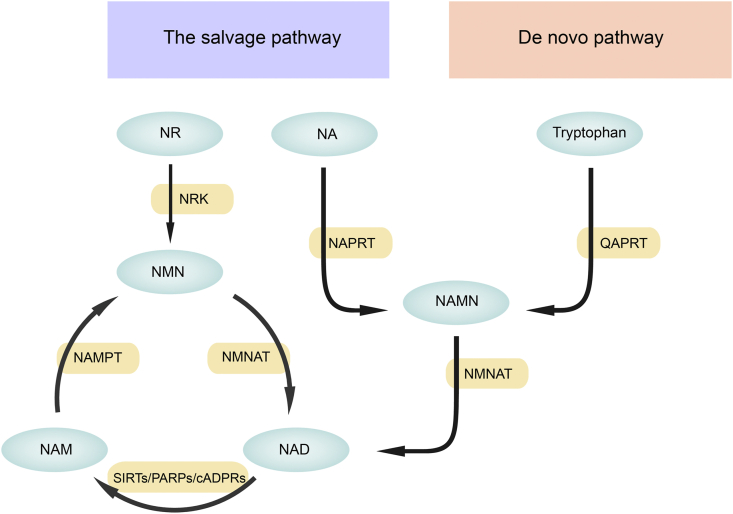
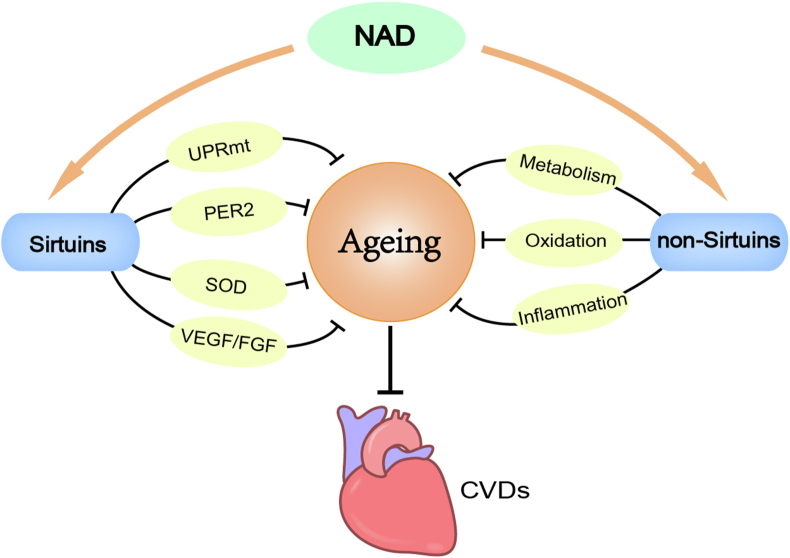
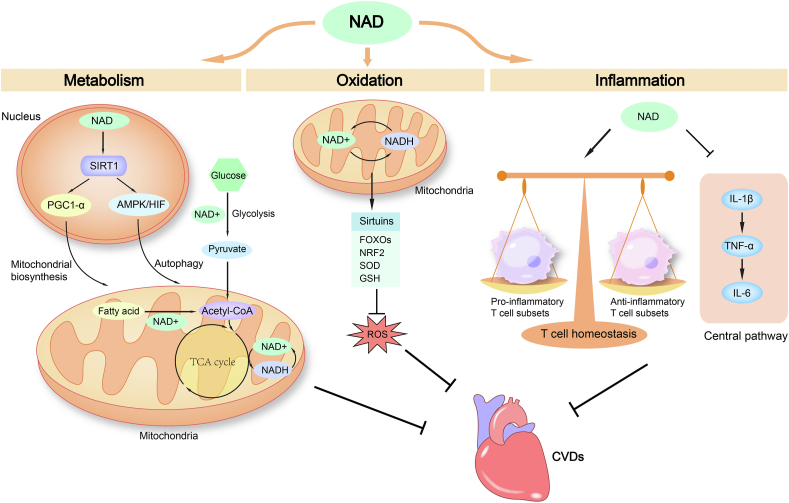
Recently, cardiovascular diseases (CVDs) were identified as the leading cause of mortality, imposing a heavy burden on health care systems and the social economy. Nicotinamide adenine dinucleotide (NAD), as a pivotal co-substrate for a range of different enzymes, is involved in many signal transduction pathways activated in CVDs. Emerging evidence has shown that NAD can exert remediating effects on CVDs by regulating metabolism, maintaining redox homeostasis and modulating the immune response. In fact, NAD might delay ageing through sirtuin and non-sirtuin pathways and thus contribute to interventions for age-related diseases such as CVDs. Considering that robust clinical studies of NAD are ongoing, we discuss current challenges and the future translational potential of NAD based on existing studies and our understanding. Despite some remaining gaps in its clinical application, NAD has been shown to have broad prospects and pan-effects, making it a suitable prophylactic drug for CVDs.
最近,心血管疾病(CVDs)被确定为主要死因,给医疗保健系统和社会经济带来了沉重负担。烟酰胺腺嘌呤二核苷酸(NAD)作为一系列不同酶的关键辅助底物,参与了CVDs中激活的许多信号转导途径。新出现的证据表明,NAD可以通过调节代谢、维持氧化还原稳态和调节免疫反应,对CVDs发挥修复作用。事实上,NAD可能通过sirtuin和非sirtuin途径延缓衰老,从而有助于干预诸如CVDs等与年龄相关的疾病。鉴于目前正在进行关于NAD的强有力的临床研究,我们基于现有研究和我们的理解,讨论NAD当前面临的挑战及其未来的转化潜力。尽管其临床应用仍存在一些差距,但NAD已被证明具有广阔的前景和广泛的效应,使其成为一种适合用于CVDs的预防性药物。