Xu Xiang, Zhang Gao, Peng Kun, Gao Yanping, Wang Jinxia, Gao Caiping, He Chong, Lu Fang
Clinical Immunology Translational Medicine Key Laboratory of Sichuan Province, Sichuan Provincial People's Hospital, University of Electronic Science and Technology of China, Chengdu, China.
Department of Gastroenterology, Sichuan Provincial People's Hospital, University of Electronic Science and Technology of China, Chengdu, China.
Front Nutr. 2022 May 24;9:894307. doi: 10.3389/fnut.2022.894307. eCollection 2022.
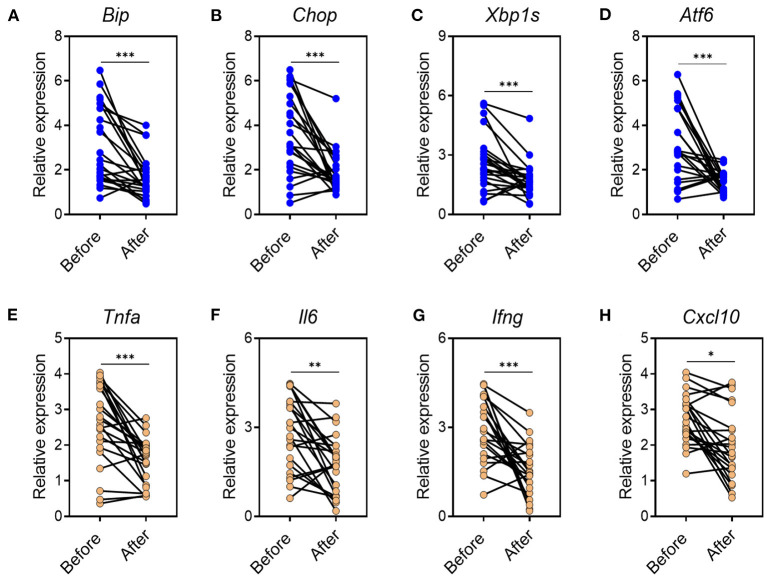
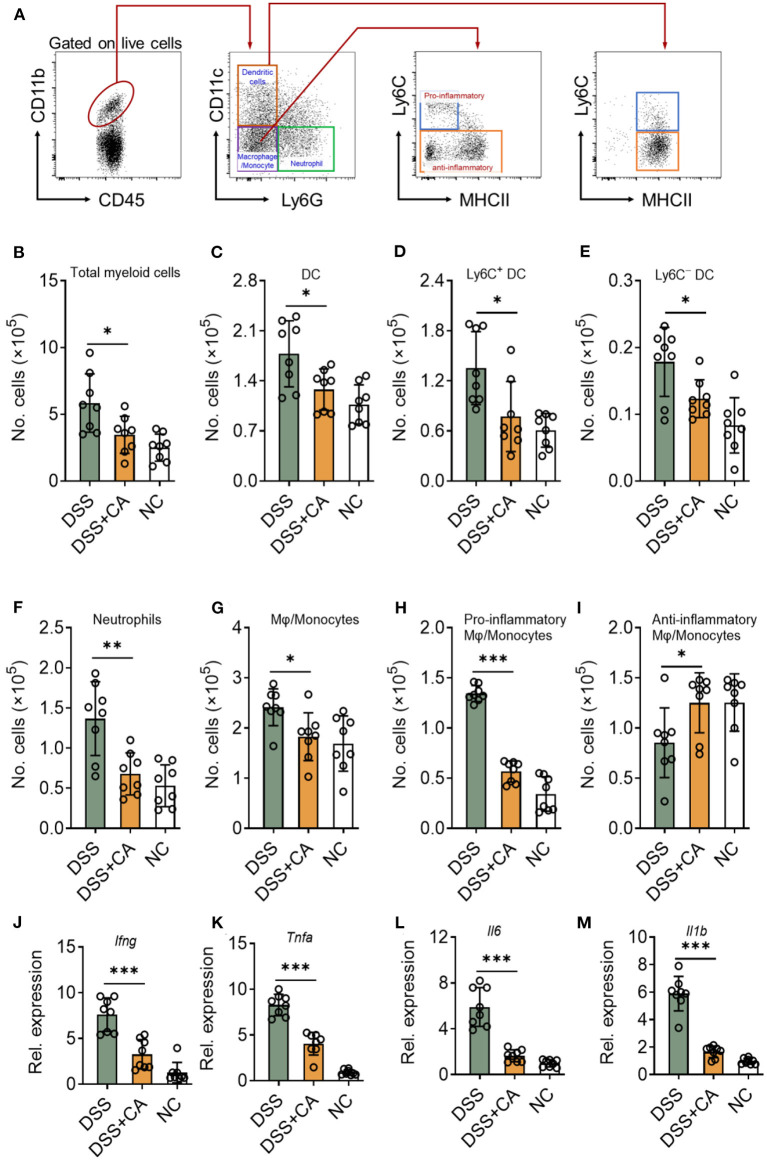
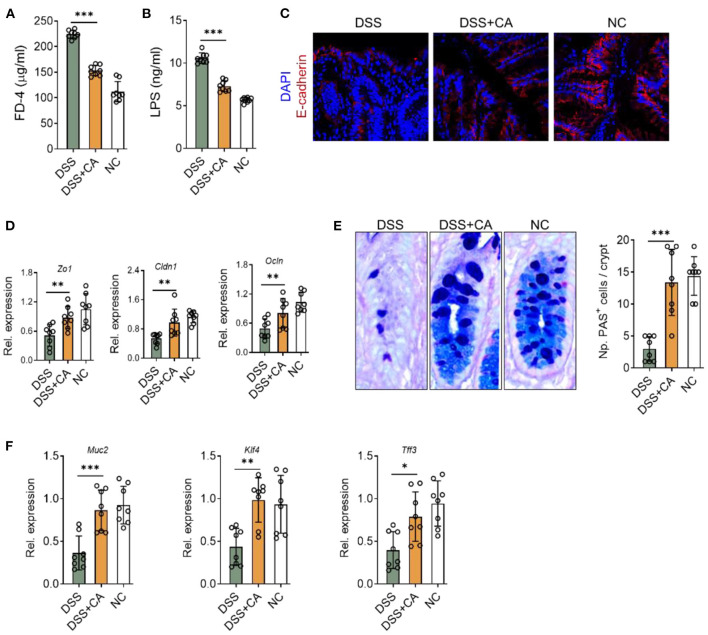
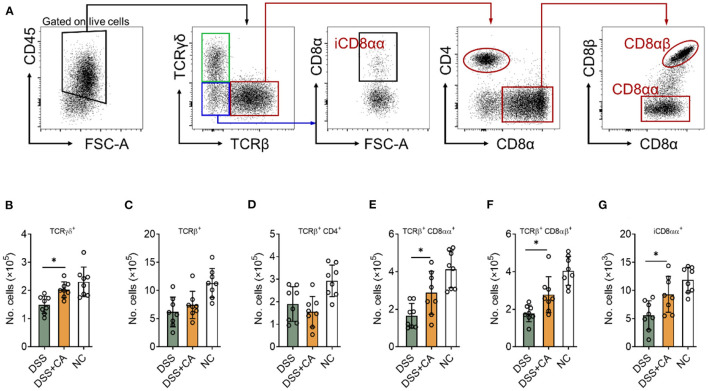
Ulcerative colitis (UC) is a chronic inflammatory disease, characterized by recurrent flares of mucosal inflammation, which is limited in the colon and rectum. Compromised epithelial barrier functions have been indicated in the initiation of UC. Carnosol (CA), a natural active ortho-diphenol diterpene compound, is one of the active ingredients in plants such as rosemary and sage. The anti-inflammatory and anti-oxidative effects of CA have been reported in several animal models, but its effect on mucosal inflammation remains elusive. We established a mouse experimental colitis model characterized by epithelial barrier destruction using dextran sulfate sodium (DSS). CA was intraperitoneally administrated. Flow cytometry was performed to determine phenotypes of intraepithelial lymphocytes and lamina propria cells. qRT-PCR was used for gene expression. ER stress in the colon was determined by immunofluorescence staining and qRT-PCR. Thapsigargin was used to induce ER stress in HCT-116 cells . We found CA significantly alleviated DSS-induced colitis in mice marked by relieved clinical symptoms and colonic pathological damage. Inflammatory cell infiltration and cytokine expression in the colon were suppressed by CA during colitis. Furthermore, CA restored epithelial barrier functions and intestinal intraepithelial lymphocyte (IEL) homeostasis in mice with DSS insults. Mechanistically, we induced endoplasmic reticulum (ER) stress in HCT-116 cells (an intestinal epithelial cell line) with thapsigargin, and CA reversed this effect. In addition, we collected inflamed mucosal biopsies from 23 patients with UC, and cultured overnight with or without CA, showing CA significantly reduced expression of ER stress signaling molecule and pro-inflammatory agents. Our data demonstrate that CA acts as an effective drug for experimental colitis and maintains proper epithelial barrier functions via suppressing epithelial ER stress, providing new evidence that CA might be a promising therapeutic candidate for UC.
溃疡性结肠炎(UC)是一种慢性炎症性疾病,其特征为黏膜炎症反复发作,病变局限于结肠和直肠。UC发病初期已表明存在上皮屏障功能受损。鼠尾草酚(CA)是一种天然活性邻二酚二萜化合物,是迷迭香和鼠尾草等植物中的活性成分之一。CA的抗炎和抗氧化作用已在多种动物模型中得到报道,但其对黏膜炎症的影响仍不明确。我们使用葡聚糖硫酸钠(DSS)建立了以上皮屏障破坏为特征的小鼠实验性结肠炎模型。通过腹腔注射给予CA。采用流式细胞术测定上皮内淋巴细胞和固有层细胞的表型。使用qRT-PCR检测基因表达。通过免疫荧光染色和qRT-PCR测定结肠中的内质网(ER)应激。使用毒胡萝卜素在HCT-116细胞中诱导ER应激。我们发现CA显著减轻了DSS诱导的小鼠结肠炎,表现为临床症状缓解和结肠病理损伤减轻。CA在结肠炎期间抑制了结肠中的炎症细胞浸润和细胞因子表达。此外,CA恢复了DSS损伤小鼠的上皮屏障功能和肠道上皮内淋巴细胞(IEL)稳态。机制上,我们用毒胡萝卜素在HCT-116细胞(一种肠道上皮细胞系)中诱导内质网应激,而CA可逆转这种效应。此外,我们收集了23例UC患者的炎症黏膜活检组织,在有或无CA的情况下培养过夜,结果显示CA显著降低了ER应激信号分子和促炎因子的表达。我们的数据表明,CA可作为实验性结肠炎的有效药物,通过抑制上皮内质网应激来维持适当的上皮屏障功能,为CA可能成为UC的有前景的治疗候选药物提供了新证据。