Erasmus School of Health Policy and Management, Erasmus University Rotterdam, The Netherlands and Higher Education Institutions' Partnership, CMC Road, PO Box 14051, Addis Ababa, Ethiopia.
Prince Mohammad Bin Salman College (MBSC) of Business and Entrepreneurship, 7082-BayLaSun-Juman St. Unit No. 1, King Abdullah Economic City, 23964-2522, Saudi Arabia, Kingdom of Saudi Arabia.
BMC Health Serv Res. 2022 Jun 10;22(1):763. doi: 10.1186/s12913-022-08046-7.
In Ethiopia, public hospitals deal with a persistent human resource crisis, even by Sub-Saharan Africa (SSA) standards. Policy and hospital reforms, however, have thus far resulted in limited progress towards addressing the strategic human resource management (SHRM) challenges Ethiopia's public hospitals face.
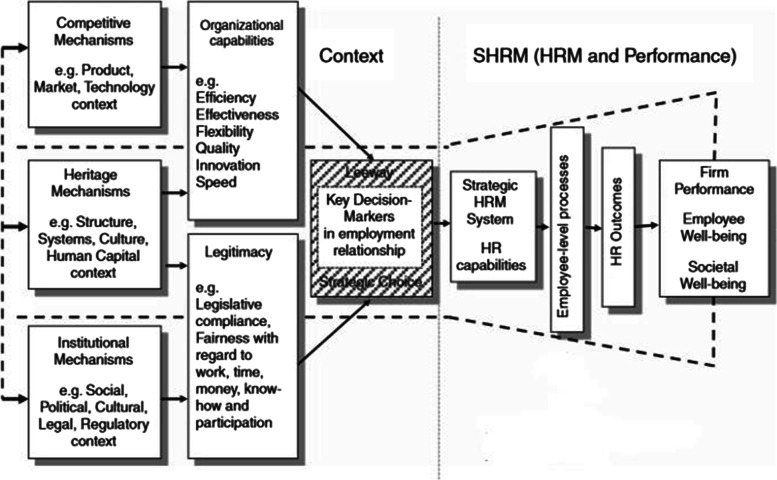
To explore the contextual factors influencing these SHRM challenges of Ethiopian public hospitals, we conducted a qualitative study based on the Contextual SHRM framework of Paauwe. A total of 19 structured interviews were conducted with Chief Executive Officers (CEOs) and HR managers from a purposive sample of 15 hospitals across Ethiopia. An additional four focus groups were held with professionals and managers.
The study found that hospitals compete on the supply side for scarce resources, including skilled professionals. There was little reporting on demand-side competition for health services provided, service quality, and service innovation. Governmental regulations were the main institutional mechanism in place. These regulations also emphasized human resources and were perceived to tightly regulate employee numbers, salaries, and employment arrangements at detailed levels. These regulations were perceived to restrict the autonomy of hospitals regarding SHRM. Regulation-induced differences in allowances and external employment arrangements were among the concerns that decreased motivation and job satisfaction and caused employees to leave. The mismatch between regulation and workforce demands posed challenges for leadership and caused leaders to be perceived as incompetent and unable when they could not successfully address workforce needs.
Bottom-up involvement in SHRM may help resolve the aforementioned persistent problems. The Ethiopian government might better loosen regulations and provide more autonomy to hospitals to develop SHRM and implement mechanisms that emphasize the quality of the health services demanded rather than the quantity of human resources supplied.
在埃塞俄比亚,公立医院即使按照撒哈拉以南非洲(SSA)的标准,也面临着持续的人力资源危机。然而,政策和医院改革迄今为止在解决埃塞俄比亚公立医院面临的战略性人力资源管理(SHRM)挑战方面仅取得了有限的进展。
为了探讨影响埃塞俄比亚公立医院这些 SHRM 挑战的背景因素,我们根据 Paauwe 的背景 SHRM 框架进行了一项定性研究。我们对来自埃塞俄比亚 15 家医院的有目的样本中的首席执行官(CEO)和人力资源经理进行了总共 19 次结构化访谈。另外还与专业人员和管理人员举行了 4 次焦点小组会议。
该研究发现,医院在供应方争夺稀缺资源,包括熟练的专业人员。几乎没有报告关于提供的卫生服务、服务质量和服务创新的需求方竞争。政府法规是主要的制度机制。这些法规还强调人力资源,并被认为严格规定了员工人数、工资和就业安排的详细级别。这些法规被认为限制了医院在 SHRM 方面的自主权。规定引起的津贴差异和外部就业安排是降低动机和工作满意度并导致员工离职的原因之一。法规与劳动力需求之间的不匹配给领导带来了挑战,并导致人们认为领导在无法成功满足劳动力需求时能力不足。
参与 SHRM 的自下而上的方法可能有助于解决上述持续存在的问题。埃塞俄比亚政府可能会更好地放宽法规,为医院提供更多自主权,以发展 SHRM 并实施强调所需卫生服务质量而不是人力资源供应数量的机制。