Jung Kyung Min, Kim Young Min, Yoo Eunhui, Han Jae Yong
Department of Agricultural Biotechnology and Research Institute of Agriculture and Life Sciences, College of Agriculture and Life Sciences, Seoul National University, 1 Gwanak-ro, Gwanak-gu, Seoul, 08826, Korea.
Front Zool. 2022 Jun 11;19(1):18. doi: 10.1186/s12983-022-00464-x.
Due to their cost effectiveness, ease of use, and unlimited supply, immortalized cell lines are used in place of primary cells for a wide range of research purposes, including gene function studies, CRISPR-based gene editing, drug metabolism tests, and vaccine or therapeutic protein production. Although immortalized cell lines have been established for a range of animal species, there is still a need to develop such cell lines for wild species. The zebra finch, which is used widely as a model species to study the neurobiological basis of human speech disorders, has been employed in several functional studies involving gene knockdown or the introduction of exogenous transgenes in vivo; however, the lack of an immortalized zebra finch cell line has hampered precise genome editing studies.
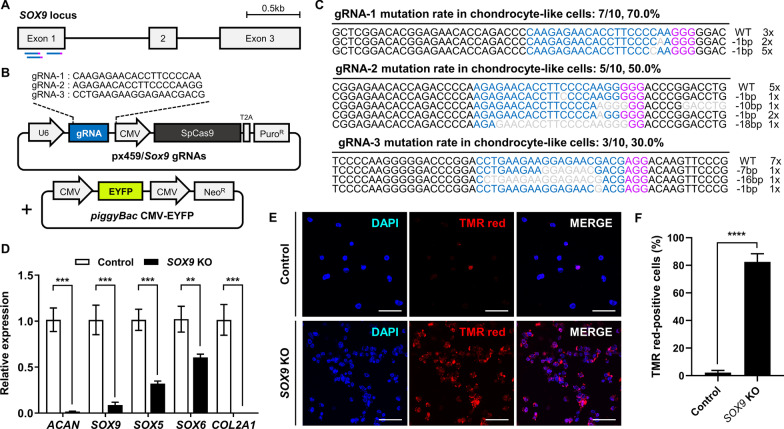
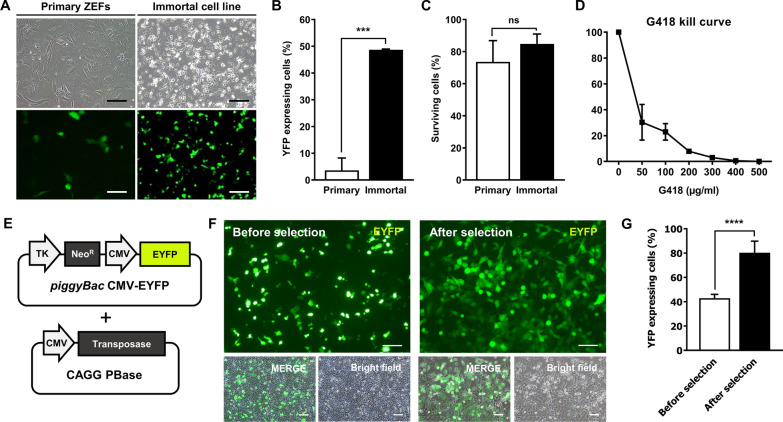
Here, we established an immortalized cell line by a single genetic event, expression of the c-MYC oncogene, in zebra finch embryonic fibroblasts and examined its potential suitability for gene targeting investigations. Retroviral vector-mediated transduction of c-MYC was used to immortalize zebra finch primary fibroblasts; the transformed cells proliferated stably over several passages, resulting in the expression of chondrocyte-specific genes. The transfection efficiency of the immortalized cells was much higher than that of the primary cells. Targeted knockout of the SOX9 gene, which plays a role in the differentiation of mesenchymal progenitor cells into chondrocytes, was conducted in vitro and both apoptosis and decreased expression levels of chondrogenic marker genes were observed in edited cells.
The c-MYC induced immortalized chondrocyte-like cell line described here broadens the available options for establishing zebra finch cell lines, paves the way for in-depth biological researches, and provides convenient approaches for biotechnology studies, particularly genomic modification research.
由于其成本效益、易用性和无限供应,永生化细胞系被用于替代原代细胞进行广泛的研究目的,包括基因功能研究、基于CRISPR的基因编辑、药物代谢测试以及疫苗或治疗性蛋白质生产。尽管已经为一系列动物物种建立了永生化细胞系,但仍需要为野生动物开发此类细胞系。斑胸草雀被广泛用作研究人类言语障碍神经生物学基础的模型物种,已被用于多项涉及体内基因敲低或外源转基因导入的功能研究;然而,缺乏永生化的斑胸草雀细胞系阻碍了精确的基因组编辑研究。
在此,我们通过单一基因事件,即c-MYC癌基因的表达,在斑胸草雀胚胎成纤维细胞中建立了一个永生化细胞系,并研究了其在基因靶向研究中的潜在适用性。使用逆转录病毒载体介导的c-MYC转导使斑胸草雀原代成纤维细胞永生化;转化后的细胞在多次传代中稳定增殖,导致软骨细胞特异性基因的表达。永生化细胞的转染效率远高于原代细胞。在体外对在间充质祖细胞向软骨细胞分化中起作用的SOX9基因进行靶向敲除,在编辑后的细胞中观察到凋亡和软骨生成标记基因表达水平降低。
本文所述的由c-MYC诱导的永生化软骨样细胞系拓宽了建立斑胸草雀细胞系的可用选项,为深入的生物学研究铺平了道路,并为生物技术研究,特别是基因组修饰研究提供了便利方法。