Amoriello Roberta, Rizzo Roberta, Mariottini Alice, Bortolotti Daria, Gentili Valentina, Bonechi Elena, Aldinucci Alessandra, Carnasciali Alberto, Peruzzi Benedetta, Repice Anna Maria, Massacesi Luca, Fainardi Enrico, Ballerini Clara
Department of Clinical and Experimental Medicine (DMSC), University of Florence, Florence, Italy.
Department of Chemical, Pharmaceutical and Agricultural Sciences, University of Ferrara, Ferrara, Italy.
Front Neurol. 2022 May 25;13:872396. doi: 10.3389/fneur.2022.872396. eCollection 2022.
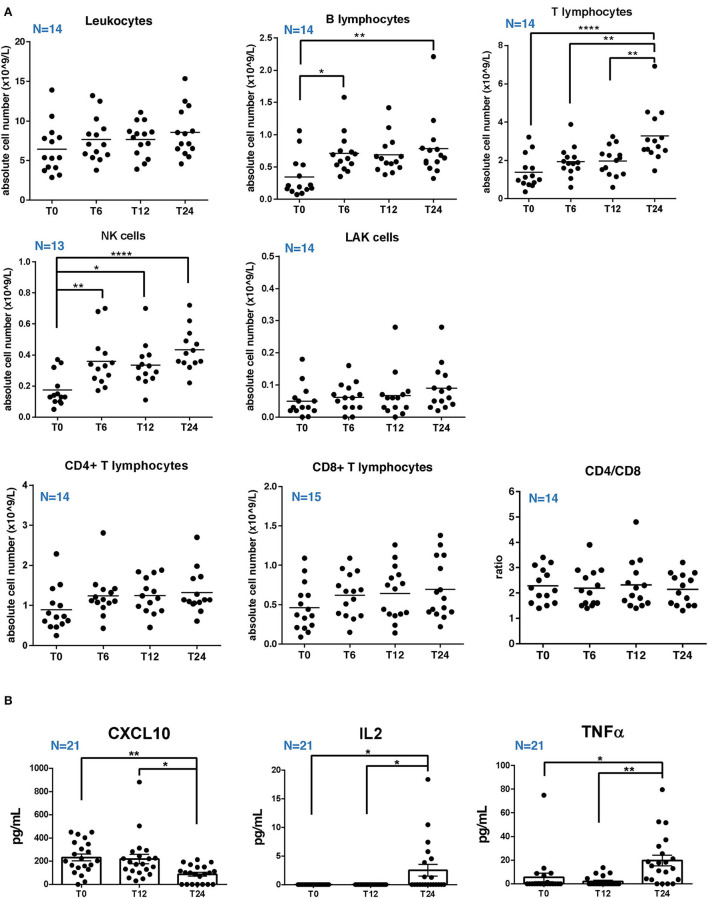
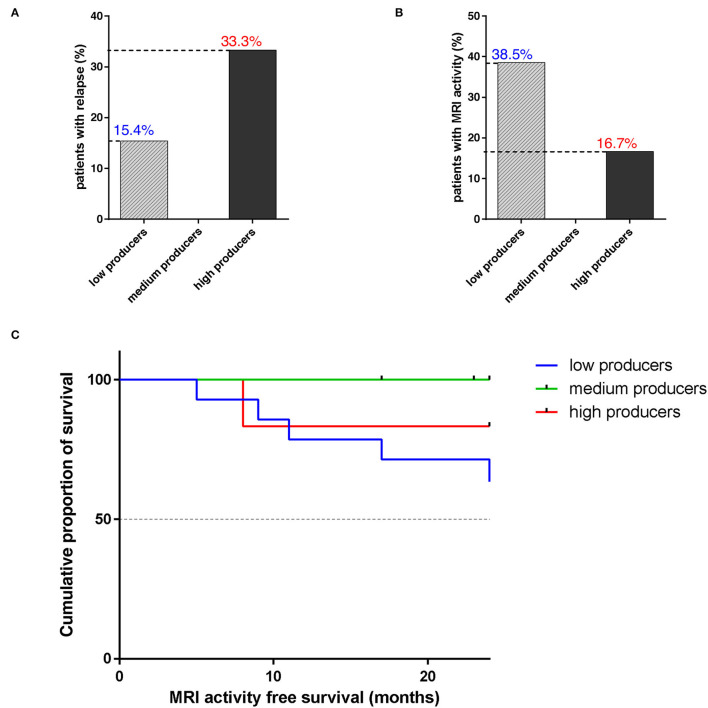
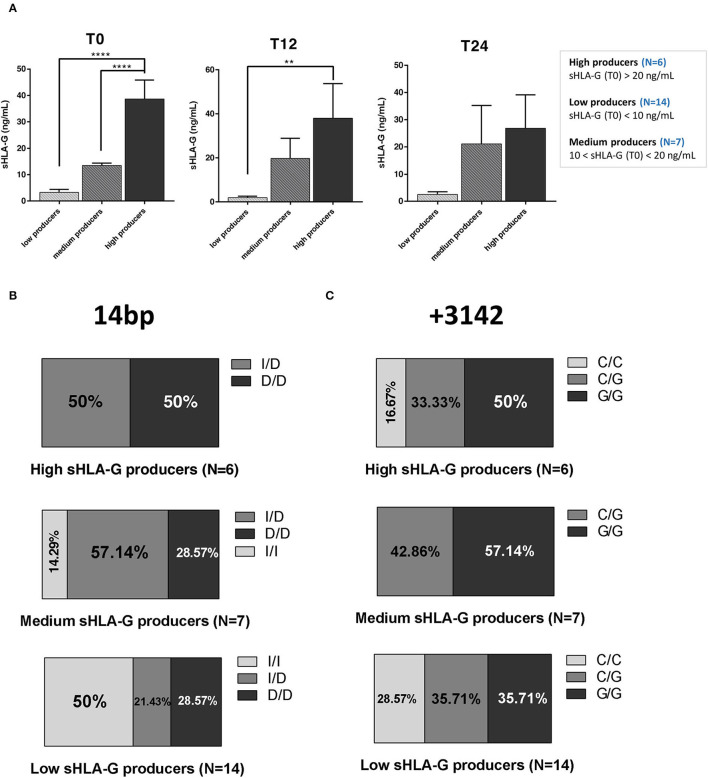
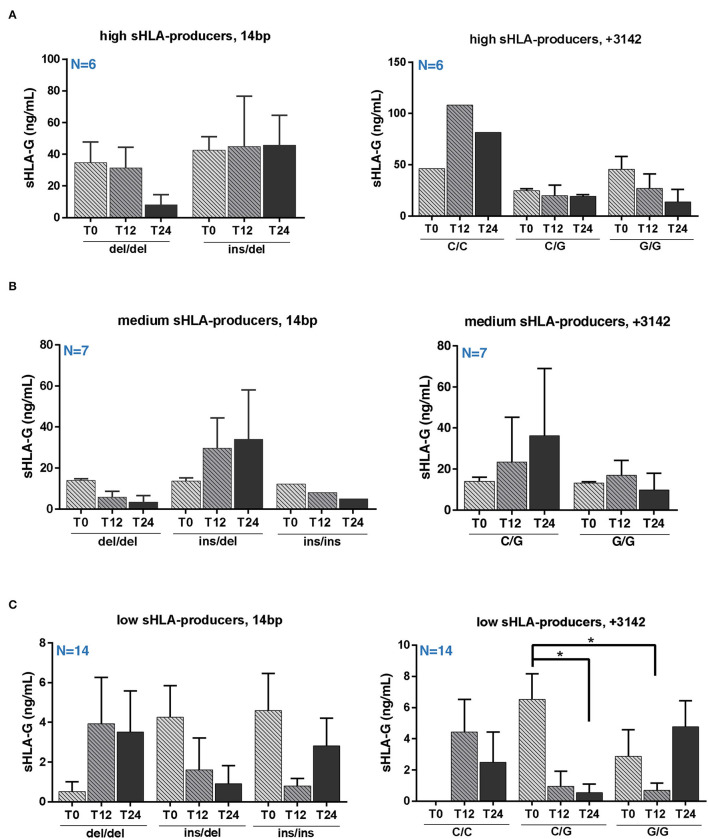
Relapsing-remitting multiple sclerosis (RRMS) is a demyelinating disease in which pathogenesis T cells have a major role. Despite the unknown etiology, several risk factors have been described, including a strong association with human leukocyte antigen (HLA) genes. Recent findings showed that HLA class I-G (HLA-G) may be tolerogenic in MS, but further insights are required. To deepen the HLA-G role in MS inflammation, we measured soluble HLA-G (sHLA-G) and cytokines serum level in 27 patients with RRMS at baseline and after 12 and 24 months of natalizumab (NTZ) treatment. Patients were divided into high (sHLA-G>20 ng/ml), medium (sHLA-G between 10 and 20 ng/ml), and low (sHLA-G <10 ng/ml) producers. Results showed a heterogeneous distribution of genotypes among producers, with no significant differences between groups. A significant decrease of sHLA-G was found after 24 months of NTZ in low producers carrying the +3142 C/G genotype. Finally, 83.3% of high and 100% of medium producers were MRI-activity free after 24 months of treatment, compared to 63.5% of low producers. Of note, we did not find any correlation of sHLA-G with peripheral cell counts or cytokines level. These findings suggest that serum sHLA-G level may partly depend on genotype rather than peripheral inflammation, and that may have impacted on MRI activity of patients over treatment.
复发缓解型多发性硬化症(RRMS)是一种脱髓鞘疾病,其中发病机制中T细胞起主要作用。尽管病因不明,但已描述了几种风险因素,包括与人类白细胞抗原(HLA)基因的强关联。最近的研究结果表明,HLA I类-G(HLA-G)在MS中可能具有免疫耐受性,但仍需要进一步深入研究。为了深入了解HLA-G在MS炎症中的作用,我们测量了27例RRMS患者在基线时以及那他珠单抗(NTZ)治疗12个月和24个月后的可溶性HLA-G(sHLA-G)和细胞因子血清水平。患者被分为高(sHLA-G>20 ng/ml)、中(sHLA-G在10至20 ng/ml之间)和低(sHLA-G<10 ng/ml)产生者。结果显示,产生者之间基因型分布不均一,各组之间无显著差异。在携带+3142 C/G基因型的低产生者中,NTZ治疗24个月后sHLA-G显著降低。最后,治疗24个月后,83.3%的高产生者和100%的中产生者MRI无活动,而低产生者为63.5%。值得注意的是,我们未发现sHLA-G与外周血细胞计数或细胞因子水平之间存在任何相关性。这些发现表明,血清sHLA-G水平可能部分取决于基因型而非外周炎症,并且这可能对治疗期间患者的MRI活动产生影响。