Areerob Yonrapach, Hamontree Chaowalit, Sricharoen Phitchan, Limchoowong Nunticha, Laksee Sakchai, Oh Won-Chun, Pattarith Kongsak
Department of Industrial Engineering, School of Engineering, King Mongkut's Institute of Technology Ladkrabang Bangkok 10520 Thailand.
Department of Premedical Science, Faculty of Medicine, Bangkokthonburi University Thawi Watthana Bangkok 10170 Thailand.
RSC Adv. 2022 May 20;12(24):15427-15434. doi: 10.1039/d2ra01749k. eCollection 2022 May 17.
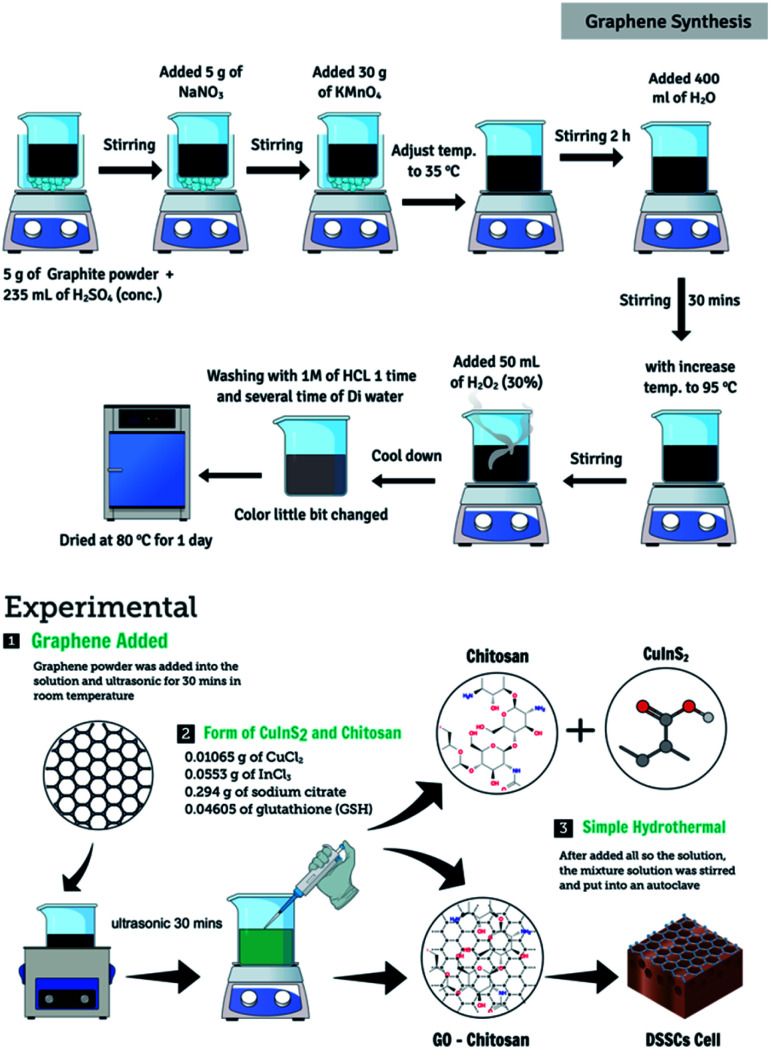
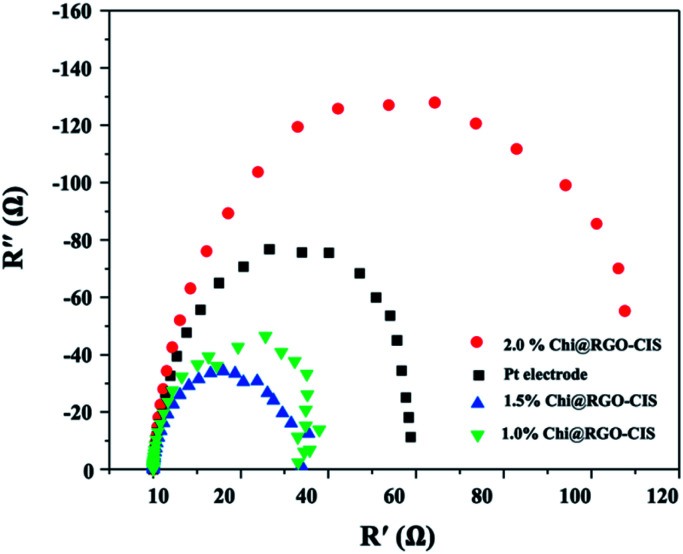
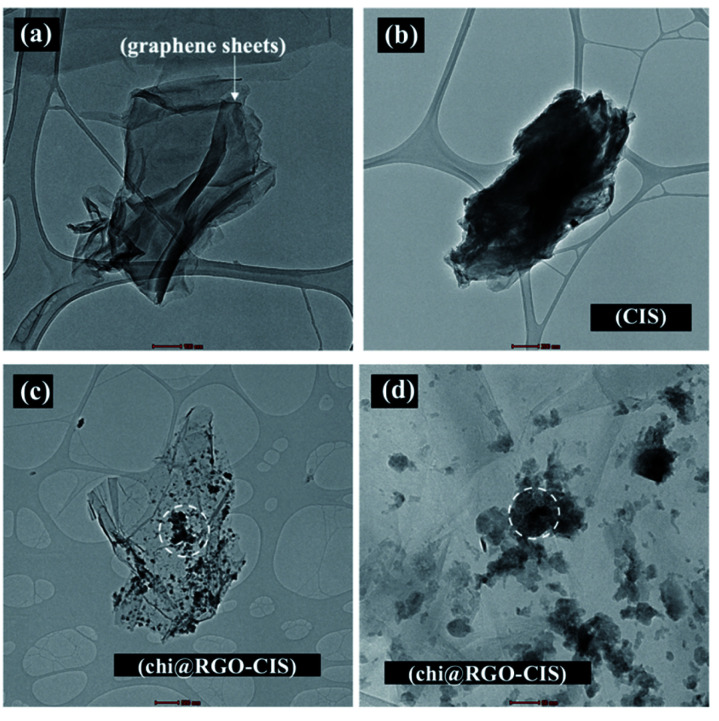
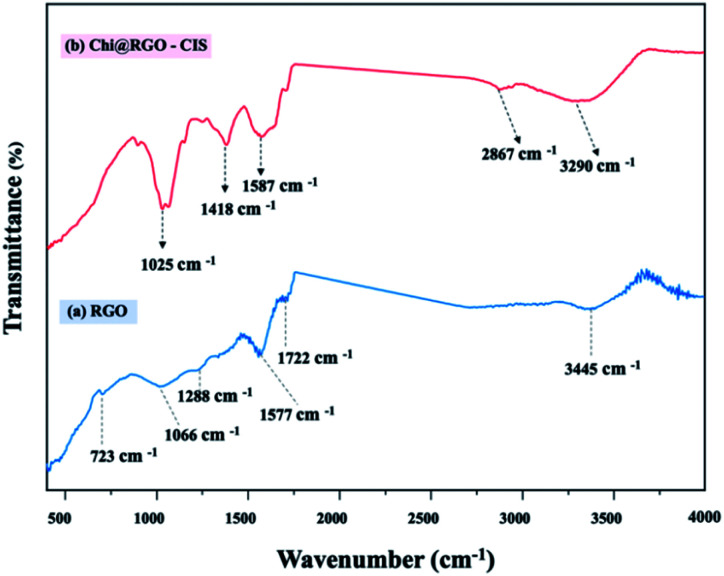
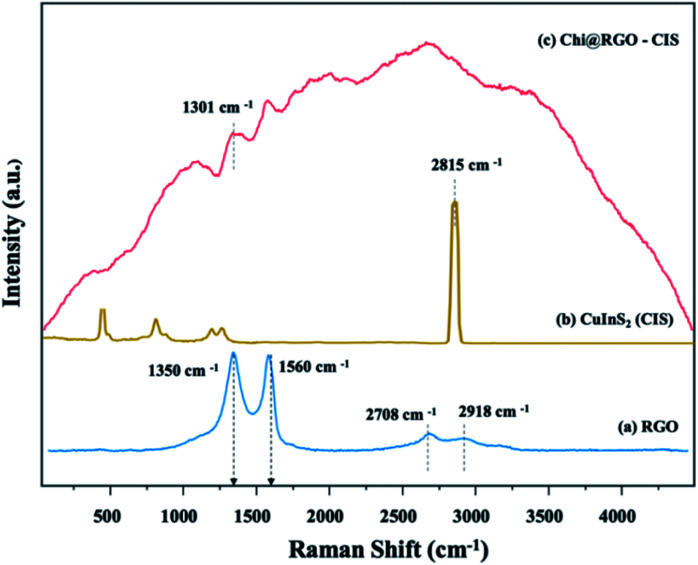
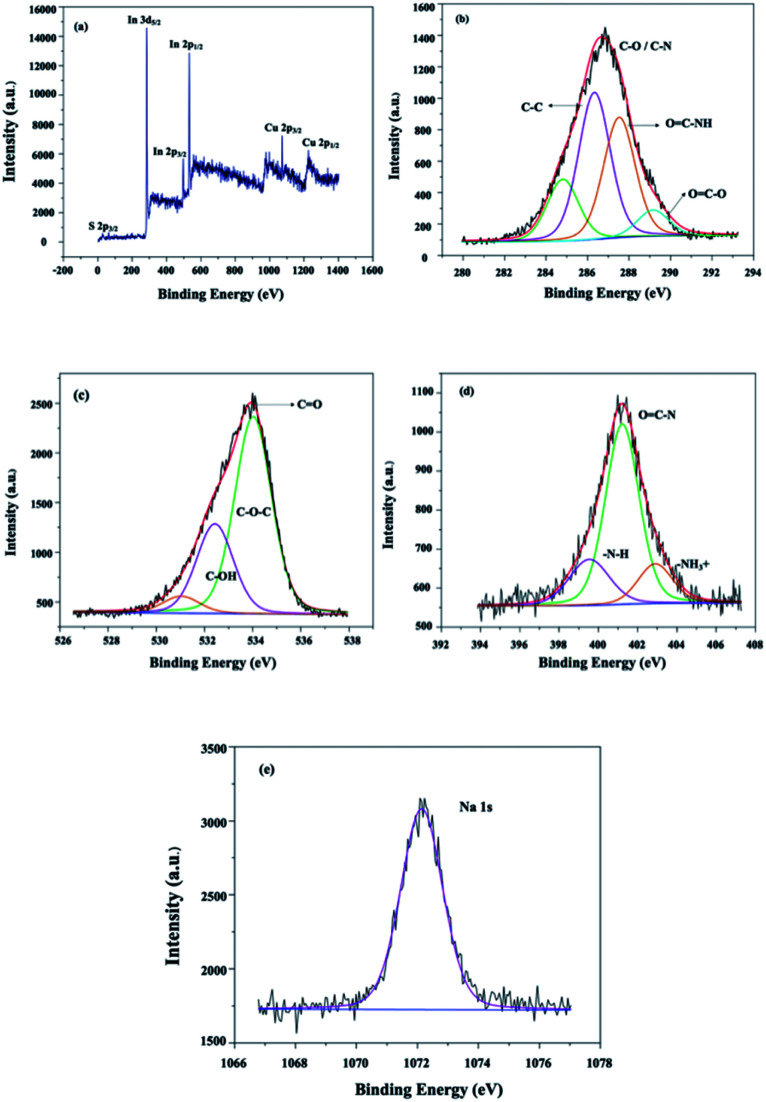
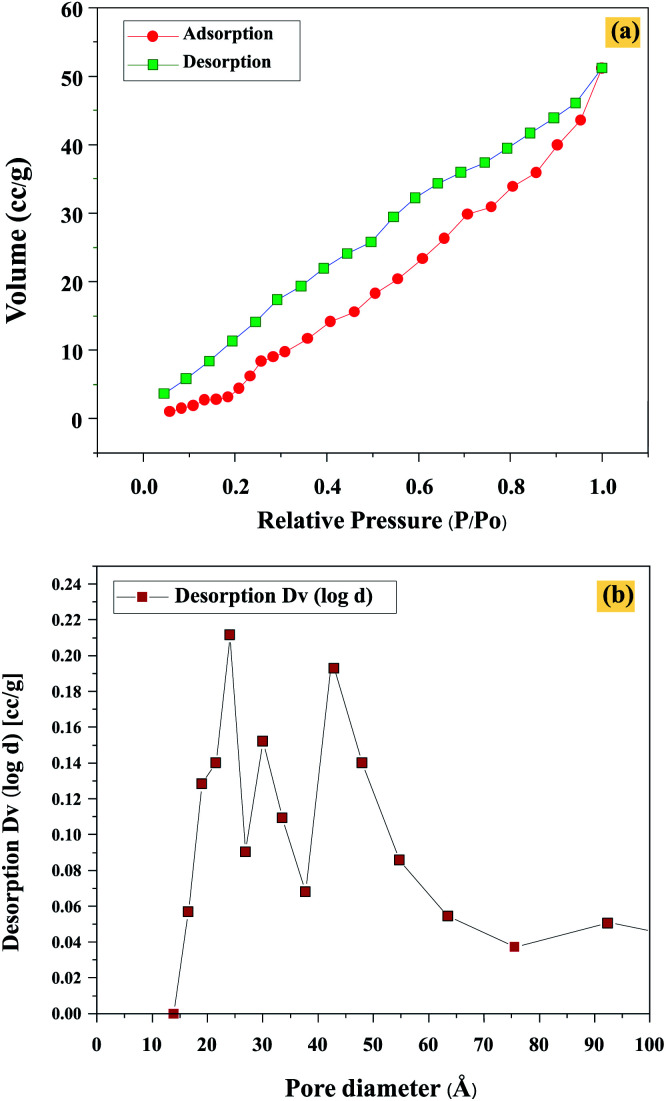
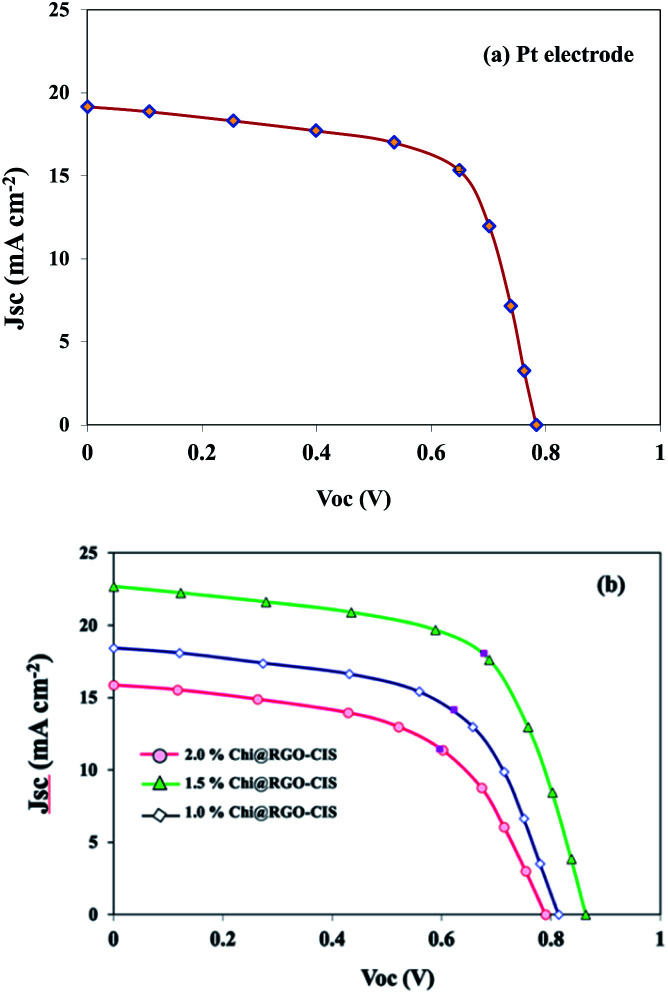
To address the issues associated with traditional counter electrodes, a novel gamma-irradiated chitosan-doped reduced graphene-CuInS composite (Chi@RGO-CIS) was used as the counter electrode (CE). The system was fabricated following a simple hydrothermal method. The prepared Chi@RGO-CIS was characterized by various spectroscopic and microscopic techniques. The synergistic effect between chitosan, CuInS, and reduced graphene oxide can help in producing a large surface area. It can also help in the generation of catalytic sites toward I-/I-redox electrolytes. We used a composite (based on electrical considerations) to study the effect of the amount of graphene on the characteristics and photovoltaic efficiency of the Chi@RGO-CIS composites. The solar cell assembled with 1.5% Chi@RGO-CIS exhibited an efficiency of 12.21%. The efficiency was higher than that of a Pt-based device (9.96%) fabricated under the same conditions. Hence, Chi@RGO-CIS can be potentially used as the CE of dye-sensitized solar cells (DSSCs). It can be used as a substitute for Pt in DSSCs.
为了解决与传统对电极相关的问题,一种新型的经γ辐照的壳聚糖掺杂还原氧化石墨烯-CuInS复合材料(Chi@RGO-CIS)被用作对电极(CE)。该体系采用简单的水热法制备。制备的Chi@RGO-CIS通过各种光谱和显微镜技术进行表征。壳聚糖、CuInS和还原氧化石墨烯之间的协同效应有助于产生大的表面积。它还有助于生成针对I⁻/I⁻氧化还原电解质的催化位点。我们使用一种复合材料(基于电学考虑)来研究石墨烯用量对Chi@RGO-CIS复合材料的特性和光伏效率的影响。组装有1.5% Chi@RGO-CIS的太阳能电池表现出12.21%的效率。该效率高于在相同条件下制备的基于Pt的器件(9.96%)。因此,Chi@RGO-CIS有潜力用作染料敏化太阳能电池(DSSC)的对电极。它可以在DSSC中用作Pt的替代品。