Wang Huajie, Ouyang Wen, Yu Yaya, Wang Jinjin, Yuan Haibo, Hua Jinjie, Jiang Yongwen
Tea Research Institute, Chinese Academy of Agricultural Sciences, 9 Meiling South Road, Hangzhou, Zhejiang 310008, PR China.
Institute of Tea Science, Zhejiang University, Hangzhou 310058, PR China.
Food Chem X. 2022 Jun 3;14:100354. doi: 10.1016/j.fochx.2022.100354. eCollection 2022 Jun 30.
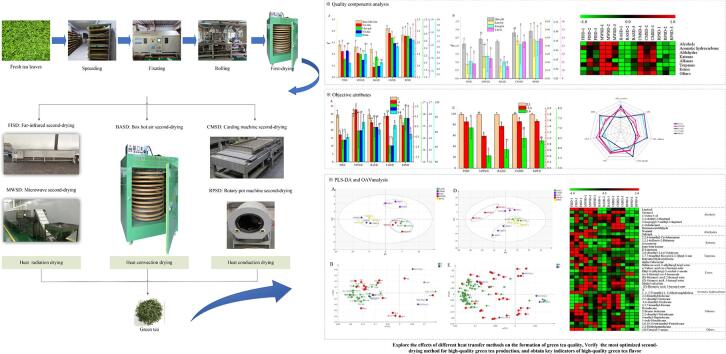
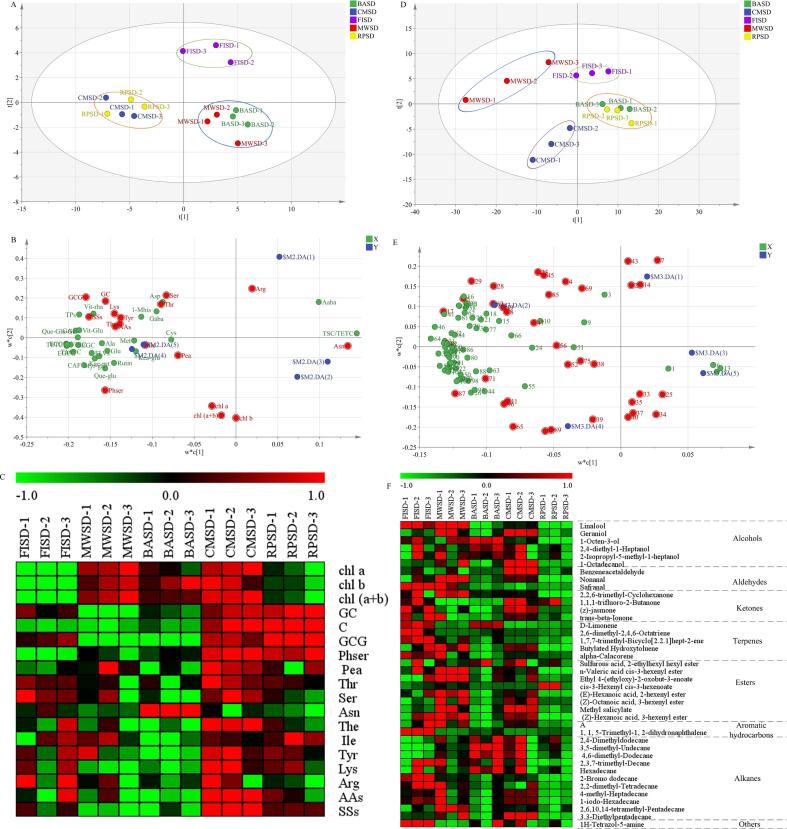
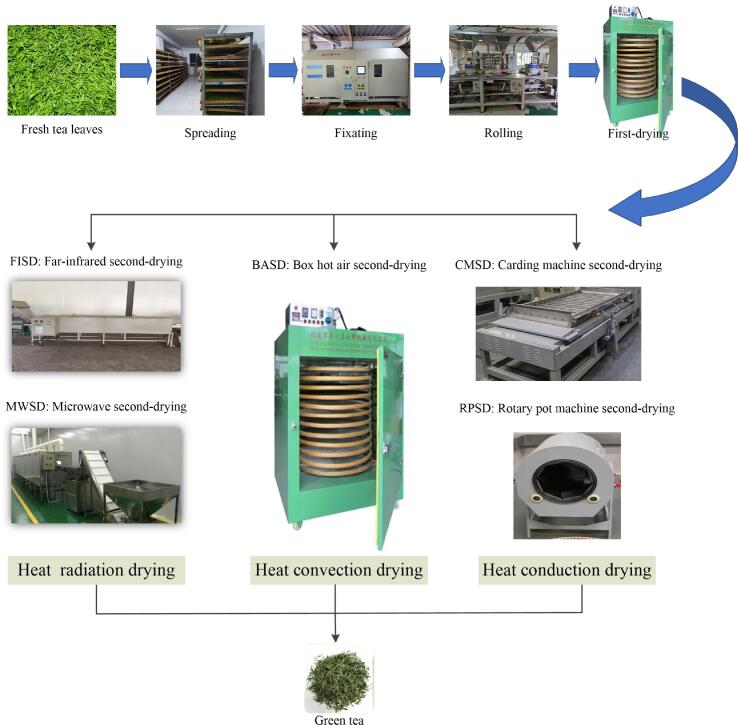
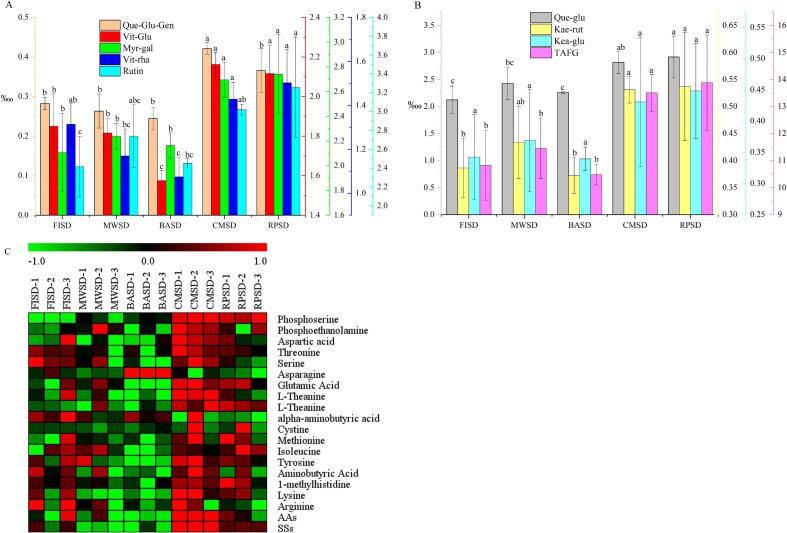
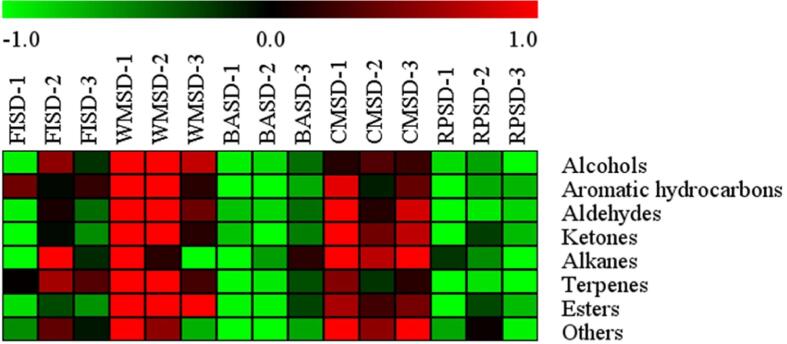
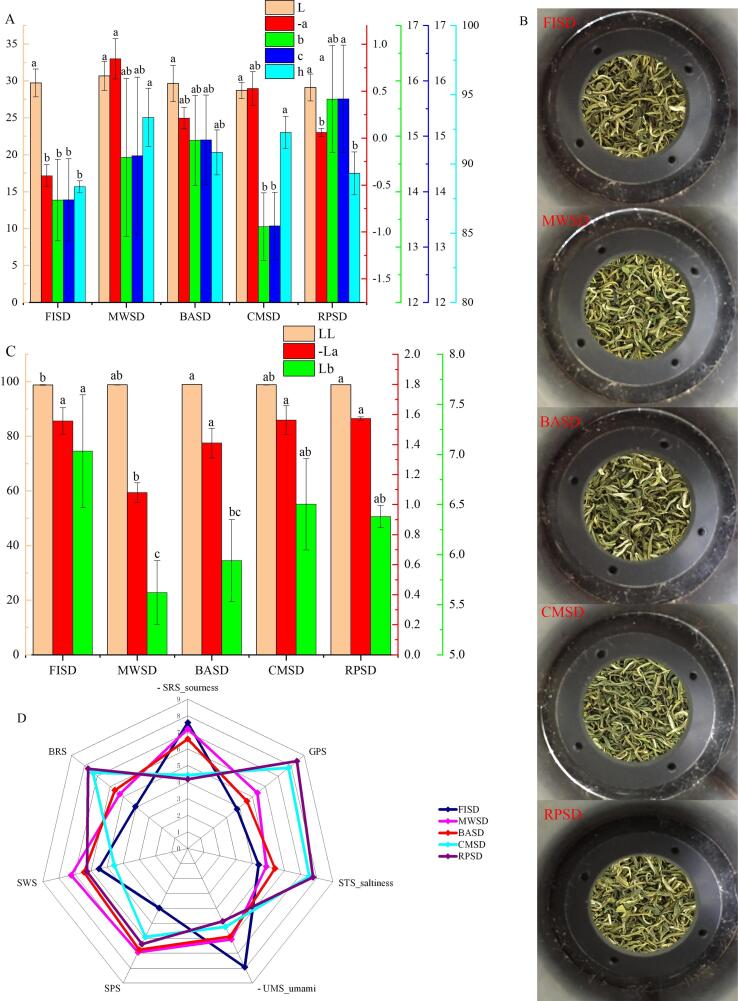
Second-drying is a key process of green tea manufacturing, however, hitherto the effect of second-drying methods on green tea quality has not been assessed. In this study, we compared the effect of three heat transfer drying methods (heat radiation, heat convection, and heat conduction) on green tea quality. Gas chromatography-tandem dual mass spectrometry was used to detect volatile compounds, while absolute quantitative methods were used to detect the non-volatile ones. We identified 45 non-volatile metabolites, 101 volatile metabolites, and 15 objective flavor indicators. Seventeen differential non-volatiles and 8 differential volatiles were screened. Microwave second-drying in heat radiation was the optimal method for green tea flavor, as it can promote the retention of chlorophyll, the degradation of flavonoid glycosides, and the enrichment of amino acids, soluble sugars, nonanal, -β-ionone, linalool, and jasmone. The results provide a theoretical basis and technical guidance for the precise and directional processing of high-quality green tea.
二次干燥是绿茶制作的关键工序,然而,迄今为止,二次干燥方法对绿茶品质的影响尚未得到评估。在本研究中,我们比较了三种热传递干燥方法(热辐射、热对流和热传导)对绿茶品质的影响。采用气相色谱 - 串联双质谱法检测挥发性化合物,同时采用绝对定量法检测非挥发性化合物。我们鉴定出45种非挥发性代谢物、101种挥发性代谢物和15种目标风味指标。筛选出17种差异非挥发性化合物和8种差异挥发性化合物。热辐射中的微波二次干燥是绿茶风味的最佳方法,因为它可以促进叶绿素的保留、黄酮糖苷的降解以及氨基酸、可溶性糖、壬醛、β-紫罗兰酮、芳樟醇和茉莉酮的富集。研究结果为高品质绿茶的精准定向加工提供了理论依据和技术指导。