Yakhnitsa Vadim, Ji Guangchen, Hein Matthew, Presto Peyton, Griffin Zack, Ponomareva Olga, Navratilova Edita, Porreca Frank, Neugebauer Volker
Department of Pharmacology and Neuroscience, Texas Tech University Health Sciences Center, Lubbock, TX, United States.
Center of Excellence for Translational Neuroscience and Therapeutics, Texas Tech University Health Sciences Center, Lubbock, TX, United States.
Front Pharmacol. 2022 May 25;13:903978. doi: 10.3389/fphar.2022.903978. eCollection 2022.
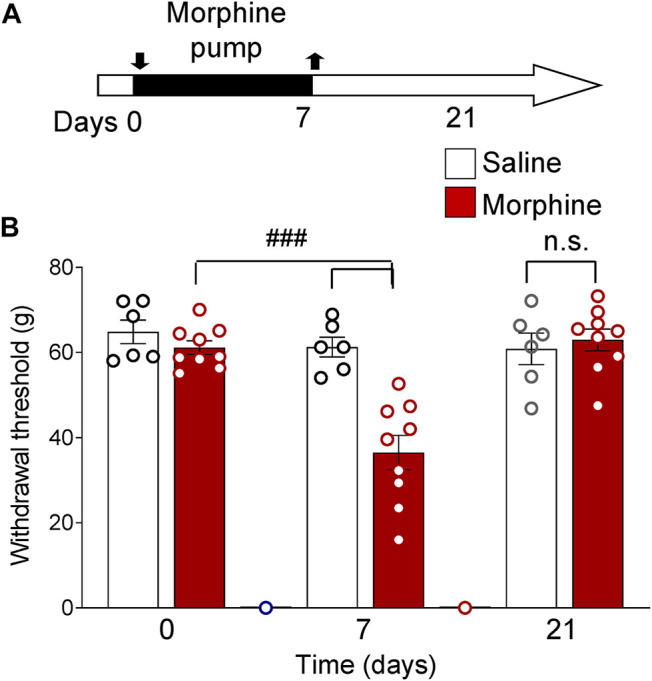
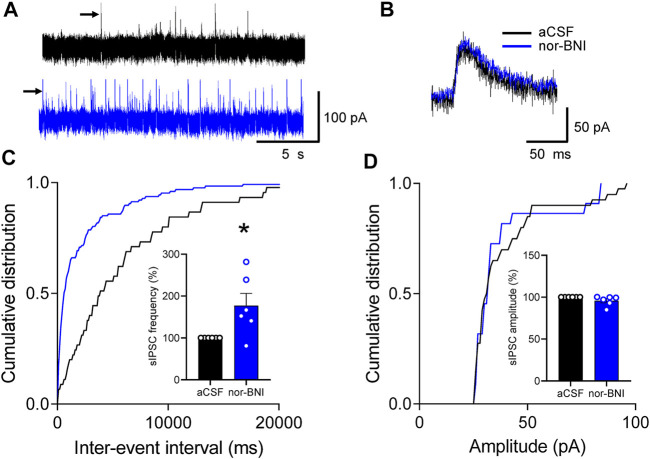
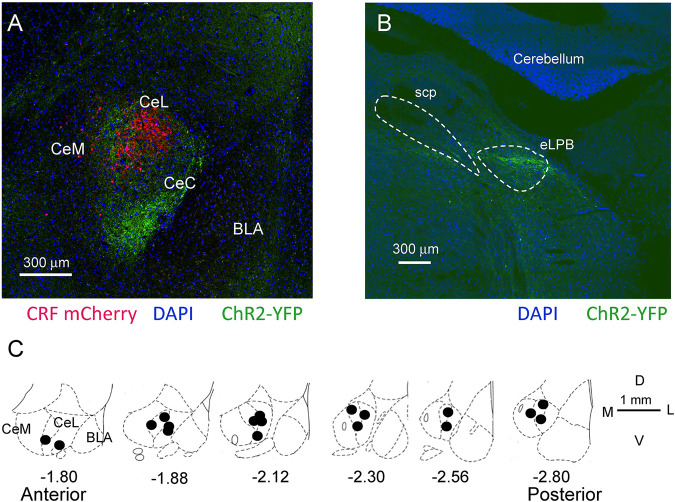
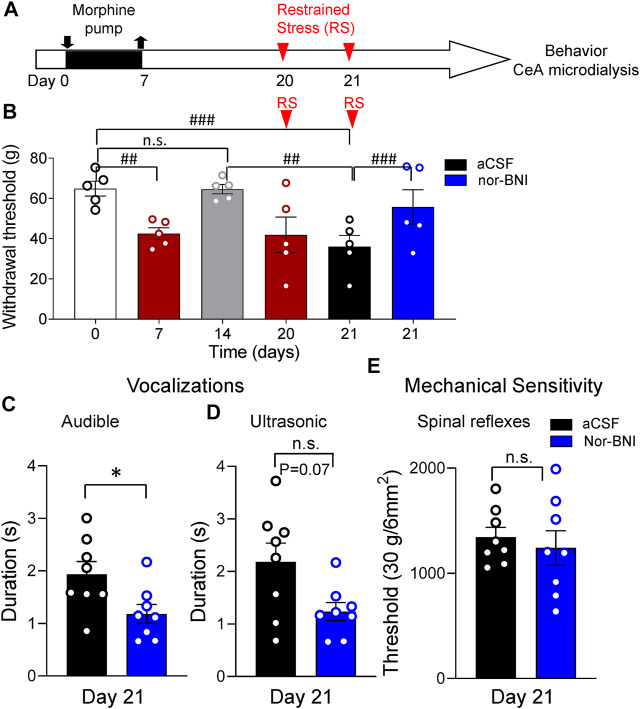
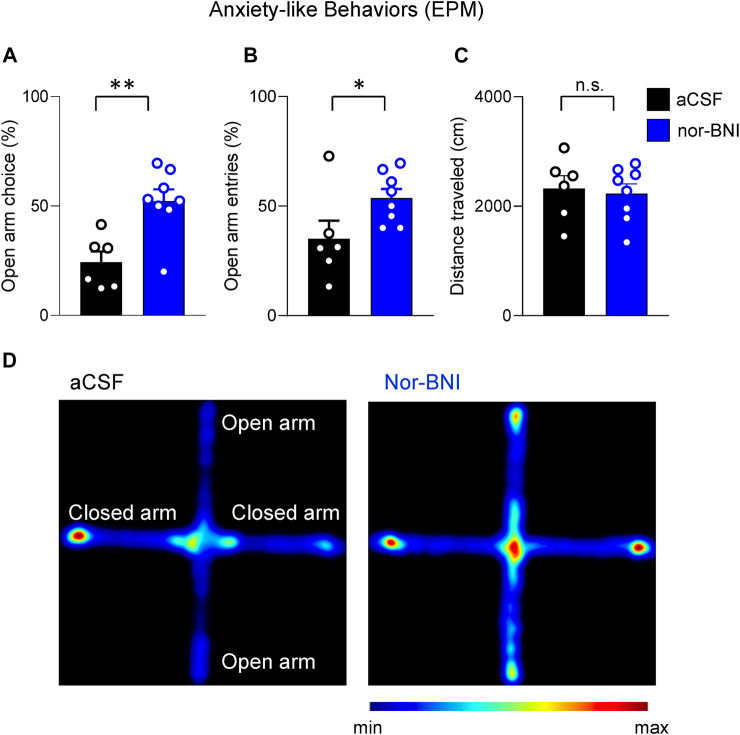
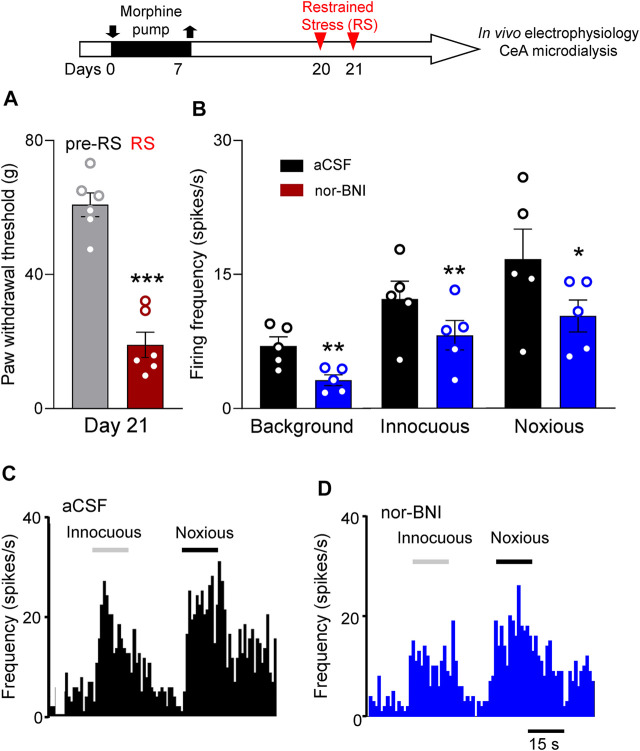
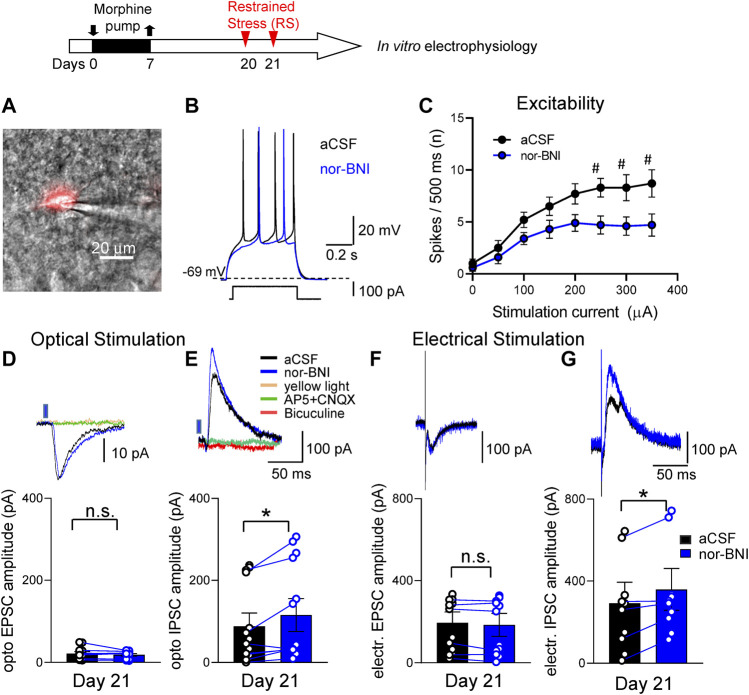
Functional pain syndromes (FPS) occur in the absence of identifiable tissue injury or noxious events and include conditions such as migraine, fibromyalgia, and others. Stressors are very common triggers of pain attacks in various FPS conditions. It has been recently demonstrated that kappa opioid receptors (KOR) in the central nucleus of amygdala (CeA) contribute to FPS conditions, but underlying mechanisms remain unclear. The CeA is rich in KOR and encompasses major output pathways involving extra-amygdalar projections of corticotropin releasing factor (CRF) expressing neurons. Here we tested the hypothesis that KOR blockade in the CeA in a rat model of FPS reduces pain-like and nocifensive behaviors by restoring inhibition of CeA-CRF neurons. Intra-CeA administration of a KOR antagonist (nor-BNI) decreased mechanical hypersensitivity and affective and anxiety-like behaviors in a stress-induced FPS model. In systems electrophysiology experiments in anesthetized rats, intra-CeA application of nor-BNI reduced spontaneous firing and responsiveness of CeA neurons to peripheral stimulation. In brain slice whole-cell patch-clamp recordings, nor-BNI increased feedforward inhibitory transmission evoked by optogenetic and electrical stimulation of parabrachial afferents, but had no effect on monosynaptic excitatory transmission. Nor-BNI decreased frequency, but not amplitude, of spontaneous inhibitory synaptic currents, suggesting a presynaptic action. Blocking KOR receptors in stress-induced FPS conditions may therefore represent a novel therapeutic strategy.
功能性疼痛综合征(FPS)在无明显组织损伤或有害事件的情况下发生,包括偏头痛、纤维肌痛等病症。应激源是各种FPS病症中疼痛发作的常见触发因素。最近有研究表明,杏仁核中央核(CeA)中的κ阿片受体(KOR)与FPS病症有关,但其潜在机制仍不清楚。CeA富含KOR,并包含涉及表达促肾上腺皮质激素释放因子(CRF)的神经元的杏仁核外投射的主要输出通路。在此,我们测试了一个假设,即在FPS大鼠模型中,阻断CeA中的KOR可通过恢复对CeA-CRF神经元的抑制来减轻疼痛样和伤害防御行为。在应激诱导的FPS模型中,向CeA内注射KOR拮抗剂(nor-BNI)可降低机械性超敏反应以及情感和焦虑样行为。在麻醉大鼠的系统电生理实验中,向CeA内应用nor-BNI可降低CeA神经元的自发放电和对周围刺激的反应性。在脑片全细胞膜片钳记录中,nor-BNI增加了臂旁传入神经的光遗传学和电刺激诱发的前馈抑制性传递,但对单突触兴奋性传递没有影响。Nor-BNI降低了自发性抑制性突触电流的频率,但不影响其幅度,表明其作用于突触前。因此,在应激诱导的FPS病症中阻断KOR受体可能代表一种新的治疗策略。