• 文献检索
  • 文档翻译
  • 深度研究
  • 学术资讯
  • Suppr Zotero 插件Zotero 插件
  • 邀请有礼
  • 套餐&价格
  • 历史记录
应用&插件
Suppr Zotero 插件Zotero 插件浏览器插件Mac 客户端Windows 客户端微信小程序
定价
高级版会员购买积分包购买API积分包
服务
文献检索文档翻译深度研究API 文档MCP 服务
关于我们
关于 Suppr公司介绍联系我们用户协议隐私条款
关注我们

Suppr 超能文献

核心技术专利:CN118964589B侵权必究
粤ICP备2023148730 号-1Suppr @ 2026

文献检索

告别复杂PubMed语法,用中文像聊天一样搜索,搜遍4000万医学文献。AI智能推荐,让科研检索更轻松。

立即免费搜索

文件翻译

保留排版,准确专业,支持PDF/Word/PPT等文件格式,支持 12+语言互译。

免费翻译文档

深度研究

AI帮你快速写综述,25分钟生成高质量综述,智能提取关键信息,辅助科研写作。

立即免费体验

基于物联网的智能辅助系统,用于在疫情期间监测娱乐场所的 occupancy(此处可能有误,推测为“人员 occupancy”,可译为“人员数量”)及新冠病毒筛查。

IoT Based Smart Assist System to Monitor Entertainment Spots Occupancy and COVID 19 Screening During the Pandemic.

作者信息

Narayanan K Lakshmi, Krishnan R Santhana, Robinson Y Harold

机构信息

Department of Electronics and Communication Engineering, Francis Xavier Engineering College, Tirunelveli, Tamilnadu India.

Department of Electronics and Communication Engineering, SCAD College of Engineering and Technology, Tirunelveli, Tamilnadu India.

出版信息

Wirel Pers Commun. 2022;126(1):839-858. doi: 10.1007/s11277-022-09772-1. Epub 2022 Jun 8.

DOI:10.1007/s11277-022-09772-1
PMID:35694532
原文链接:https://pmc.ncbi.nlm.nih.gov/articles/PMC9174623/
Abstract

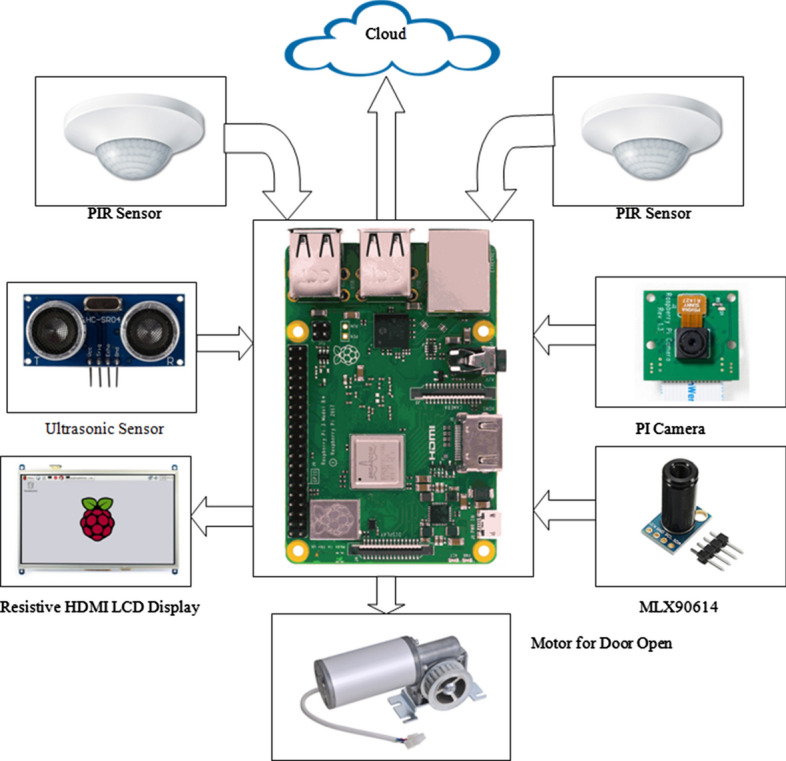
The greatest threat to the word in recent days is the spread of COVID 19 virus throughout the world. To tackle this problem government of India has implemented various restrictions to be followed to stop the spread of the COVID 19 virus. But most of the time general public forget their responsibilities and don't follow these restrictions, especially in situations like when their favourite hero's movie releases in the theatre, and in spending time in hotels, malls and in other entertainment places in spite of governments occupancy restrictions in those places. In order to address this problem we propose an IoT based Smart System for monitoring the occupancy in such entertainment spots and screen the public entry if they dint follow the protocols such as if they dint wear mask or if they have body temperature. This proposed system is implemented on a Raspberry Pi 3B+ processor which runs on a Broadcom processor. For monitoring the occupancy and screen the visitors for mask, we use a Passive Infrared Sensors and Pi camera to count the person entering into the premises. And we use a MLX90614 Infrared temperature sensor for screening the public entry with high temperature. The complete system is implemented using python programming and the details will be uploaded to cloud, authorities can monitor this from a remote place so that the spread of COVID 19 can be restricted in pubic entertainment spots.

摘要

近期,世界面临的最大威胁是新冠病毒在全球的传播。为应对这一问题,印度政府实施了各种限制措施以阻止新冠病毒的传播。但大多数时候,普通民众忘记了自己的责任,不遵守这些限制,尤其是在他们最喜欢的英雄主演的电影在影院上映时,以及不顾政府对酒店、商场和其他娱乐场所的入住限制,仍在这些地方消费娱乐。为了解决这个问题,我们提出了一种基于物联网的智能系统,用于监测此类娱乐场所的 occupancy(此处原文有误,推测为“occupancy”,意为“ occupancy(此处原文有误,推测为“occupancy”,意为“占用情况”),并在公众不遵守诸如不戴口罩或体温异常等规定时,对其进入进行筛查。该提议系统在运行于博通处理器的树莓派3B + 处理器上实现。为了监测占用情况并对访客进行口罩筛查,我们使用被动红外传感器和树莓派摄像头来统计进入场所的人数。并且我们使用MLX90614红外温度传感器来筛查体温过高的公众进入。整个系统使用Python编程实现,细节将上传至云端,当局可以从远程位置进行监控,以便在公共娱乐场所限制新冠病毒的传播。
https://cdn.ncbi.nlm.nih.gov/pmc/blobs/f3b0/9174623/e65368708176/11277_2022_9772_Fig17_HTML.jpg
https://cdn.ncbi.nlm.nih.gov/pmc/blobs/f3b0/9174623/1d0999f2c4f2/11277_2022_9772_Fig1_HTML.jpg
https://cdn.ncbi.nlm.nih.gov/pmc/blobs/f3b0/9174623/6677c5203b72/11277_2022_9772_Fig2_HTML.jpg
https://cdn.ncbi.nlm.nih.gov/pmc/blobs/f3b0/9174623/9fd1eee8b302/11277_2022_9772_Fig3_HTML.jpg
https://cdn.ncbi.nlm.nih.gov/pmc/blobs/f3b0/9174623/8571ba35a8cd/11277_2022_9772_Fig4_HTML.jpg
https://cdn.ncbi.nlm.nih.gov/pmc/blobs/f3b0/9174623/2f67393bb420/11277_2022_9772_Fig5_HTML.jpg
https://cdn.ncbi.nlm.nih.gov/pmc/blobs/f3b0/9174623/3d146642e164/11277_2022_9772_Fig6_HTML.jpg
https://cdn.ncbi.nlm.nih.gov/pmc/blobs/f3b0/9174623/d5a0a792c188/11277_2022_9772_Fig7_HTML.jpg
https://cdn.ncbi.nlm.nih.gov/pmc/blobs/f3b0/9174623/2ad770122597/11277_2022_9772_Fig8_HTML.jpg
https://cdn.ncbi.nlm.nih.gov/pmc/blobs/f3b0/9174623/bcb36e7d4341/11277_2022_9772_Fig9_HTML.jpg
https://cdn.ncbi.nlm.nih.gov/pmc/blobs/f3b0/9174623/595e7b38509b/11277_2022_9772_Fig10_HTML.jpg
https://cdn.ncbi.nlm.nih.gov/pmc/blobs/f3b0/9174623/22b2e45ea38d/11277_2022_9772_Fig11_HTML.jpg
https://cdn.ncbi.nlm.nih.gov/pmc/blobs/f3b0/9174623/9f5cd2468d2e/11277_2022_9772_Fig12_HTML.jpg
https://cdn.ncbi.nlm.nih.gov/pmc/blobs/f3b0/9174623/6d822ec79685/11277_2022_9772_Fig13_HTML.jpg
https://cdn.ncbi.nlm.nih.gov/pmc/blobs/f3b0/9174623/832fec8f37ea/11277_2022_9772_Fig14_HTML.jpg
https://cdn.ncbi.nlm.nih.gov/pmc/blobs/f3b0/9174623/fee9d80c509e/11277_2022_9772_Fig15_HTML.jpg
https://cdn.ncbi.nlm.nih.gov/pmc/blobs/f3b0/9174623/90efaf4456e9/11277_2022_9772_Fig16_HTML.jpg
https://cdn.ncbi.nlm.nih.gov/pmc/blobs/f3b0/9174623/e65368708176/11277_2022_9772_Fig17_HTML.jpg
https://cdn.ncbi.nlm.nih.gov/pmc/blobs/f3b0/9174623/1d0999f2c4f2/11277_2022_9772_Fig1_HTML.jpg
https://cdn.ncbi.nlm.nih.gov/pmc/blobs/f3b0/9174623/6677c5203b72/11277_2022_9772_Fig2_HTML.jpg
https://cdn.ncbi.nlm.nih.gov/pmc/blobs/f3b0/9174623/9fd1eee8b302/11277_2022_9772_Fig3_HTML.jpg
https://cdn.ncbi.nlm.nih.gov/pmc/blobs/f3b0/9174623/8571ba35a8cd/11277_2022_9772_Fig4_HTML.jpg
https://cdn.ncbi.nlm.nih.gov/pmc/blobs/f3b0/9174623/2f67393bb420/11277_2022_9772_Fig5_HTML.jpg
https://cdn.ncbi.nlm.nih.gov/pmc/blobs/f3b0/9174623/3d146642e164/11277_2022_9772_Fig6_HTML.jpg
https://cdn.ncbi.nlm.nih.gov/pmc/blobs/f3b0/9174623/d5a0a792c188/11277_2022_9772_Fig7_HTML.jpg
https://cdn.ncbi.nlm.nih.gov/pmc/blobs/f3b0/9174623/2ad770122597/11277_2022_9772_Fig8_HTML.jpg
https://cdn.ncbi.nlm.nih.gov/pmc/blobs/f3b0/9174623/bcb36e7d4341/11277_2022_9772_Fig9_HTML.jpg
https://cdn.ncbi.nlm.nih.gov/pmc/blobs/f3b0/9174623/595e7b38509b/11277_2022_9772_Fig10_HTML.jpg
https://cdn.ncbi.nlm.nih.gov/pmc/blobs/f3b0/9174623/22b2e45ea38d/11277_2022_9772_Fig11_HTML.jpg
https://cdn.ncbi.nlm.nih.gov/pmc/blobs/f3b0/9174623/9f5cd2468d2e/11277_2022_9772_Fig12_HTML.jpg
https://cdn.ncbi.nlm.nih.gov/pmc/blobs/f3b0/9174623/6d822ec79685/11277_2022_9772_Fig13_HTML.jpg
https://cdn.ncbi.nlm.nih.gov/pmc/blobs/f3b0/9174623/832fec8f37ea/11277_2022_9772_Fig14_HTML.jpg
https://cdn.ncbi.nlm.nih.gov/pmc/blobs/f3b0/9174623/fee9d80c509e/11277_2022_9772_Fig15_HTML.jpg
https://cdn.ncbi.nlm.nih.gov/pmc/blobs/f3b0/9174623/90efaf4456e9/11277_2022_9772_Fig16_HTML.jpg
https://cdn.ncbi.nlm.nih.gov/pmc/blobs/f3b0/9174623/e65368708176/11277_2022_9772_Fig17_HTML.jpg

相似文献

1
IoT Based Smart Assist System to Monitor Entertainment Spots Occupancy and COVID 19 Screening During the Pandemic.基于物联网的智能辅助系统,用于在疫情期间监测娱乐场所的 occupancy(此处可能有误,推测为“人员 occupancy”,可译为“人员数量”)及新冠病毒筛查。
Wirel Pers Commun. 2022;126(1):839-858. doi: 10.1007/s11277-022-09772-1. Epub 2022 Jun 8.
2
IoT-Based Smart Mask Protection against the Waves of COVID-19.基于物联网的智能口罩对新冠疫情浪潮的防护作用
J Ambient Intell Humaniz Comput. 2022 Sep 12:1-12. doi: 10.1007/s12652-022-04395-7.
3
An Improved IoT-Based System for Detecting the Number of People and Their Distribution in a Classroom.基于物联网的改进型系统,用于检测教室内的人数及其分布。
Sensors (Basel). 2022 Oct 18;22(20):7912. doi: 10.3390/s22207912.
4
IoT-Based Smart Health Monitoring System for COVID-19.基于物联网的新冠肺炎智能健康监测系统
SN Comput Sci. 2022;3(2):137. doi: 10.1007/s42979-022-01015-1. Epub 2022 Jan 20.
5
Design and Implementation of Cloud-Centric Configuration Repository for DIY IoT Applications.面向DIY物联网应用的以云为中心的配置存储库的设计与实现。
Sensors (Basel). 2018 Feb 6;18(2):474. doi: 10.3390/s18020474.
6
Contactless Body Temperature Monitoring of In-Patient Department (IPD) Using 2.4 GHz Microwave Frequency via the Internet of Things (IoT) Network.基于物联网(IoT)网络,利用2.4GHz微波频段对住院部进行非接触式体温监测。
Wirel Pers Commun. 2022;124(3):1961-1976. doi: 10.1007/s11277-021-09438-4. Epub 2021 Nov 29.
7
Intelligent IoT (IIoT) Device to Identifying Suspected COVID-19 Infections Using Sensor Fusion Algorithm and Real-Time Mask Detection Based on the Enhanced MobileNetV2 Model.基于增强型MobileNetV2模型,利用传感器融合算法和实时口罩检测的智能物联网(IIoT)设备识别疑似COVID-19感染情况。
Healthcare (Basel). 2022 Feb 28;10(3):454. doi: 10.3390/healthcare10030454.
8
IoT-Enabled smart mask to detect COVID19 outbreak.用于检测新冠疫情爆发的物联网智能口罩。
Health Technol (Berl). 2022;12(5):1025-1036. doi: 10.1007/s12553-022-00695-2. Epub 2022 Aug 19.
9
Fuzzy Guided Autonomous Nursing Robot through Wireless Beacon Network.基于无线信标网络的模糊引导自主护理机器人。
Multimed Tools Appl. 2022;81(3):3297-3325. doi: 10.1007/s11042-021-11264-6. Epub 2021 Jul 29.
10
Remote diagnostic and detection of coronavirus disease (COVID-19) system based on intelligent healthcare and internet of things.基于智能医疗和物联网的冠状病毒病(COVID-19)远程诊断与检测系统
Results Phys. 2021 Mar;22:103910. doi: 10.1016/j.rinp.2021.103910. Epub 2021 Feb 12.