Department of Immunology, School of Basic Medical Sciences, Shanghai Medical College of Fudan Universitygrid.11841.3d, and Liver Cancer Institute, Zhongshan Hospital, Fudan University, Shanghai, People's Republic of China.
Department of Digestive Diseases, Huashan Hospital, Fudan University, Shanghai, People's Republic of China.
J Virol. 2022 Jul 13;96(13):e0054622. doi: 10.1128/jvi.00546-22. Epub 2022 Jun 13.
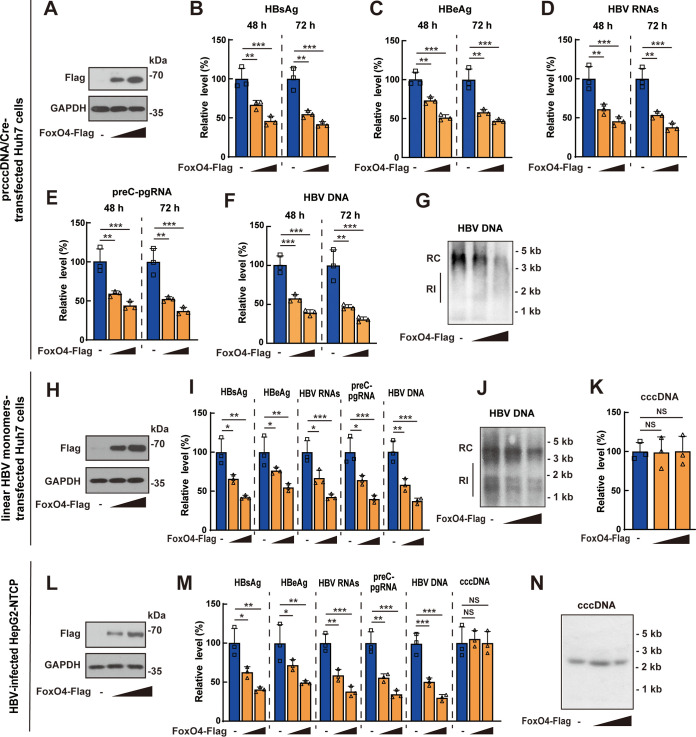
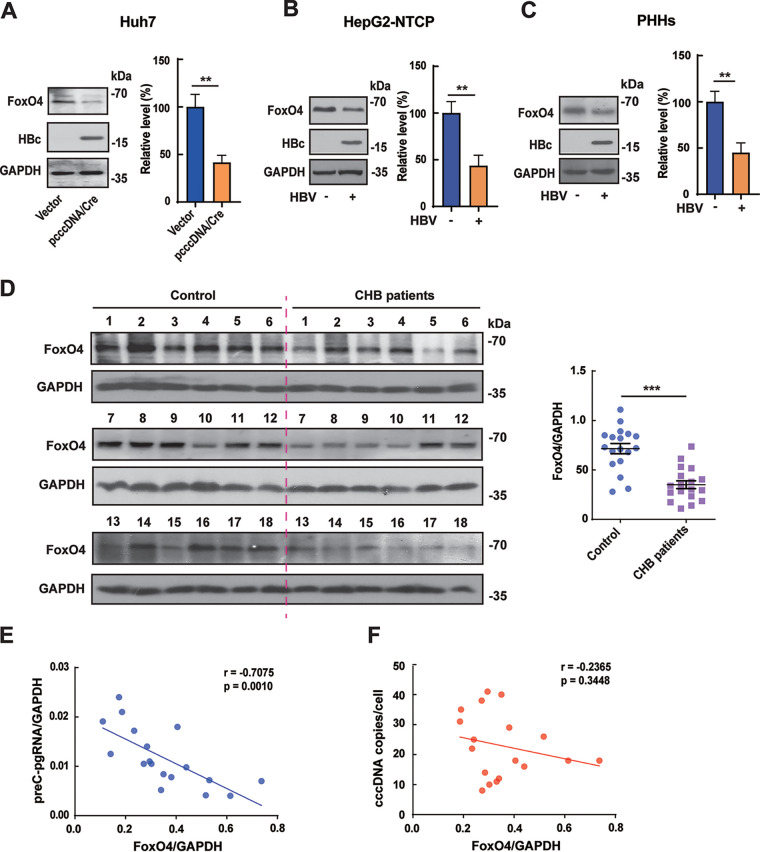
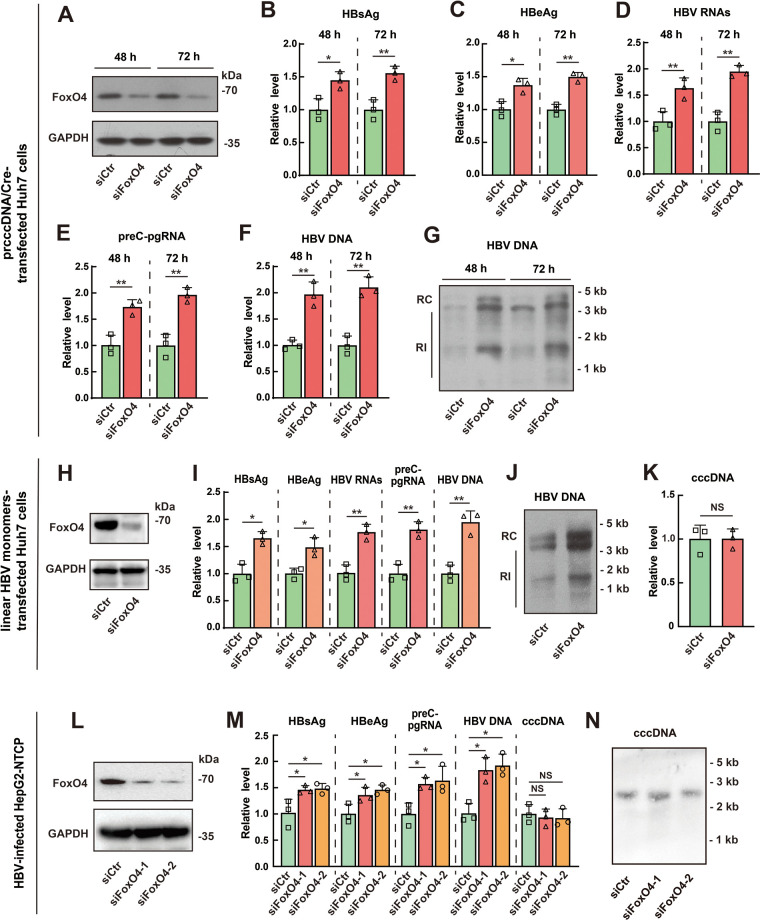
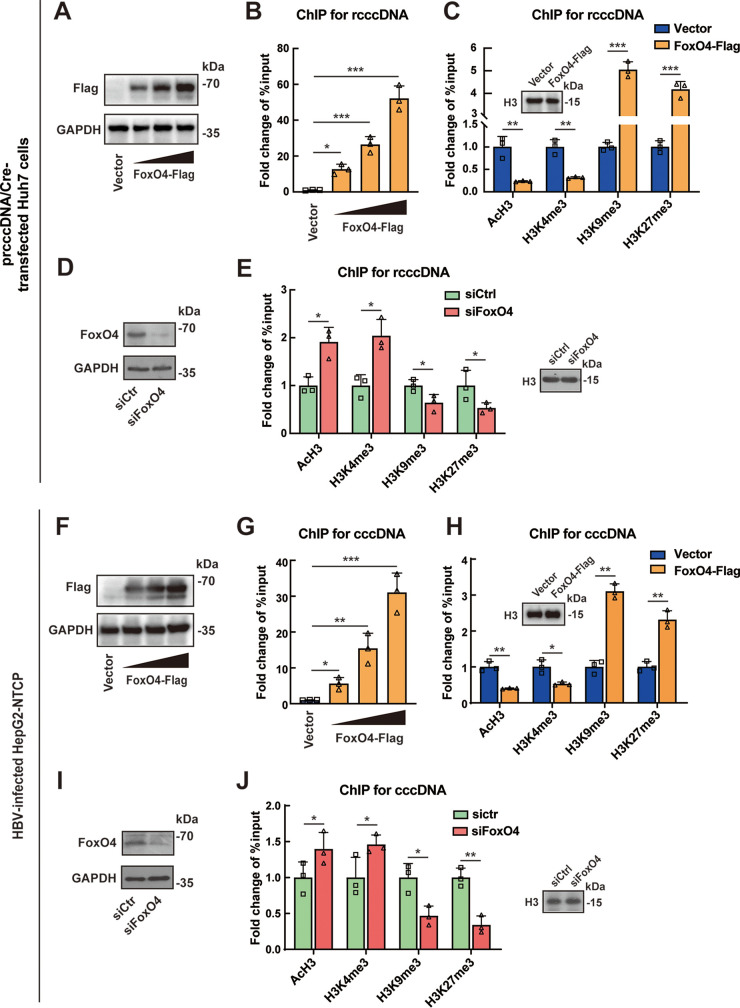
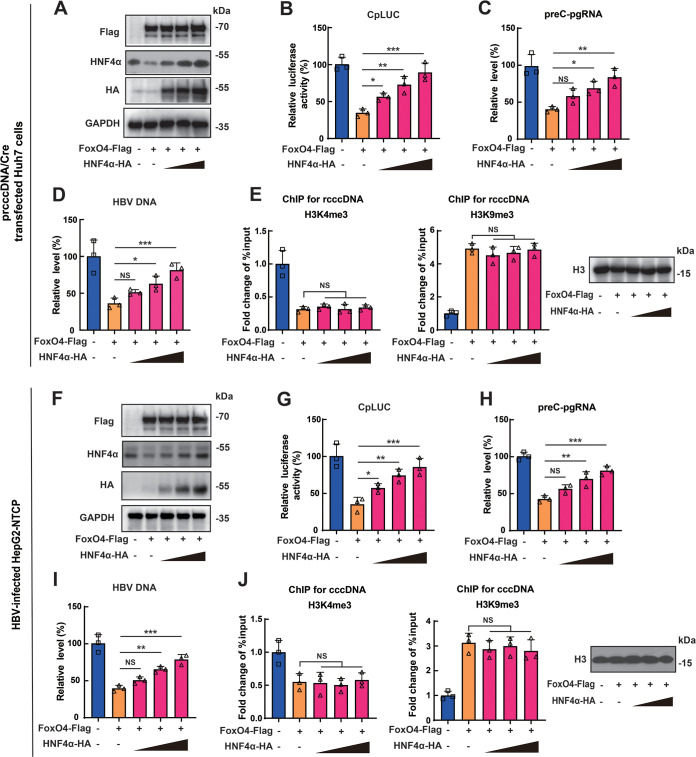
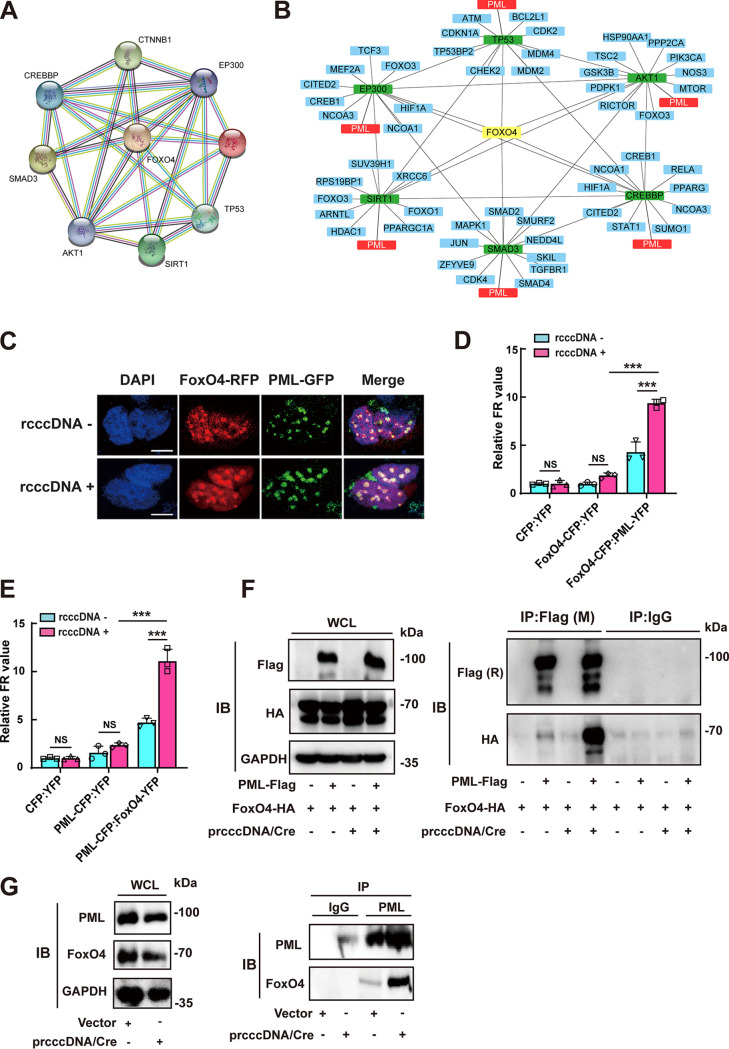
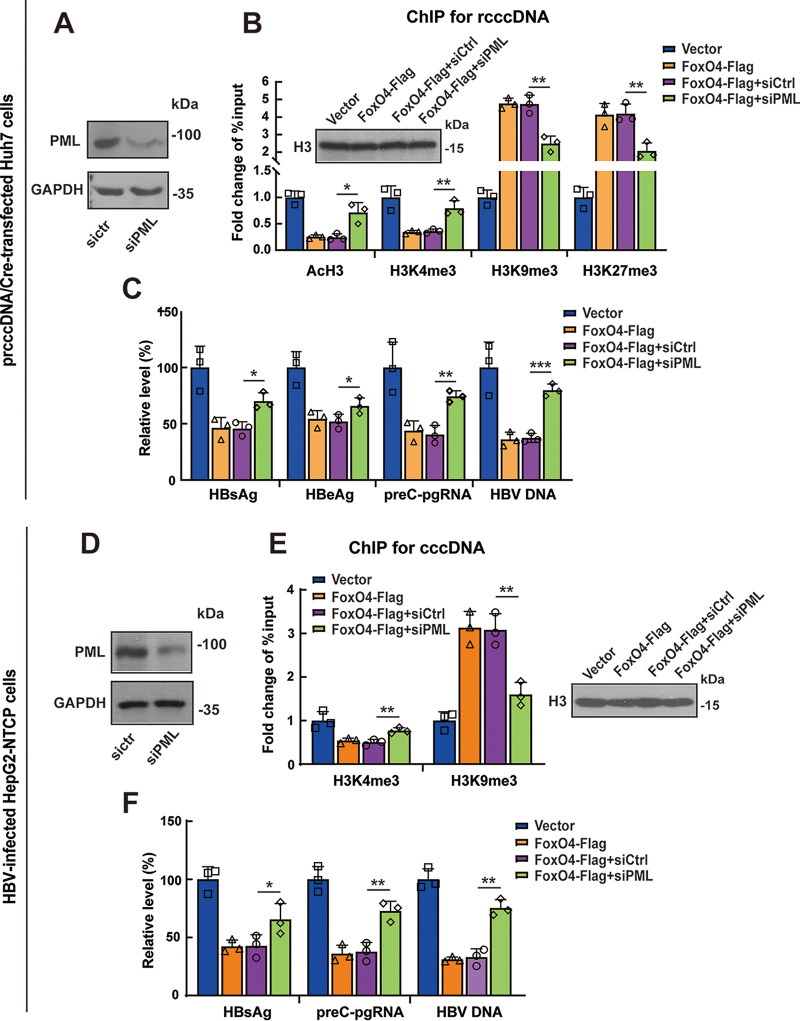
Nuclear located hepatitis B virus (HBV) covalently closed circular DNA (cccDNA) remains the key obstacle to cure chronic hepatitis B (CHB). In our previous investigation, it was found that FoxO4 could inhibit HBV core promoter activity through downregulating the expression of HNF4α. However, the exact mechanisms whereby FoxO4 inhibits HBV replication, especially its effect on cccDNA, remain unclear. Here, our data further revealed that FoxO4 could effectively inhibit cccDNA mediated transcription and HBV replication without affecting cccDNA level. Mechanistic study showed that FoxO4 could cause epigenetic suppression of cccDNA. Although FoxO4-mediated downregulation of HNF4α contributed to inhibiting HBV core promoter activity, it had little effect on cccDNA epigenetic regulation. Further, it was found that FoxO4 could colocalize within promyelocytic leukemia protein (PML) nuclear bodies and interact with PML. Of note, PML was revealed to be critical for FoxO4-mediated inhibition of cccDNA epigenetic modification and of the following cccDNA transcription and HBV replication. Furthermore, FoxO4 was found to be downregulated in HBV-infected hepatocytes and human liver tissues, and it was negatively correlated with cccDNA transcriptional activity in CHB patients. Together, these findings highlight the role of FoxO4 in suppressing cccDNA transcription and HBV replication via genetic downregulation of HNF4α and epigenetic suppression of cccDNA through interacting with PML. Targeting FoxO4 may present as a new therapeutic strategy against chronic HBV infection. HBV cccDNA is a determining factor for viral persistence and the main obstacle for a cure of chronic hepatitis B. Strategies that target cccDNA directly are therefore of great importance in controlling persistent HBV infection. In present investigation, we found that FoxO4 could efficiently suppress cccDNA transcription and HBV replication without affecting the level of cccDNA itself. Further, our data revealed that FoxO4 might inhibit cccDNA function via a two-part mechanism: one is to epigenetically suppress cccDNA transcription via interacting with PML, and the other is to inhibit HBV core promoter activity via the genetic downregulation of HNF4α. Of note, HBV might dampen the expression of FoxO4 for its own persistent infection. We propose that manipulation of FoxO4 may present as a potential therapeutic strategy against chronic HBV infection.
核定位乙型肝炎病毒 (HBV) 共价闭合环状 DNA (cccDNA) 仍然是治愈慢性乙型肝炎 (CHB) 的关键障碍。在我们之前的研究中,发现 FoxO4 通过下调 HNF4α 的表达可以抑制 HBV 核心启动子活性。然而,FoxO4 抑制 HBV 复制的确切机制,特别是其对 cccDNA 的影响,尚不清楚。在这里,我们的数据进一步表明,FoxO4 可以在不影响 cccDNA 水平的情况下有效抑制 cccDNA 介导的转录和 HBV 复制。机制研究表明,FoxO4 可以导致 cccDNA 的表观遗传抑制。虽然 FoxO4 介导的 HNF4α 下调有助于抑制 HBV 核心启动子活性,但对 cccDNA 的表观遗传调控影响很小。进一步发现,FoxO4 可以在早幼粒细胞白血病蛋白 (PML) 核小体中定位,并与 PML 相互作用。值得注意的是,发现 PML 对于 FoxO4 介导的 cccDNA 表观遗传修饰以及随后的 cccDNA 转录和 HBV 复制抑制至关重要。此外,在 HBV 感染的肝细胞和人类肝组织中发现 FoxO4 下调,并与 CHB 患者的 cccDNA 转录活性呈负相关。总之,这些发现强调了 FoxO4 通过遗传下调 HNF4α 和通过与 PML 相互作用抑制 cccDNA 的表观遗传抑制来抑制 cccDNA 转录和 HBV 复制的作用。靶向 FoxO4 可能成为治疗慢性乙型肝炎感染的新策略。HBV cccDNA 是病毒持续存在的决定因素,也是治愈慢性乙型肝炎的主要障碍。因此,直接针对 cccDNA 的策略在控制持续性 HBV 感染方面非常重要。在本研究中,我们发现 FoxO4 可以在不影响 cccDNA 本身水平的情况下有效抑制 cccDNA 转录和 HBV 复制。进一步,我们的数据揭示 FoxO4 可能通过两种机制抑制 cccDNA 功能:一种是通过与 PML 相互作用,表观遗传抑制 cccDNA 转录;另一种是通过遗传下调 HNF4α 抑制 HBV 核心启动子活性。值得注意的是,HBV 可能会抑制 FoxO4 的表达以维持其自身的持续感染。我们提出,FoxO4 的操纵可能是治疗慢性乙型肝炎感染的一种潜在治疗策略。