Estupiñán-Moreno Elkyn, Ortiz-Fernández Lourdes, Li Tianlu, Hernández-Rodríguez Jose, Ciudad Laura, Andrés-León Eduardo, Terron-Camero Laura Carmen, Prieto-González Sergio, Espígol-Frigolé Georgina, Cid Maria Cinta, Márquez Ana, Ballestar Esteban, Martín Javier
Institute of Parasitology and Biomedicine López-Neyra (IPBLN), Spanish National Research Council (CSIC), Granada, Spain.
Institute of Parasitology and Biomedicine López-Neyra (IPBLN), Spanish National Research Council (CSIC), Granada, Spain
Ann Rheum Dis. 2022 Aug 11;81(9):1290-1300. doi: 10.1136/annrheumdis-2022-222156.
Giant cell arteritis (GCA) is a complex systemic vasculitis mediated by the interplay between both genetic and epigenetic factors. Monocytes are crucial players of the inflammation occurring in GCA. Therefore, characterisation of the monocyte methylome and transcriptome in GCA would be helpful to better understand disease pathogenesis.
We performed an integrated epigenome-and transcriptome-wide association study in CD14+ monocytes from 82 patients with GCA, cross-sectionally classified into three different clinical statuses (active, in remission with or without glucocorticoid (GC) treatment), and 31 healthy controls.
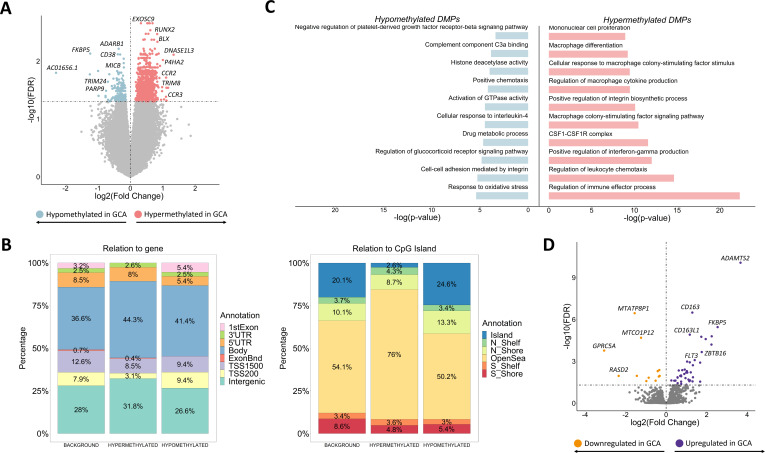
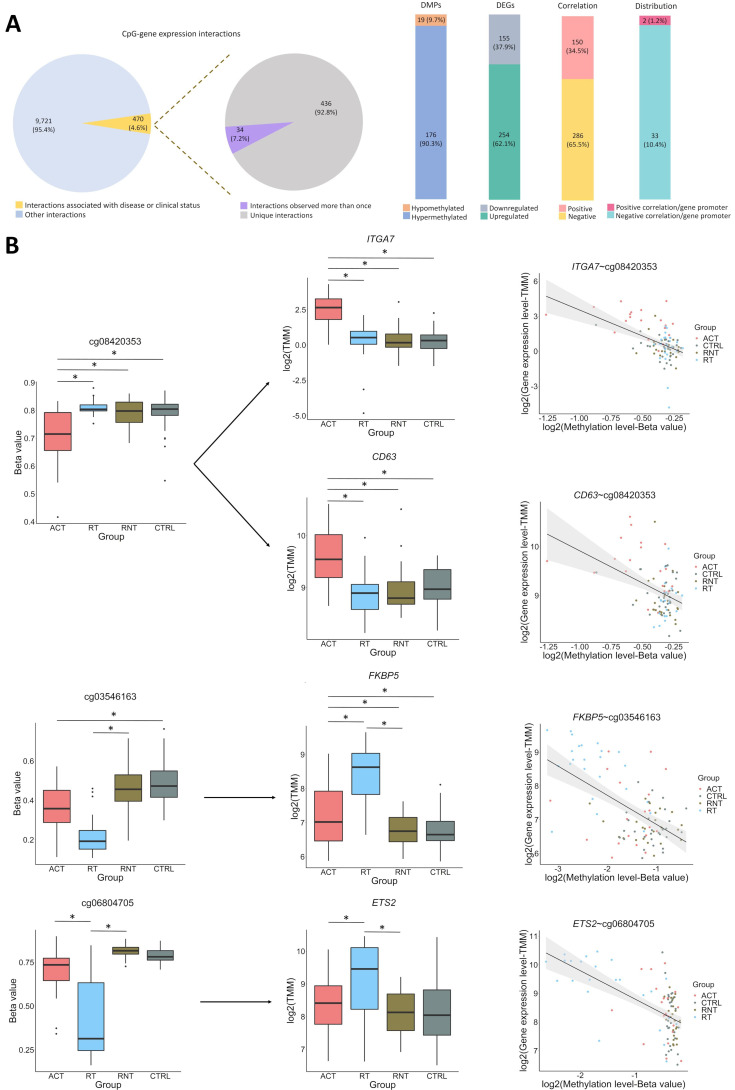
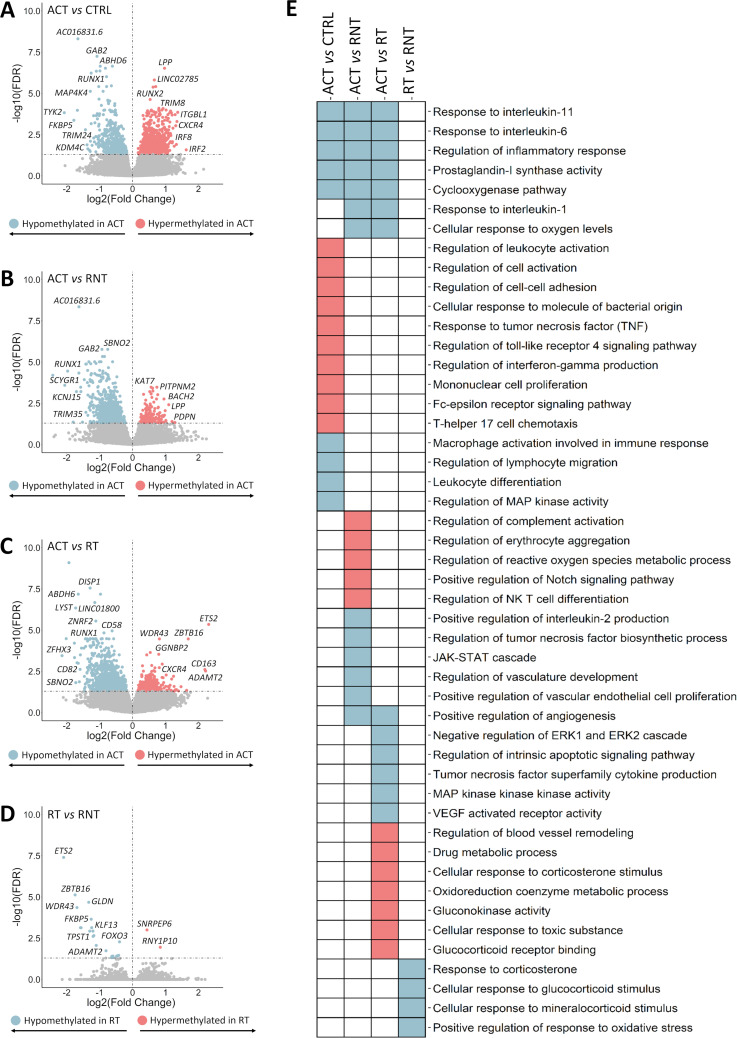
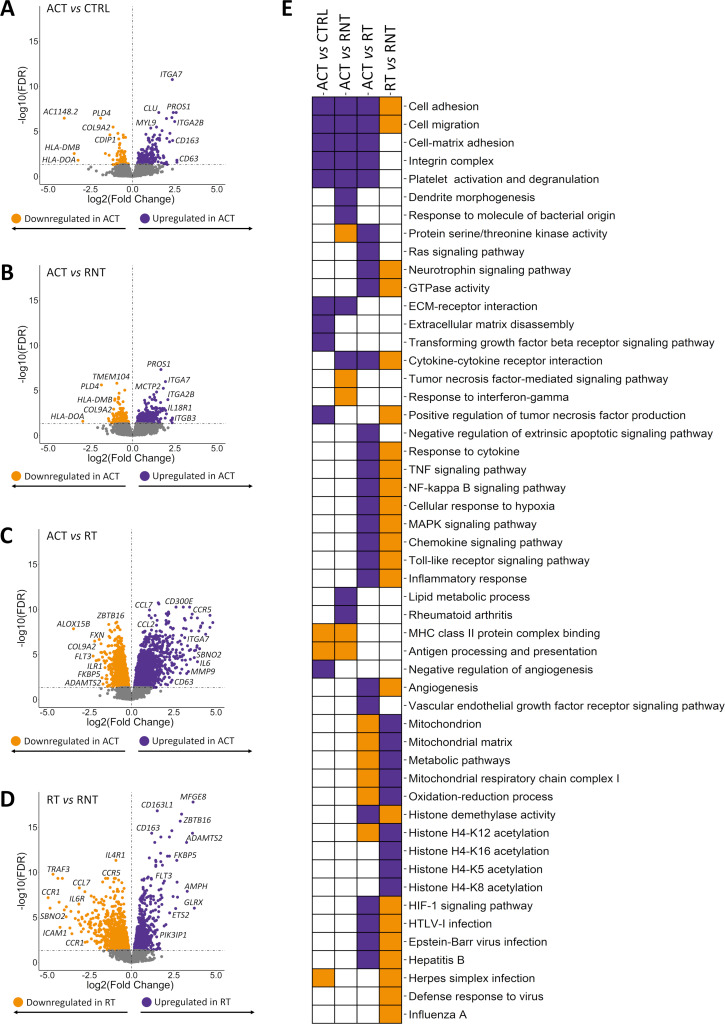
We identified a global methylation and gene expression dysregulation in GCA monocytes. Specifically, monocytes from active patients showed a more proinflammatory phenotype compared with healthy controls and patients in remission. In addition to inflammatory pathways known to be involved in active GCA, such as response to IL-6 and IL-1, we identified response to IL-11 as a new pathway potentially implicated in GCA. Furthermore, monocytes from patients in remission with treatment showed downregulation of genes involved in inflammatory processes as well as overexpression of GC receptor-target genes. Finally, we identified changes in DNA methylation correlating with alterations in expression levels of genes with a potential role in GCA pathogenesis, such as and , as well as genes mediating the molecular response to GC, including , and .
Our results revealed profound alterations in the methylation and transcriptomic profiles of monocytes from GCA patients, uncovering novel genes and pathways involved in GCA pathogenesis and in the molecular response to GC treatment.
巨细胞动脉炎(GCA)是一种由遗传和表观遗传因素相互作用介导的复杂系统性血管炎。单核细胞是GCA中发生炎症的关键参与者。因此,对GCA中单核细胞甲基化组和转录组进行表征将有助于更好地理解疾病发病机制。
我们对82例GCA患者的CD14+单核细胞进行了全表观基因组和转录组关联研究,这些患者横断面分为三种不同临床状态(活动期、接受或未接受糖皮质激素(GC)治疗的缓解期),并与31名健康对照进行比较。
我们在GCA单核细胞中发现了整体甲基化和基因表达失调。具体而言,与健康对照和缓解期患者相比,活动期患者的单核细胞表现出更促炎的表型。除了已知参与活动期GCA的炎症途径,如对IL-6和IL-1的反应外,我们还确定对IL-11的反应是可能与GCA相关的新途径。此外,接受治疗的缓解期患者的单核细胞显示参与炎症过程的基因下调以及GC受体靶基因的过表达。最后,我们确定了DNA甲基化的变化与在GCA发病机制中可能起作用的基因(如 和 )以及介导对GC分子反应的基因(包括 、 和 )表达水平的改变相关。
我们的结果揭示了GCA患者单核细胞甲基化和转录组谱的深刻改变,揭示了参与GCA发病机制和对GC治疗分子反应的新基因和途径。