Systems Biology Group (SysBio), Institute of Physics of Liquids and Biological Systems (IFLySIB), National Scientific and Technical Research Council (CONICET), University of La Plata, La Plata, Argentina.
Laboratory of Biomembranes, Institute of Physiology and Biophysics Bernardo Houssay (IFIBIO Houssay), School of Medicine, University of Buenos Aires, Buenos Aires, Argentina.
Sci Rep. 2022 Jun 15;12(1):9961. doi: 10.1038/s41598-022-14000-8.
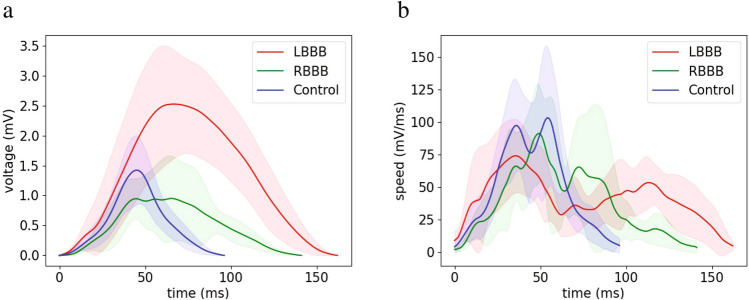
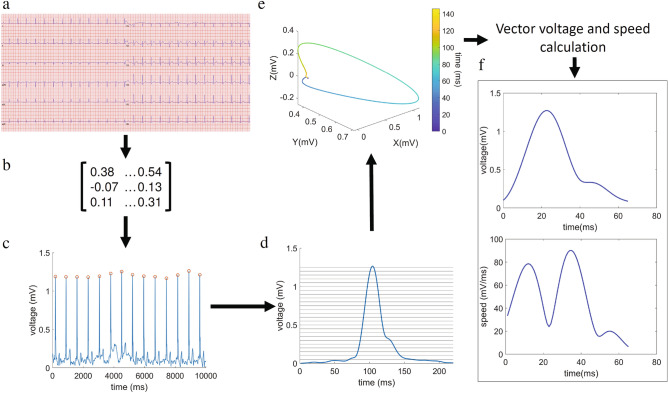
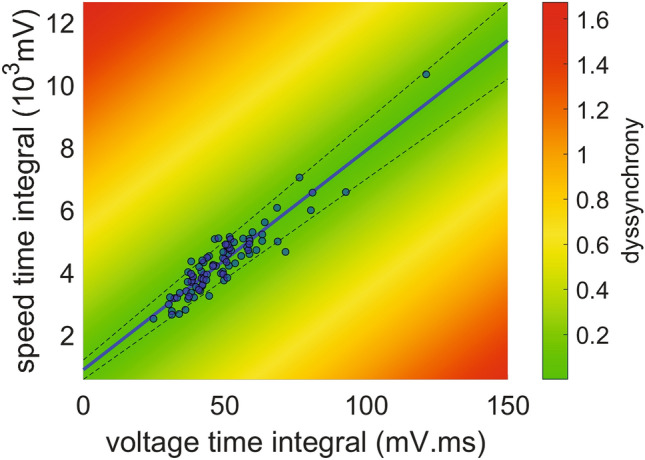
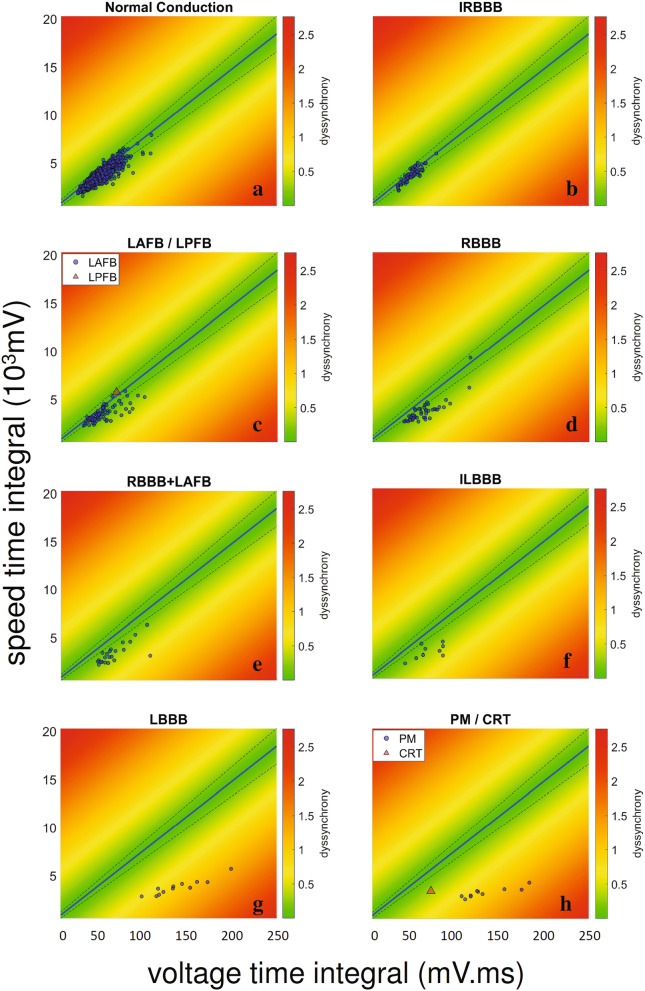
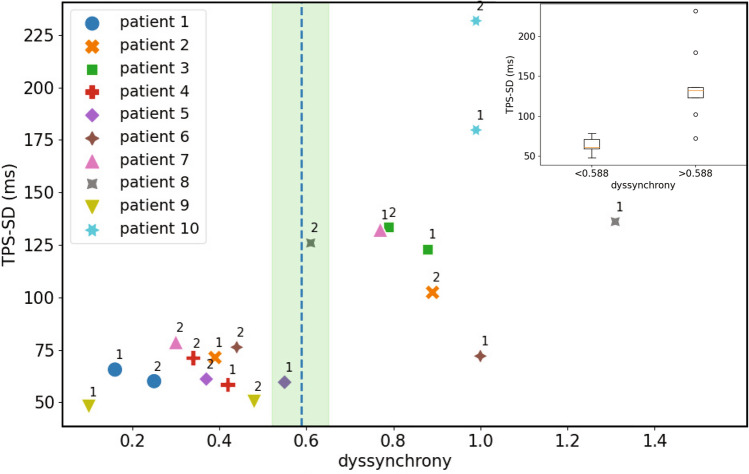
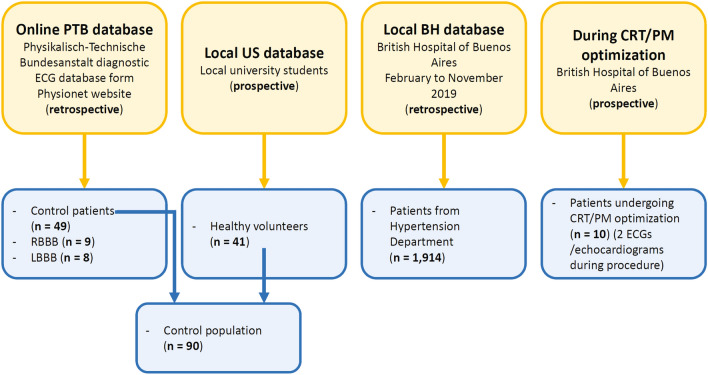
Alteration of muscle activation sequence is a key mechanism in heart failure with reduced ejection fraction. Successful cardiac resynchronization therapy (CRT), which has become standard therapy in these patients, is limited by the lack of precise dyssynchrony quantification. We implemented a computational pipeline that allows assessment of ventricular dyssynchrony by vectorcardiogram reconstruction from the patient's electrocardiogram. We defined a ventricular dyssynchrony index as the distance between the voltage and speed time integrals of an individual observation and the linear fit of these variables obtained from a healthy population. The pipeline was tested in a 1914-patient population. The dyssynchrony index showed minimum values in heathy controls and maximum values in patients with left bundle branch block (LBBB) or with a pacemaker (PM). We established a critical dyssynchrony index value that discriminates electrical dyssynchronous patterns (LBBB and PM) from ventricular synchrony. In 10 patients with PM or CRT devices, dyssynchrony indexes above the critical value were associated with high time to peak strain standard deviation, an echocardiographic measure of mechanical dyssynchrony. Our index proves to be a promising tool to evaluate ventricular activation dyssynchrony, potentially enhancing the selection of candidates for CRT, device configuration during implantation, and post-implant optimization.
肌肉激活顺序的改变是射血分数降低的心力衰竭的关键机制。心脏再同步治疗(CRT)已成为这些患者的标准治疗方法,但由于缺乏精确的失同步量化,其效果受到限制。我们实施了一种计算流程,该流程允许通过从患者心电图重建心向量图来评估心室失同步。我们将心室失同步指数定义为个体观察的电压和速度时间积分与从健康人群中获得的这些变量的线性拟合之间的距离。该流程在 1914 名患者人群中进行了测试。失同步指数在健康对照组中最小,在左束支传导阻滞(LBBB)或起搏器(PM)患者中最大。我们确定了一个临界失同步指数值,该值可将电失同步模式(LBBB 和 PM)与心室同步区分开来。在 10 名具有 PM 或 CRT 设备的患者中,高于临界值的失同步指数与峰值应变标准差高的时间相关,这是一种机械失同步的超声心动图测量指标。我们的指数被证明是评估心室激活失同步的有前途的工具,可能会增强 CRT 候选者的选择,植入过程中的设备配置以及植入后的优化。