Department of Orthopedic Surgery, Chung-Ang University Hospital, Chung-Ang University College of Medicine, Seoul, Republic of Korea.
Samsong Seoul Orthopedic Clinic, Goyang, Republic of Korea.
BMC Musculoskelet Disord. 2022 Jun 16;23(1):581. doi: 10.1186/s12891-022-05536-x.
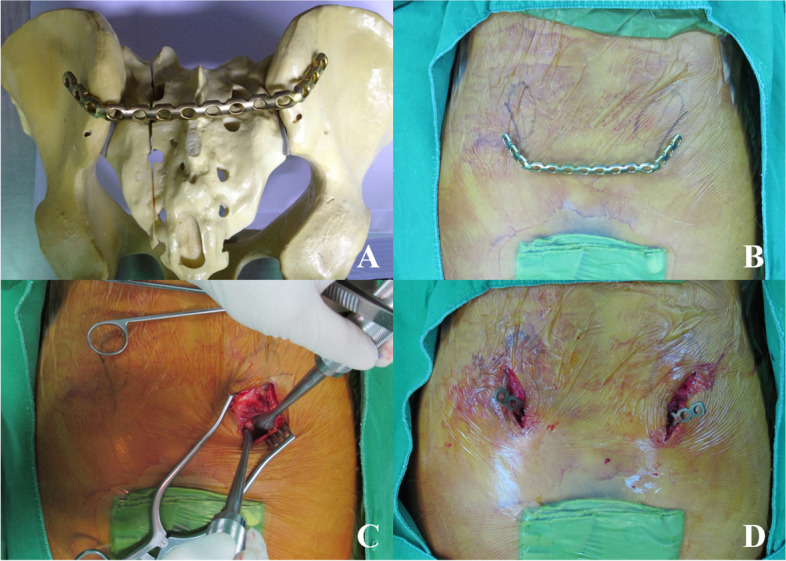
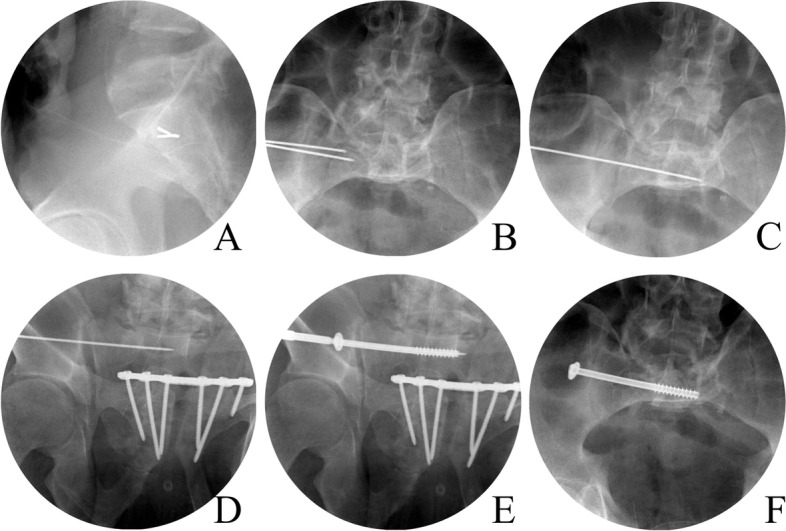
This study aimed to compare the clinical outcomes and complications between two minimally invasive surgical techniques: percutaneous transiliac plate fixation and iliosacral (IS) screw fixation for the treatment of Tile C-type pelvic bone fractures.
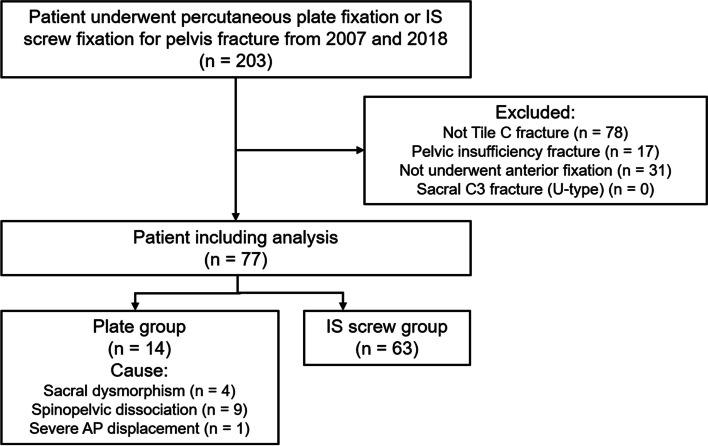
We retrospectively reviewed the data of 77 consecutive patients with Tile C pelvic ring injuries who underwent either percutaneous transiliac plate fixation or IS screw fixation in a single academic center between November 2007 and January 2018. We recorded patients' demographics, surgery-related data, and postoperative surgical outcomes and compared the incidence of complications and revision surgery rates between the two groups.
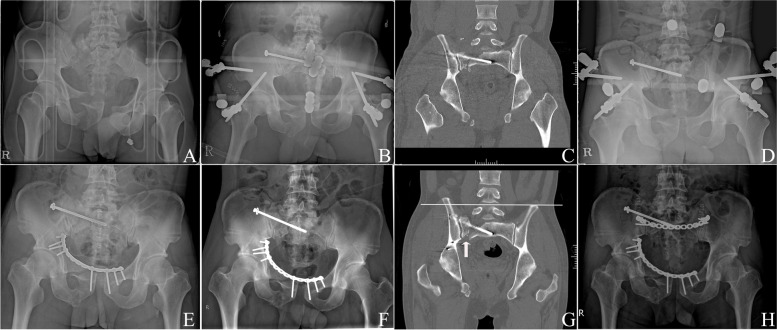
Overall, 14 patients were included in the plate group, while 63 were included in the IS screw fixation group. No significant differences were observed in the patients' demographics between the two groups except for a longer interval from injury to surgery (13.5 days vs. 5.4 days, P = 0.001). Both groups acquired fracture union in all cases. There was one case of infection requiring surgical debridement in the plating group. Notably, nerve injury (n = 3) and implant loosening (n = 5) occurred in the IS screw group, but the difference was not significant.
Both percutaneous posterior transiliac plating and IS screw fixation in patients with Tile C-type pelvic bone fractures showed good results. We recommend IS screw fixation as the primary treatment and propose posterior plating as treatment for sacral dysmorphism and bilateral sacral alar fractures in patients with spinopelvic dissociation.
III.
本研究旨在比较两种微创外科技术治疗 Tile C 型骨盆骨折的临床结果和并发症:经皮髂骨翼板固定和髂骨-骶骨(IS)螺钉固定。
我们回顾性分析了 2007 年 11 月至 2018 年 1 月在一家学术中心接受经皮髂骨翼板固定或 IS 螺钉固定治疗的 77 例连续 Tile C 型骨盆环损伤患者的数据。我们记录了患者的人口统计学资料、手术相关数据以及术后手术结果,并比较了两组并发症的发生率和翻修手术率。
总体而言,14 例患者纳入钢板组,63 例患者纳入 IS 螺钉固定组。除了从受伤到手术的时间间隔较长(13.5 天比 5.4 天,P=0.001)外,两组患者的人口统计学资料无显著差异。两组患者均获得骨折愈合。钢板组有 1 例感染需行手术清创。值得注意的是,IS 螺钉组发生神经损伤(n=3)和植入物松动(n=5),但差异无统计学意义。
经皮后路髂骨翼板固定和 IS 螺钉固定治疗 Tile C 型骨盆骨折均取得良好效果。我们建议 IS 螺钉固定作为主要治疗方法,并提出对于脊柱骨盆分离的患者,后路钢板固定适用于骶骨畸形和双侧骶骨翼骨折。
III 级。