Huang Yu-Shu, Tang I, Chin Wei-Chih, Jang Ling-Sheng, Lee Chin-Pang, Lin Chen, Yang Chun-Pai, Cho Shu-Ling
Division of Pediatric Psychiatry and Sleep Center, Chang Gung Memorial Hospital, Taoyuan, Taiwan.
College of Medicine, Chang Gung University, Taoyuan, Taiwan.
Nat Sci Sleep. 2022 Jun 8;14:1113-1124. doi: 10.2147/NSS.S346941. eCollection 2022.
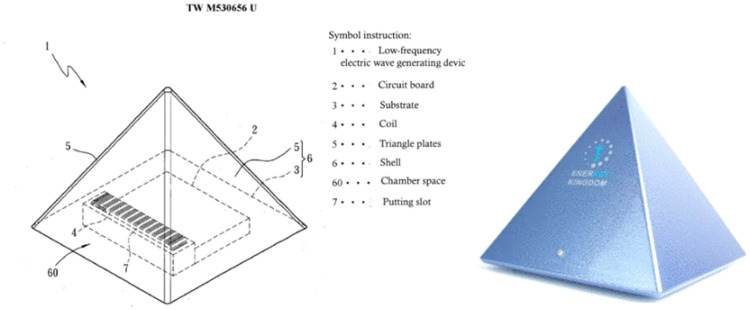
Accumulated studies revealed that electromagnetic field can affect human brain and sleep, and the extremely low-frequency electromagnetic field, Schumann resonance, may have the potential to reduce insomnia symptoms. The purpose of this study was to investigate the responses of patients with insomnia to a non-invasive treatment, Schumann resonance (SR), and to evaluate its effectiveness by subjective and objective sleep assessments.
We adopted a double-blinded and randomized design and 40 participants (70% female; 50.00 ± 13.38 year) with insomnia completed the entire study. These participants were divided into the SR-sleep-device group and the placebo-device group and were followed up for four weeks. The study used polysomnography (PSG) to measure objective sleep and used sleep diaries, Pittsburgh Sleep Quality Inventory (PSQI), Epworth Sleepiness Scale (ESS), and visual analogy of sleep satisfaction to measure subjective sleep. The 36-Item Short-Form Health Survey (SF-36) was used to evaluate quality of life. Chi-square test, Mann-Whitney -test, and Wilcoxon test were used to analyze the data.
About 70% of the subjects were women, with an average age of 50±13.38 years and an average history of insomnia of 9.68±8.86 years. We found that in the SR-sleep-device group, objective sleep measurements (sleep-onset-latency, SOL, and total-sleep-time, TST) and subjective sleep questionnaires (SOL, TST, sleep-efficiency, sleep-quality, daytime-sleepiness, and sleep-satisfaction) were significantly improved after using the SR-sleep-device; in the placebo-device group, only such subjective sleep improvements as PSQI and sleep-satisfaction were observed.
This study demonstrates that the SR-sleep-device can reduce the insomnia symptoms through both objective and subjective tests, with minimal adverse effects. Future studies can explore the possible mechanism of SR and health effects and, with a longer tracking time, verify the effectiveness and side effects.
多项研究表明,电磁场会影响人类大脑和睡眠,而极低频电磁场——舒曼共振,可能具有减轻失眠症状的潜力。本研究旨在调查失眠患者对非侵入性治疗——舒曼共振(SR)的反应,并通过主观和客观睡眠评估来评估其有效性。
我们采用双盲随机设计,40名失眠参与者(70%为女性;年龄50.00±13.38岁)完成了整个研究。这些参与者被分为SR睡眠设备组和安慰剂设备组,并随访四周。该研究使用多导睡眠图(PSG)来测量客观睡眠,并使用睡眠日记、匹兹堡睡眠质量指数(PSQI)、爱泼华嗜睡量表(ESS)以及睡眠满意度视觉模拟量表来测量主观睡眠。采用36项简明健康调查(SF-36)来评估生活质量。使用卡方检验、曼-惠特尼检验和威尔科克森检验来分析数据。
约70%的受试者为女性,平均年龄50±13.38岁,平均失眠病史9.68±8.86年。我们发现,在SR睡眠设备组中,使用SR睡眠设备后,客观睡眠测量指标(入睡潜伏期、SOL,以及总睡眠时间、TST)和主观睡眠问卷(SOL、TST、睡眠效率、睡眠质量、日间嗜睡和睡眠满意度)均有显著改善;在安慰剂设备组中,仅观察到PSQI和睡眠满意度等主观睡眠方面的改善。
本研究表明,SR睡眠设备可通过客观和主观测试减轻失眠症状,且副作用极小。未来的研究可以探索SR的可能机制及其对健康的影响,并通过更长的跟踪时间来验证其有效性和副作用。