Department of Anesthesiology, Affiliated Drum Tower Hospital of Medical Department of Nanjing University, Nanjing 210008, Jiangsu, China.
Department of Anesthesiology, Affiliated Drum Tower Hospital of Medical Department of Nanjing University, Nanjing 210008, Jiangsu, China.
Int Immunopharmacol. 2022 Aug;109:108903. doi: 10.1016/j.intimp.2022.108903. Epub 2022 Jun 13.
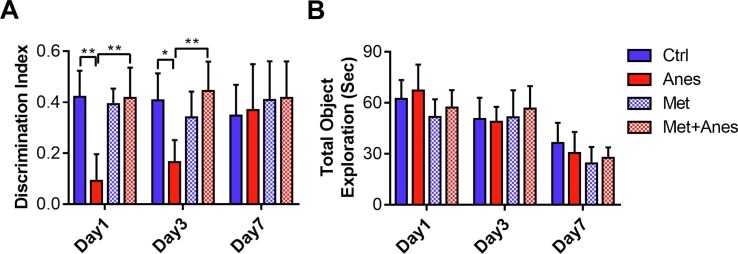
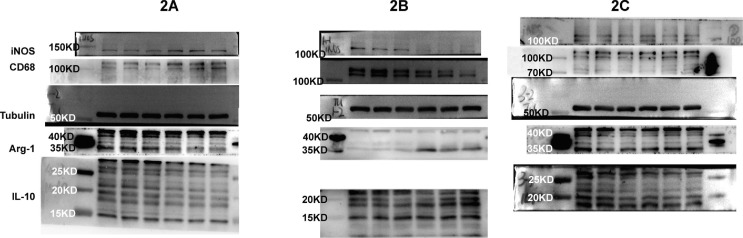
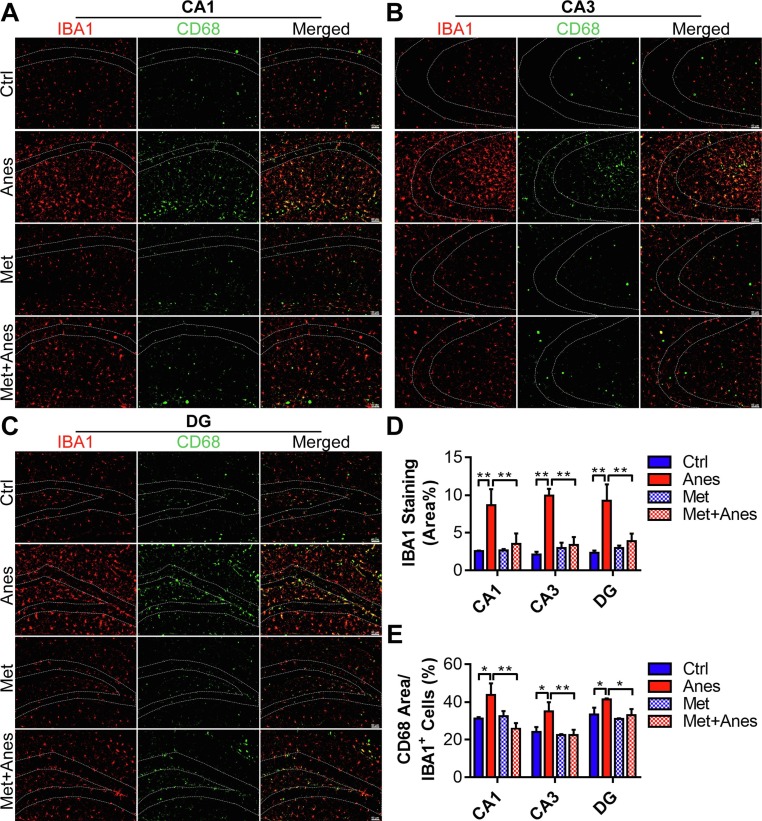
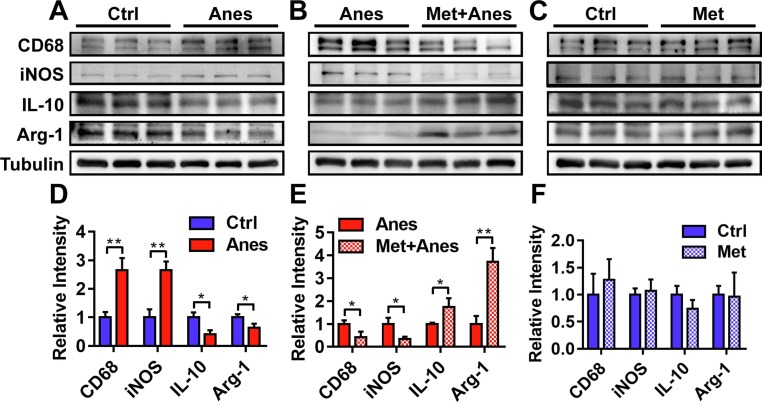
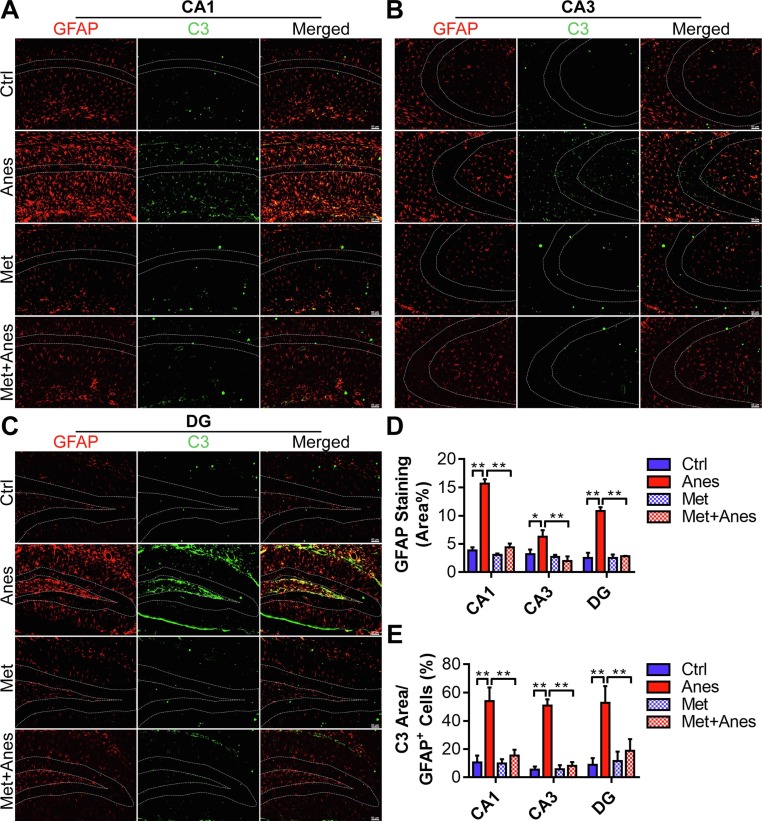
With the widespread use of volatile anesthetic agents in the prolonged sedation for COVID-19 pneumonia and ARDS, there is an urgent need to investigate the effects and treatments of lengthy low-concentration inhaled anesthetics exposure on cognitive function in adults. Previous studies showed that general anesthetics dose- and exposure length-dependently induced neuroinflammatory response and cognitive decline in neonatal and aging animals. The anti-diabetes drug metformin has anti-neuroinflammation effects by modulating microglial polarization and inhibiting astrocyte activation. In this study, we demonstrated that the inhalation of 1.3% isoflurane (a sub-minimal alveolar concentration, sub-MAC) for 6 h impaired recognition of novel objects from Day 1 to Day3 in adult mice. Prolonged sub-MAC isoflurane exposure also triggered typically reactive microglia and A1-like astrocytes in the hippocampus of adult mice on Day 3 after anesthesia. In addition, prolonged isoflurane inhalation switched microglia into a proinflammatory M1 phenotype characterized by elevated CD68 and iNOS as well as decreased arginase-1 and IL-10. Metformin pretreatment before anesthesia enhanced cognitive performance in the novel object test. The positive cellular modifications promoted by metformin pretreatment included the inhibition of reactive microglia and A1-like astrocytes and the polarization of microglia into M2 phenotype in the hippocampus of adult mice. In conclusion, prolonged sub-MAC isoflurane exposure triggered significant hippocampal neuroinflammation and cognitive decline in adult mice which can be alleviated by metformin pretreatment via inhibiting reactive microglia and A1-like astrocytes and promoting microglia polarization toward anti-inflammatory phenotype in the hippocampus.
在 COVID-19 肺炎和 ARDS 的长时间镇静中广泛使用挥发性麻醉剂的情况下,迫切需要研究长时间低浓度吸入麻醉剂暴露对成人认知功能的影响和治疗方法。先前的研究表明,全身麻醉剂的剂量和暴露时间依赖性地诱导了新生和衰老动物的神经炎症反应和认知能力下降。抗糖尿病药物二甲双胍通过调节小胶质细胞极化和抑制星形胶质细胞激活来发挥抗神经炎症作用。在这项研究中,我们证明了吸入 1.3%异氟烷(亚最小肺泡浓度,sub-MAC)6 小时会损害成年小鼠从第 1 天到第 3 天对新物体的识别。长时间亚 MAC 异氟烷暴露还会在麻醉后第 3 天触发成年小鼠海马中典型的反应性小胶质细胞和 A1 样星形胶质细胞。此外,长时间异氟烷吸入会将小胶质细胞转化为促炎 M1 表型,其特征是 CD68 和 iNOS 升高,而精氨酸酶-1 和 IL-10 降低。麻醉前给予二甲双胍预处理可增强新物体测试中的认知表现。二甲双胍预处理促进的阳性细胞修饰包括抑制反应性小胶质细胞和 A1 样星形胶质细胞,以及将小胶质细胞极化为成年小鼠海马中的 M2 表型。总之,长时间亚 MAC 异氟烷暴露会引发成年小鼠海马神经炎症和认知能力下降,而麻醉前给予二甲双胍预处理可通过抑制反应性小胶质细胞和 A1 样星形胶质细胞,以及促进小胶质细胞向抗炎表型极化,从而缓解这种情况。