Department of Anesthesiology, Sun Yat-Sen Memorial Hospital, Sun Yat-Sen University, Guangzhou, 510289, Guangdong, China.
Laboratory of RNA and Major Diseases of Brain and Heart, Sun Yat-Sen Memorial Hospital, Sun Yat-Sen University, Guangzhou, 510120, China.
J Neuroinflammation. 2018 Apr 17;15(1):109. doi: 10.1186/s12974-018-1137-1.
Elderly patients are more likely to suffer from postoperative cognitive dysfunction (POCD) after surgery and anesthesia. Except for declined organ function, the particular pathogenesis of POCD in elderly patients remains unknown. This study is carried out to determine the critical role of the NOD-like receptor protein 3 (NLRP3)-caspase-1 pathway in isoflurane-induced cognitive impairment.
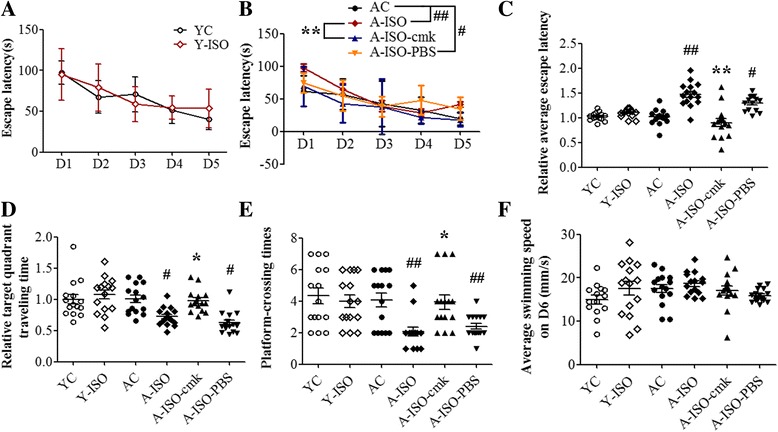
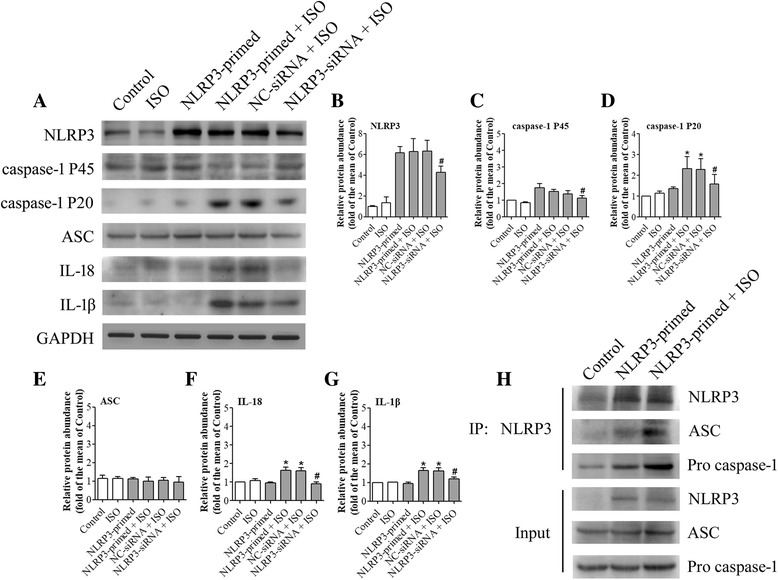
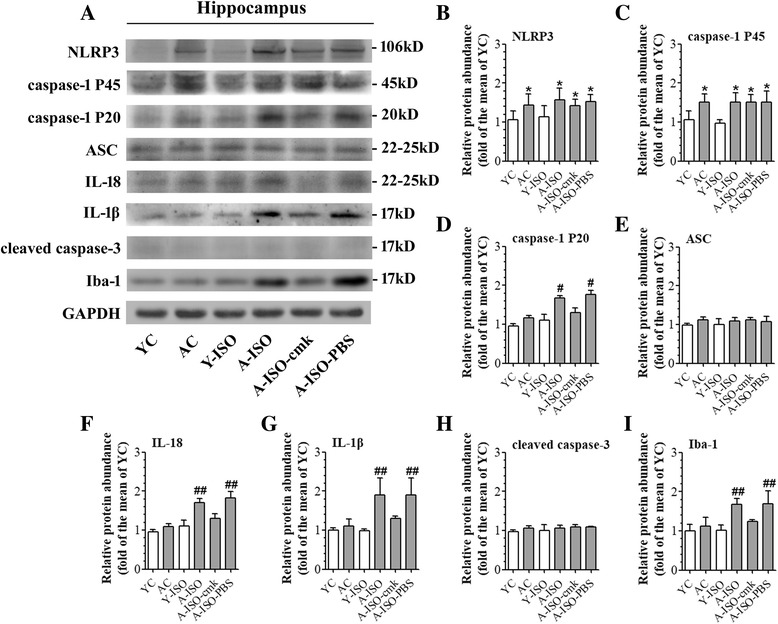
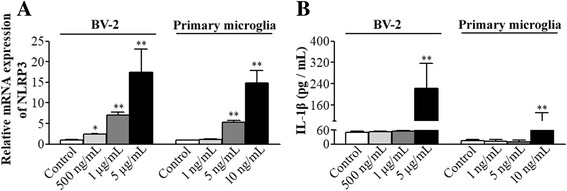
Young (6-8 months old) and aged (14 months old) healthy male C57BL/6 mice were exposed to 1.5% isoflurane for 2 h. Some mice received intraperitoneal injection of Ac-YVAD-cmk (8 mg/kg), a specific inhibitor of caspase-1, 30 min before the isoflurane exposure. Morris water maze test was carried out 1 week after the isoflurane anesthesia. Brain tissues were harvested 24 h after the isoflurane anesthesia. Western blotting was carried out to detect the expression of NLRP3, interleukin (IL)-1β, and IL-18 in the hippocampus. Mouse microglial cell line BV-2 and primary microglial cultures were primed by lipopolysaccharide for 30 min before being exposed to isoflurane. NLRP3 was downregulated by RNA interference.
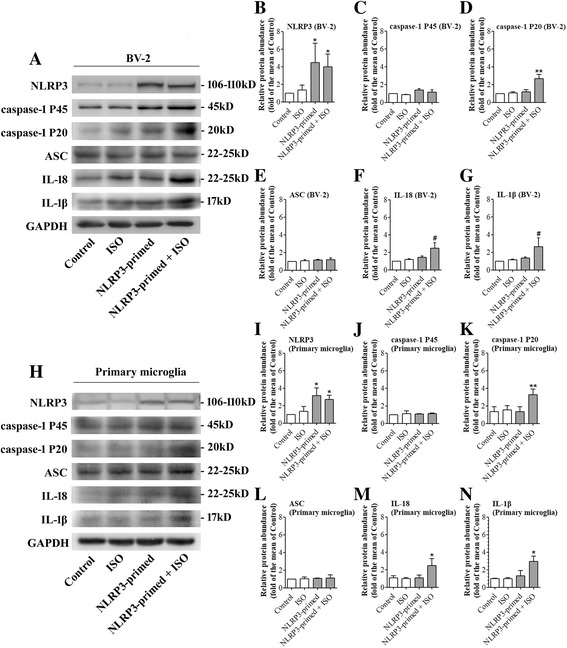
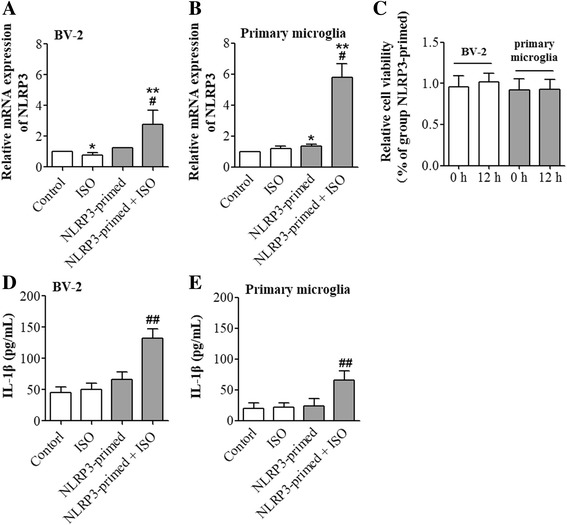
Compared to young mice, aged mice had an increased expression of NLRP3 in the hippocampus. Isoflurane induced cognitive impairment and hippocampal inflammation in aged mice but not in young mice. These effects were attenuated by Ac-YVAD-cmk pretreatment (P < 0.05). Isoflurane activated NLRP3-caspase-1 pathway and increased the secretion of IL-18 and IL-1β in cells pretreated with lipopolysaccharide but not in cells without pretreatment. Downregulation of NLRP3 attenuated the activation of NLRP3 inflammasome by isoflurane.
NLRP3 priming status in aged mouse brain may be involved in isoflurane-induced hippocampal inflammation and cognitive impairment.
老年患者在接受手术和麻醉后更容易发生术后认知功能障碍(POCD)。除了器官功能下降外,老年患者 POCD 的特定发病机制尚不清楚。本研究旨在确定 NOD 样受体蛋白 3(NLRP3)-半胱天冬酶-1 途径在异氟烷诱导的认知障碍中的关键作用。
年轻(6-8 个月大)和年老(14 个月大)健康雄性 C57BL/6 小鼠暴露于 1.5%异氟烷 2 小时。一些小鼠在异氟烷暴露前 30 分钟接受腹腔注射 caspase-1 特异性抑制剂 Ac-YVAD-cmk(8mg/kg)。异氟烷麻醉后 1 周进行 Morris 水迷宫测试。异氟烷麻醉后 24 小时采集脑组织。Western blot 检测海马中 NLRP3、白细胞介素(IL)-1β和 IL-18 的表达。用脂多糖预刺激小鼠小胶质细胞系 BV-2 和原代小胶质细胞培养物 30 分钟,然后暴露于异氟烷。用 RNA 干扰下调 NLRP3。
与年轻小鼠相比,年老小鼠海马中 NLRP3 的表达增加。异氟烷诱导年老小鼠认知障碍和海马炎症,但在年轻小鼠中没有。Ac-YVAD-cmk 预处理可减轻这些影响(P<0.05)。异氟烷激活 NLRP3-caspase-1 途径,并增加脂多糖预处理细胞中 IL-18 和 IL-1β的分泌,但不增加未预处理细胞中的分泌。NLRP3 下调可减轻异氟烷对 NLRP3 炎性小体的激活。
年老小鼠大脑中 NLRP3 的预刺激状态可能参与异氟烷诱导的海马炎症和认知障碍。