Bai Guangtao, Jiang Liang, Huan Sai, Meng Pingping, Wang Yuyang, Pan Xiaona, Yin Shuai, Zhao Yuyang, Wang Qiang
Department of Rehabilitation Medicine, The Affiliated Hospital of Qingdao University, Qingdao, China.
Department of Otolaryngology, Qingdao Women's and Children's Hospital, Qingdao, China.
Front Aging Neurosci. 2022 May 30;14:883542. doi: 10.3389/fnagi.2022.883542. eCollection 2022.
To explore the therapeutic effect and mechanism of low-frequency repetitive transcranial magnetic stimulation on the speech function of patients with non-fluent aphasia after stroke.
According to the inclusion and exclusion criteria, 60 patients with post-stroke non-fluent aphasia were included and randomly divided into treatment group (rTMS group) and sham stimulation group (S-rTMS group). Patients in rTMS group were given low-frequency rTMS + ST training. Patients in the S-rTMS group were given sham low-frequency rTMS + ST training. Once a day, 5 days a week, for a total of 4 weeks. The Western Aphasia Battery and the short-form Token test were used to evaluate the language function of the patients in the two groups before and after treatment. Part of the enrolled patients were subjected to functional magnetic resonance imaging examination, and the morning fasting venous blood of the enrolled patients was drawn before and after treatment to determine the content of BDNF and TNF-α.
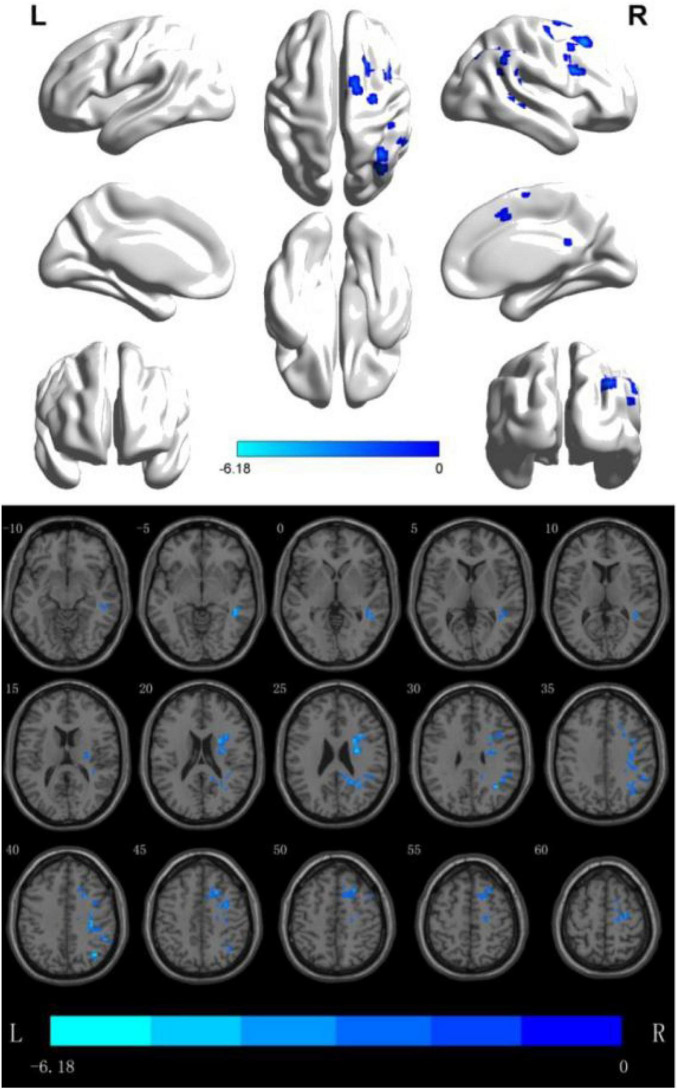
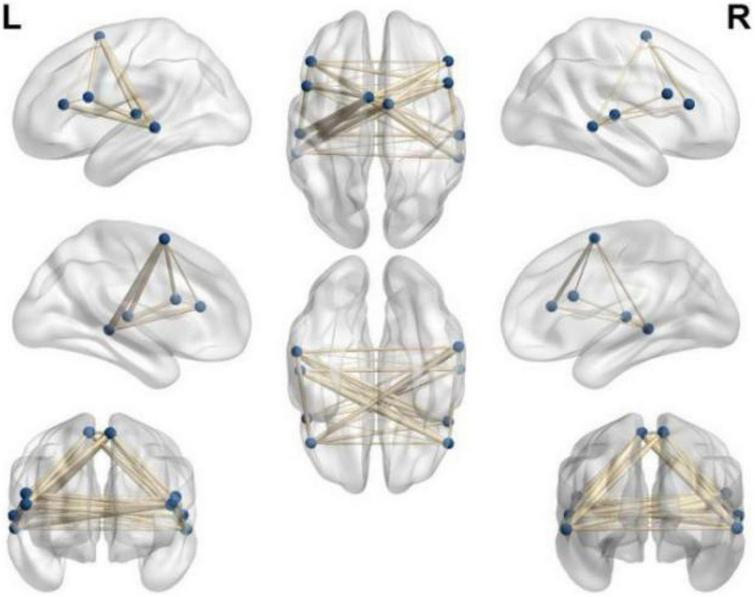
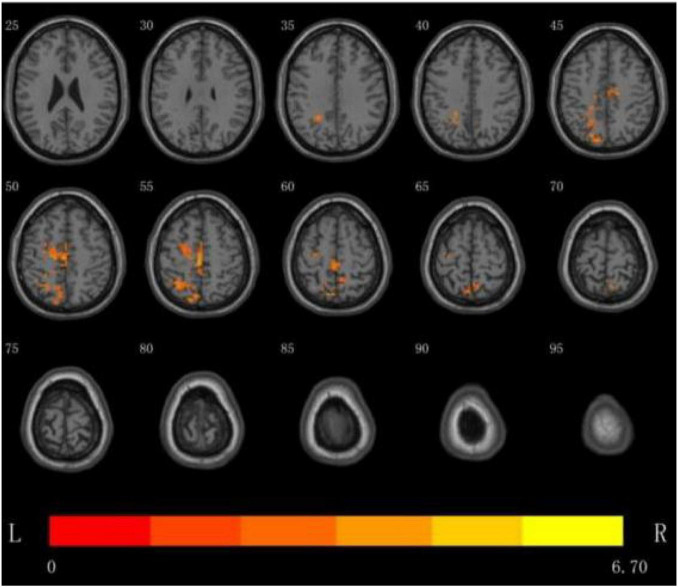
In the comparison before and after treatment within the group, all dimensions of the WAB scale of the patients in the rTMS group increased significantly. Only two dimensions of the WAB scale of the patients in the S-rTMS group improved significantly after treatment. The results of the short-form Token test showed that patients in the rTMS group improved significantly before and after treatment. The resting state functional magnetic resonance imaging of the two groups of patients before and after treatment showed: the activation of multiple brain regions in the left hemisphere of the rTMS group increased compared with the control group. The serum BDNF content of the patients in the rTMS group was significantly higher than that of the patients in the S-rTMS group after treatment.
Low-frequency rTMS combined with conventional speech training can significantly improve the speech function of patients with non-fluent aphasia after stroke.
探讨低频重复经颅磁刺激对脑卒中后非流畅性失语患者言语功能的治疗效果及机制。
根据纳入与排除标准,纳入60例脑卒中后非流畅性失语患者,随机分为治疗组(重复经颅磁刺激组)和假刺激组(假重复经颅磁刺激组)。重复经颅磁刺激组患者给予低频重复经颅磁刺激+言语训练。假重复经颅磁刺激组患者给予假低频重复经颅磁刺激+言语训练。每天1次,每周5天,共4周。采用西方失语成套测验和简短代币测验评估两组患者治疗前后的语言功能。部分入选患者接受功能磁共振成像检查,入选患者治疗前后抽取清晨空腹静脉血,测定脑源性神经营养因子(BDNF)和肿瘤坏死因子-α(TNF-α)含量。
组内治疗前后比较,重复经颅磁刺激组患者西方失语成套测验各维度均显著升高。假重复经颅磁刺激组患者西方失语成套测验仅两个维度治疗后显著改善。简短代币测验结果显示,重复经颅磁刺激组患者治疗前后改善显著。两组患者治疗前后静息态功能磁共振成像显示:重复经颅磁刺激组左半球多个脑区激活较对照组增加。治疗后重复经颅磁刺激组患者血清BDNF含量显著高于假重复经颅磁刺激组患者。
低频重复经颅磁刺激联合传统言语训练可显著改善脑卒中后非流畅性失语患者的言语功能。