Department of Pharmacology, School of Pharmacy, Fourth Military Medical University, Xi'an, China.
Department of Neurology, Xijing Hospital, Fourth Military Medical University, Xi'an, China.
Front Endocrinol (Lausanne). 2022 May 30;13:887238. doi: 10.3389/fendo.2022.887238. eCollection 2022.
Chronic pain is defined as pain that persists typically for a period of over six months. Chronic pain is often accompanied by an anxiety disorder, and these two tend to exacerbate each other. This can make the treatment of these conditions more difficult. Glucose-dependent insulinotropic polypeptide (GIP) is a member of the incretin hormone family and plays a critical role in glucose metabolism. Previous research has demonstrated the multiple roles of GIP in both physiological and pathological processes. In the central nervous system (CNS), studies of GIP are mainly focused on neurodegenerative diseases; hence, little is known about the functions of GIP in chronic pain and pain-related anxiety disorders.
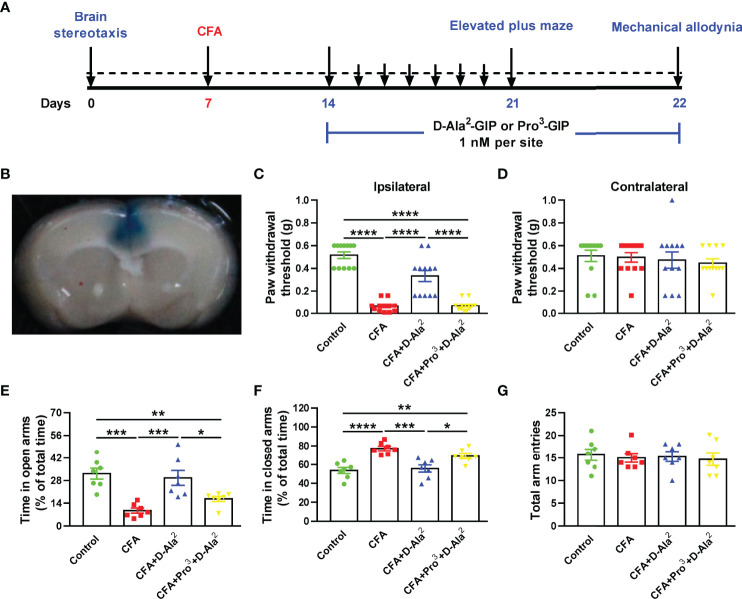
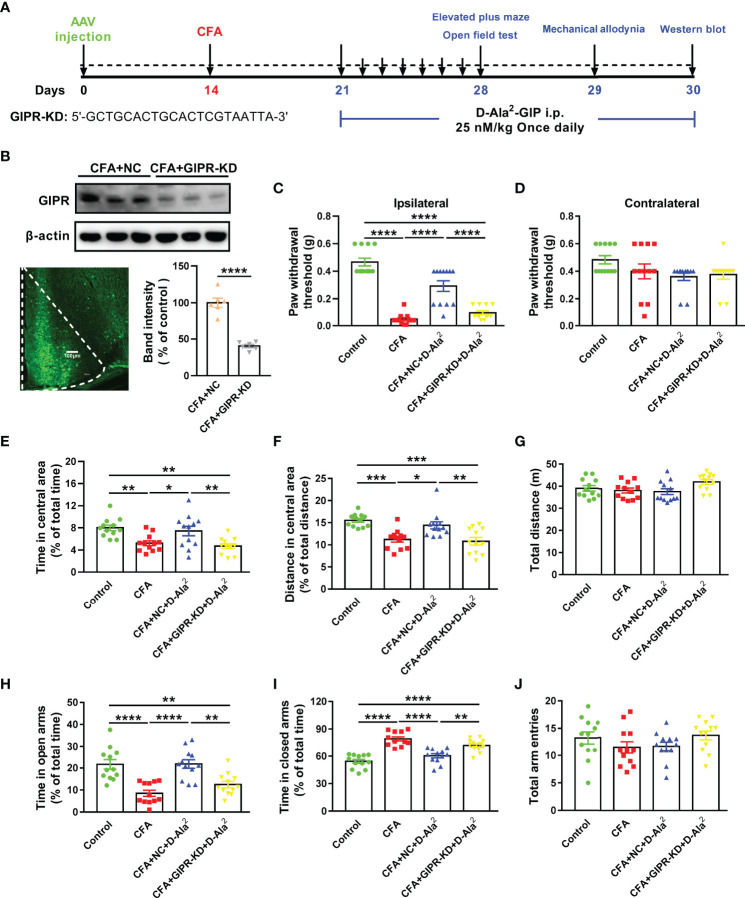
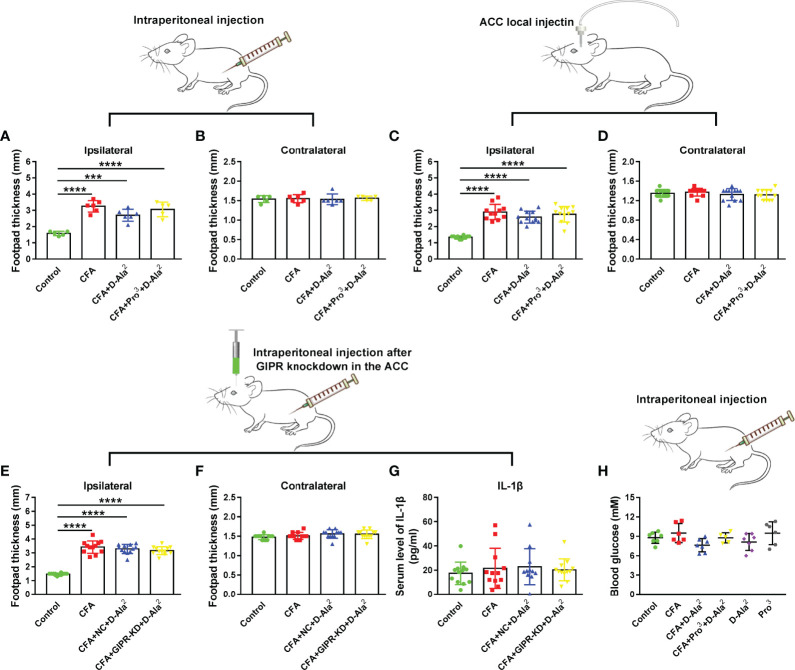
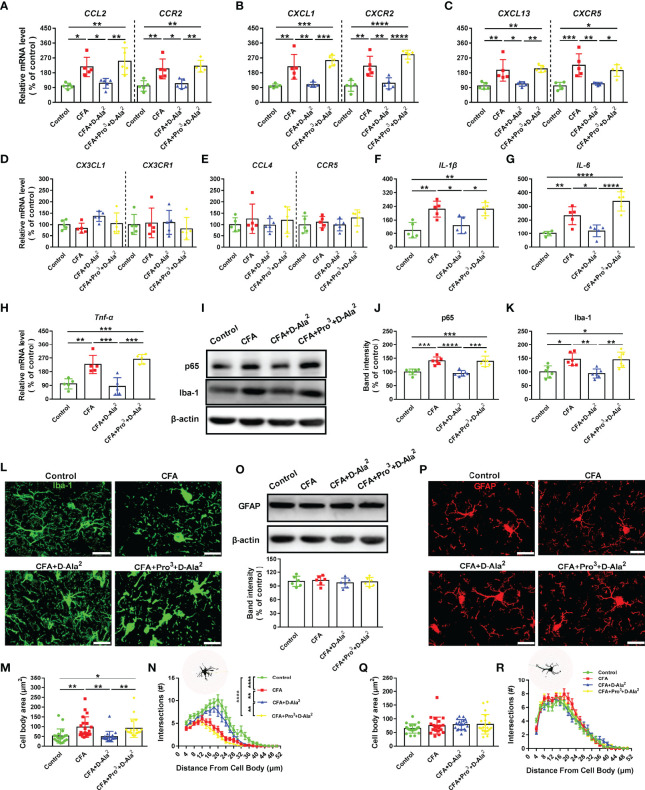
The chronic inflammatory pain model was established by hind paw injection with complete Freund's adjuvant (CFA) in C57BL/6 mice. GIP receptor (GIPR) agonist (D-Ala-GIP) and antagonist (Pro-GIP) were given by intraperitoneal injection or anterior cingulate cortex (ACC) local microinjection. Von Frey filaments and radiant heat were employed to assess the mechanical and thermal hypersensitivity. Anxiety-like behaviors were detected by open field and elevated plus maze tests. The underlying mechanisms in the peripheral nervous system and CNS were explored by GIPR shRNA knockdown in the ACC, enzyme-linked immunosorbent assay, western blot analysis, whole-cell patch-clamp recording, immunofluorescence staining and quantitative real-time PCR.
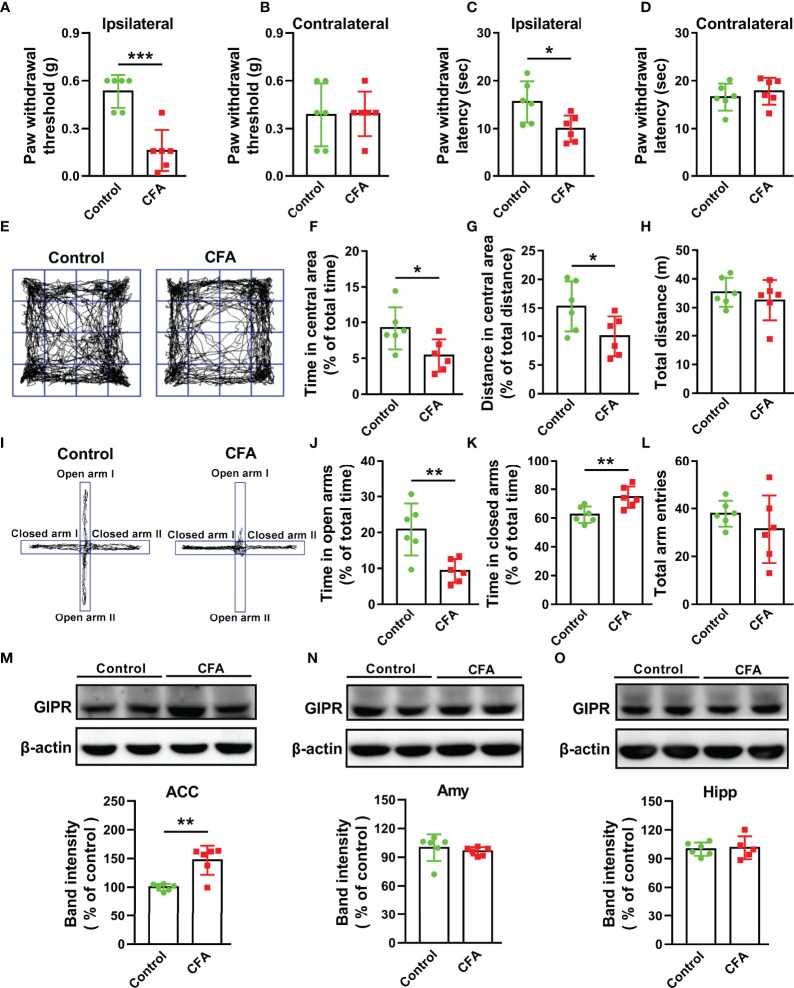
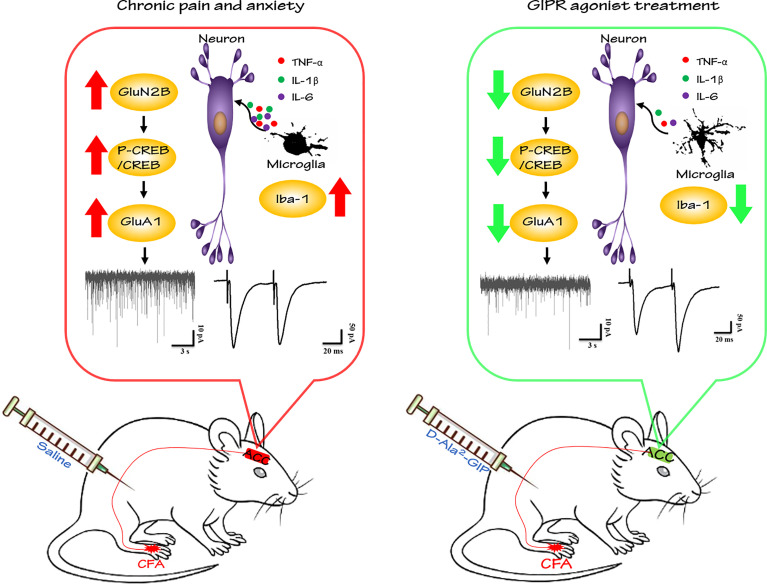
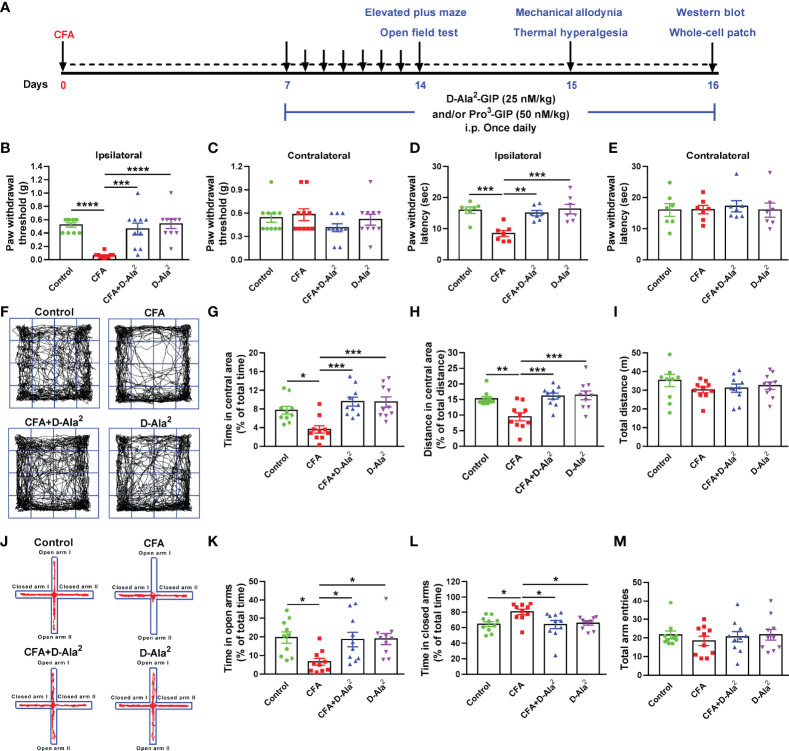
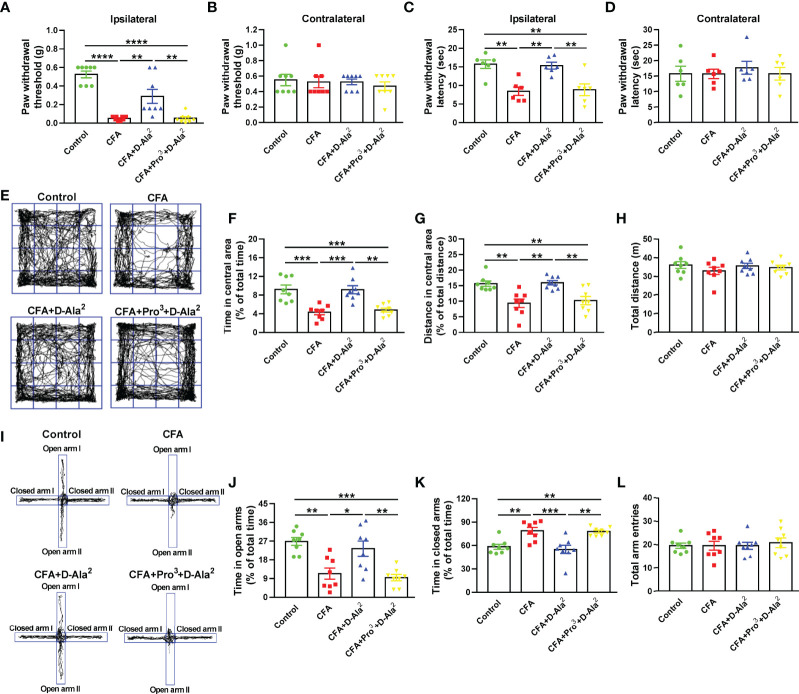
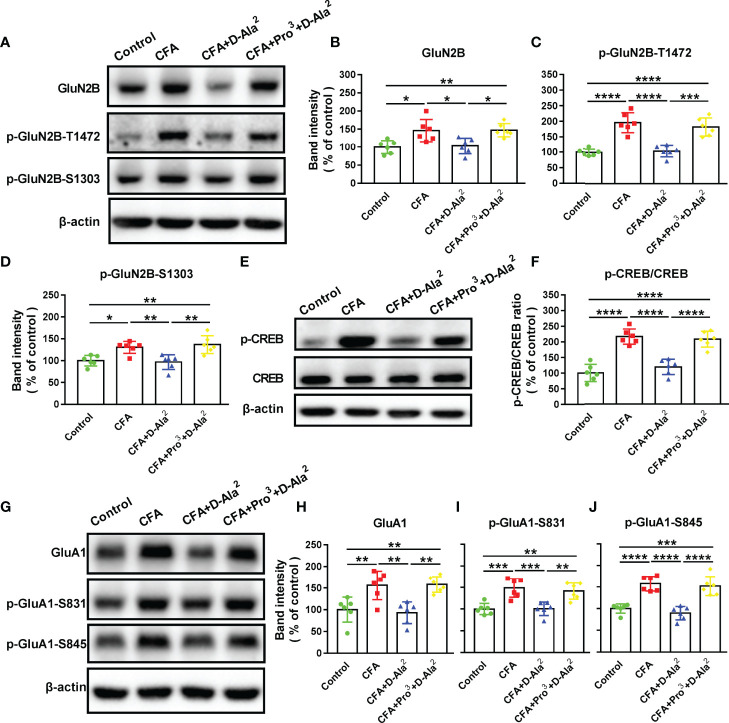
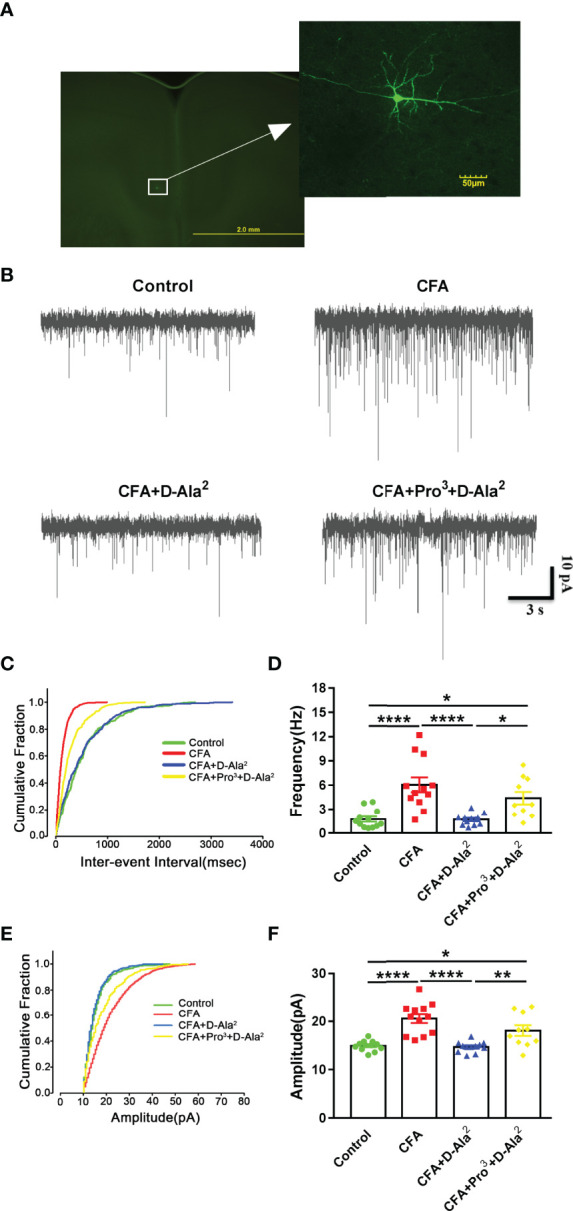
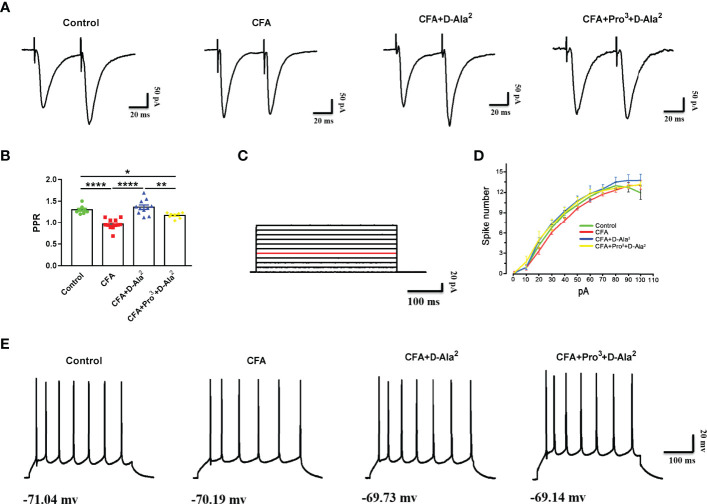
In the present study, we found that hind paw injection with CFA induced pain sensitization and anxiety-like behaviors in mice. The expression of GIPR in the ACC was significantly higher in CFA-injected mice. D-Ala-GIP administration by intraperitoneal or ACC local microinjection produced analgesic and anxiolytic effects; these were blocked by Pro-GIP and GIPR shRNA knockdown in the ACC. Activation of GIPR inhibited neuroinflammation and activation of microglia, reversed the upregulation of NMDA and AMPA receptors, and suppressed the enhancement of excitatory neurotransmission in the ACC of model mice.
GIPR activation was found to produce analgesic and anxiolytic effects, which were partially due to attenuation of neuroinflammation and inhibition of excitatory transmission in the ACC. GIPR may be a suitable target for treatment of chronic inflammatory pain and pain-related anxiety.
慢性疼痛被定义为持续时间通常超过六个月的疼痛。慢性疼痛常伴有焦虑症,而这两者往往会相互加重。这使得这些疾病的治疗更加困难。葡萄糖依赖性胰岛素释放多肽(GIP)是肠促胰岛素激素家族的一员,在葡萄糖代谢中发挥关键作用。先前的研究表明 GIP 在生理和病理过程中具有多种作用。在中枢神经系统(CNS)中,对 GIP 的研究主要集中在神经退行性疾病上;因此,对于 GIP 在慢性疼痛和与疼痛相关的焦虑障碍中的作用知之甚少。
通过向 C57BL/6 小鼠的后爪注射完全弗氏佐剂(CFA)建立慢性炎症性疼痛模型。通过腹腔内注射或扣带前皮质(ACC)局部微注射给予 GIP 受体(GIPR)激动剂(D-Ala-GIP)和拮抗剂(Pro-GIP)。使用 von Frey 纤维和辐射热评估机械和热感觉过敏。通过旷场和高架十字迷宫试验检测焦虑样行为。通过在 ACC 中敲低 GIPR shRNA、酶联免疫吸附试验、western blot 分析、全细胞膜片钳记录、免疫荧光染色和实时定量 PCR 来探索外周神经系统和 CNS 的潜在机制。
在本研究中,我们发现向爪注射 CFA 可诱导小鼠疼痛敏化和焦虑样行为。CFA 注射小鼠的 ACC 中 GIPR 的表达明显升高。腹腔内或 ACC 局部微注射 D-Ala-GIP 可产生镇痛和抗焦虑作用;这些作用被 Pro-GIP 和 ACC 中 GIPR shRNA 敲低所阻断。GIPR 的激活抑制了神经炎症和小胶质细胞的激活,逆转了 NMDA 和 AMPA 受体的上调,并抑制了模型小鼠 ACC 中兴奋性神经递质传递的增强。
发现 GIPR 的激活可产生镇痛和抗焦虑作用,部分原因是减轻了 ACC 中的神经炎症和抑制了兴奋性传递。GIPR 可能是治疗慢性炎症性疼痛和与疼痛相关的焦虑的合适靶点。