
宿主细胞依赖性晚期进入步骤决定乙型肝炎病毒感染。
Host cell-dependent late entry step as determinant of hepatitis B virus infection.
机构信息
Department of Microbiology and Immunology, The Pennsylvania State University College of Medicine, Hershey, Pennsylvania, United States of America.
Department of Pharmacology, Department of Biochemistry and Molecular Biology, Institute for Personalized Medicine, The Pennsylvania State University College of Medicine, Hershey, Pennsylvania, United States of America.
出版信息
PLoS Pathog. 2022 Jun 17;18(6):e1010633. doi: 10.1371/journal.ppat.1010633. eCollection 2022 Jun.
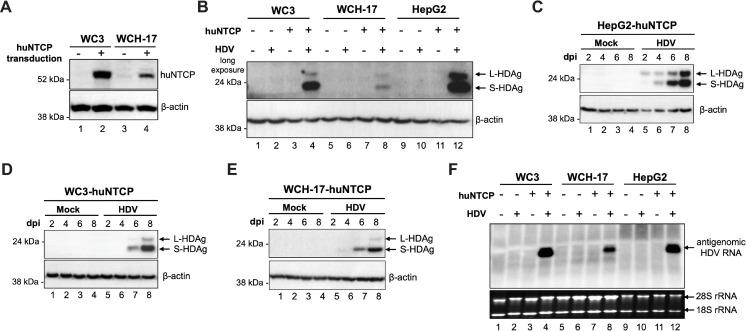
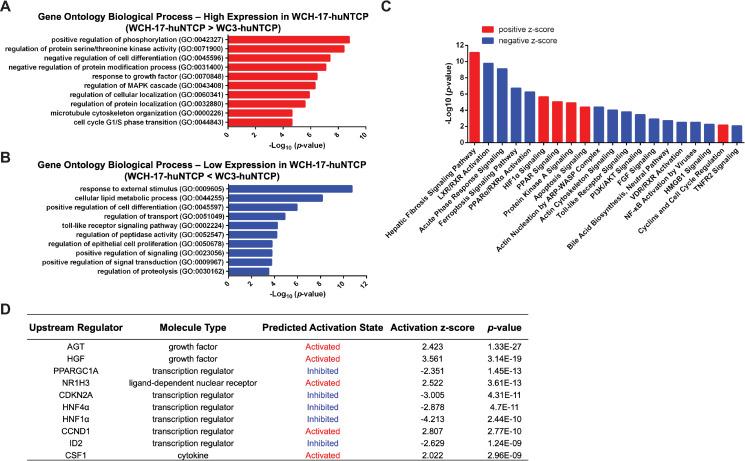
Hepatitis B virus (HBV) has a highly restricted host range and cell tropism. Other than the human sodium taurocholate cotransporting polypeptide (huNTCP), the HBV entry receptor, host determinants of HBV susceptibility are poorly understood. Woodchucks are naturally infected with woodchuck hepatitis virus (WHV), closely related to HBV, but not with HBV. Here, we investigated the capabilities of woodchuck hepatic and human non-hepatic cell lines to support HBV infection. DNA transfection assays indicated that all cells tested supported both HBV and WHV replication steps post entry, including the viral covalently closed circular DNA (cccDNA) formation, which is essential for establishing and sustaining infection. Ectopic expression of huNTCP rendered one, but not the other, woodchuck hepatic cell line and the non-hepatic human cell line competent to support productive HBV entry, defined here by cccDNA formation during de novo infection. All huNTCP-expressing cell lines tested became susceptible to infection with hepatitis D virus (HDV) that shares the same entry receptor and initial steps of entry with HBV, suggesting that a late entry/trafficking step(s) of HBV infection was defective in one of the two woodchuck cell lines. In addition, the non-susceptible woodchuck hepatic cell line became susceptible to HBV after fusion with human hepatic cells, suggesting the lack of a host cell-dependent factor(s) in these cells. Comparative transcriptomic analysis of the two woodchuck cell lines revealed widespread differences in gene expression in multiple biological processes that may contribute to HBV infection. In conclusion, other than huNTCP, neither human- nor hepatocyte-specific factors are essential for productive HBV entry. Furthermore, a late trafficking step(s) during HBV infection, following the shared entry steps with HDV and before cccDNA formation, is subject to host cell regulation and thus, a host determinant of HBV infection.
乙型肝炎病毒(HBV)具有高度受限的宿主范围和细胞嗜性。除了人牛磺胆酸钠共转运多肽(huNTCP),HBV 的进入受体外,HBV 易感性的宿主决定因素知之甚少。土拨鼠自然感染土拨鼠肝炎病毒(WHV),与 HBV 密切相关,但不感染 HBV。在这里,我们研究了土拨鼠肝和人非肝细胞系支持 HBV 感染的能力。DNA 转染实验表明,所有测试的细胞均支持 HBV 和 WHV 复制步骤,包括病毒共价闭合环状 DNA(cccDNA)形成,这对于建立和维持感染至关重要。huNTCP 的异位表达使一种而非另一种土拨鼠肝细胞系和非肝人细胞系有能力支持产生活性 HBV 进入,这里定义为在从头感染期间形成 cccDNA。所有表达 huNTCP 的细胞系都变得容易感染乙型肝炎 delta 病毒(HDV),HDV 与 HBV 共享相同的进入受体和进入的初始步骤,这表明在两种土拨鼠细胞系中的一种中,HBV 感染的晚期进入/运输步骤(多个)存在缺陷。此外,在与人肝细胞融合后,非易感的土拨鼠肝细胞系变得容易感染 HBV,这表明这些细胞中缺乏宿主细胞依赖性因子(多个)。对两种土拨鼠细胞系的比较转录组学分析表明,多个生物学过程中的基因表达存在广泛差异,这可能有助于 HBV 感染。总之,除了 huNTCP 外,人类和肝细胞特异性因子对于产生活性 HBV 进入都不是必需的。此外,HBV 感染后的晚期运输步骤(多个),与 HDV 共享进入步骤,然后是 cccDNA 形成,受到宿主细胞调节,因此是 HBV 感染的宿主决定因素。




 Zotero 插件