Department of Microbiology and Immunology, The Pennsylvania State University College of Medicine, Hershey, Pennsylvania, United States of America.
Department of Microbiology and Immunology, Georgetown University Medical Center, Washington, District of Columbia, United States of America.
PLoS Pathog. 2022 Jul 28;18(7):e1010739. doi: 10.1371/journal.ppat.1010739. eCollection 2022 Jul.
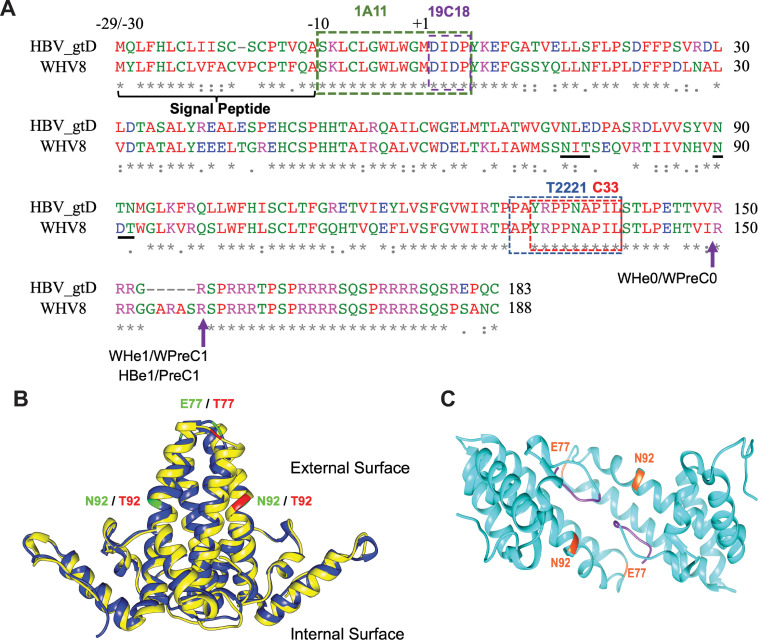
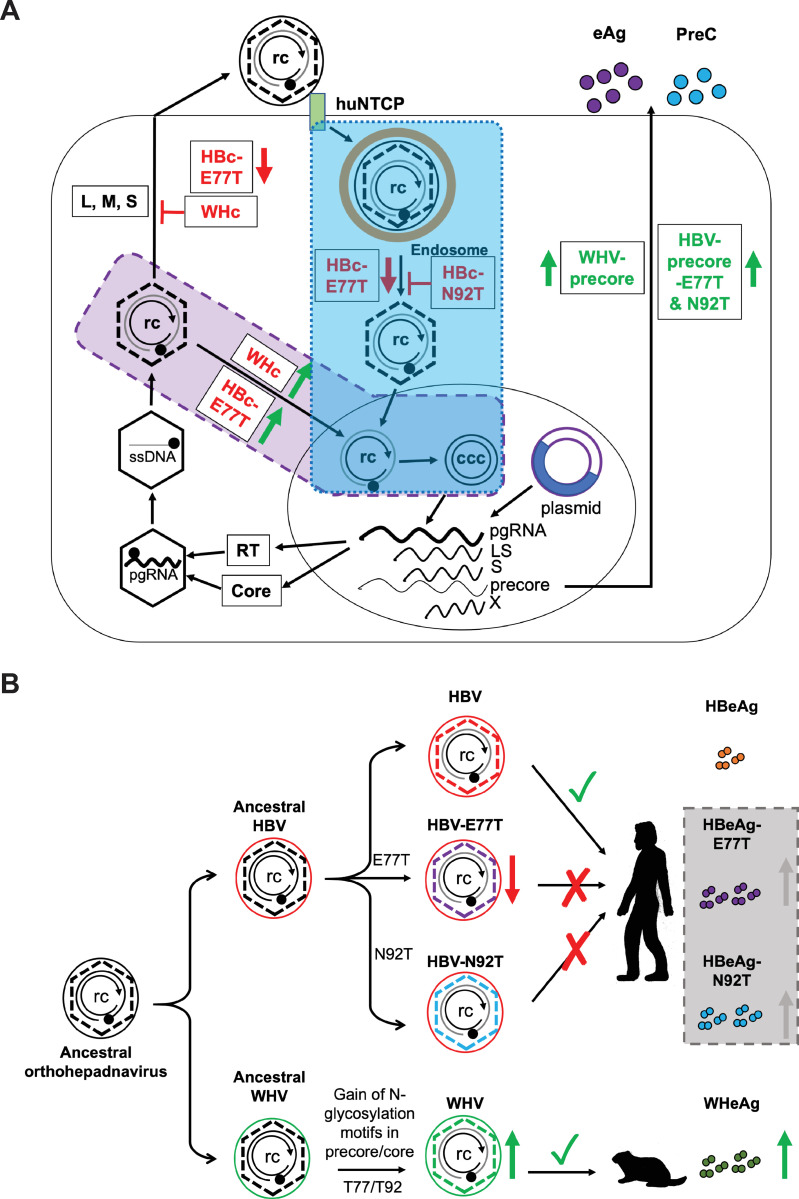
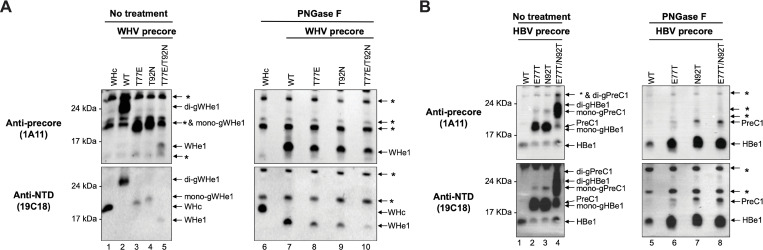
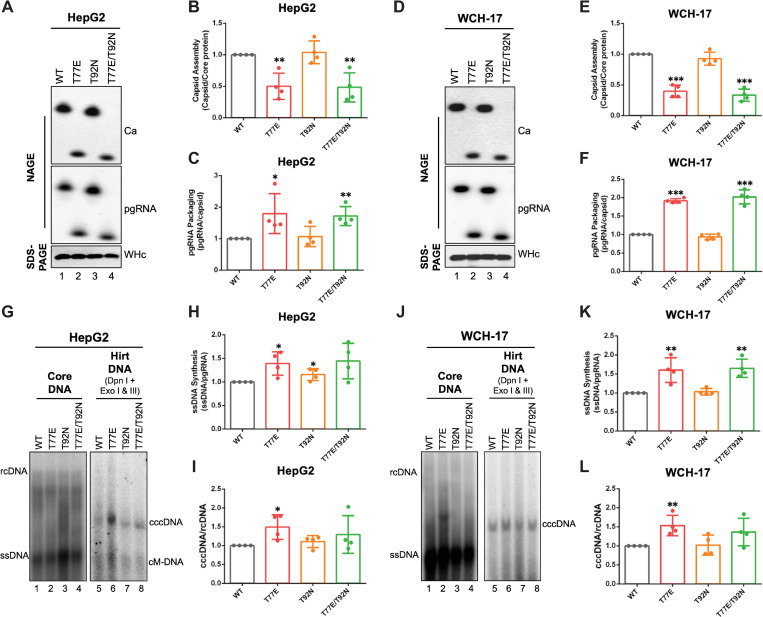
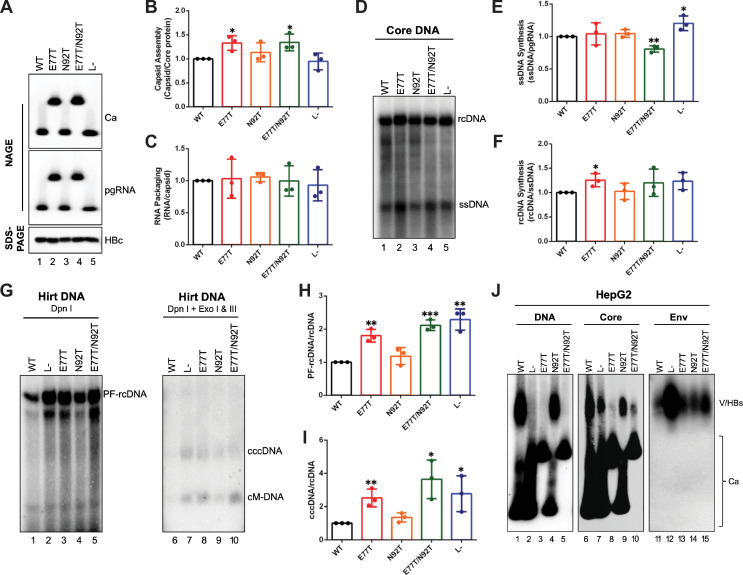
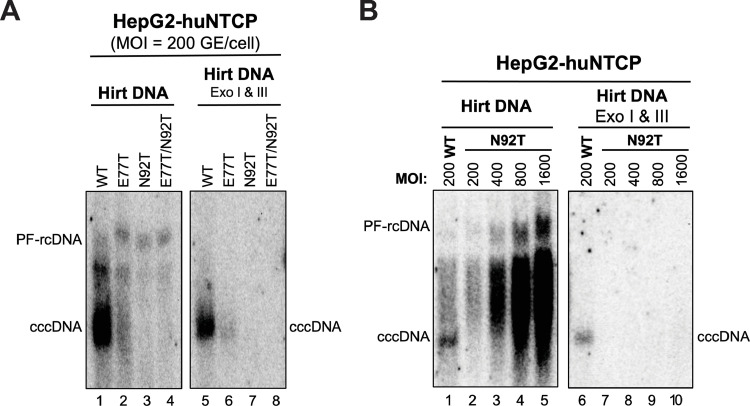
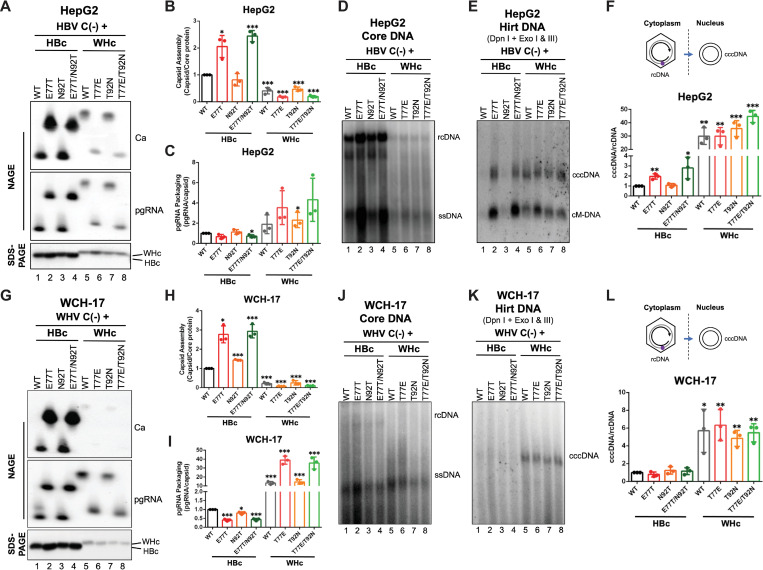
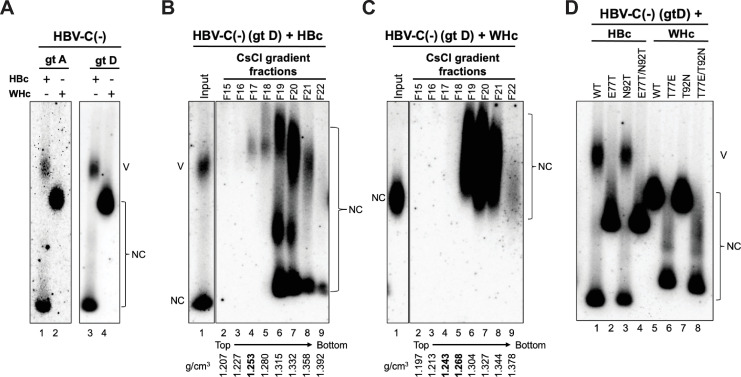
Hepadnaviruses use extensively overlapping genes to expand their coding capacity, especially the precore/core genes encode the precore and core proteins with mostly identical sequences but distinct functions. The precore protein of the woodchuck hepatitis virus (WHV) is N-glycosylated, in contrast to the precore of the human hepatitis B virus (HBV) that lacks N-glycosylation. To explore the roles of the N-linked glycosylation sites in precore and core functions, we substituted T77 and T92 in the WHV precore/core N-glycosylation motifs (75NIT77 and 90NDT92) with the corresponding HBV residues (E77 and N92) to eliminate the sequons. Conversely, these N-glycosylation sequons were introduced into the HBV precore/core gene by E77T and N92T substitutions. We found that N-glycosylation increased the levels of secreted precore gene products from both HBV and WHV. However, the HBV core (HBc) protein carrying the E77T substitution was defective in supporting virion secretion, and during infection, the HBc E77T and N92T substitutions impaired the formation of the covalently closed circular DNA (cccDNA), the critical viral DNA molecule responsible for establishing and maintaining infection. In cross-species complementation assays, both HBc and WHV core (WHc) proteins supported all steps of intracellular replication of the heterologous virus while WHc, with or without the N-glycosylation sequons, failed to interact with HBV envelope proteins for virion secretion. Interestingly, WHc supported more efficiently intracellular cccDNA amplification than HBc in the context of either HBV or WHV. These findings reveal novel determinants of precore secretion and core functions and illustrate strong constraints during viral host adaptation resulting from their compact genome and extensive use of overlapping genes.
嗜肝 DNA 病毒广泛使用重叠基因来扩大其编码能力,特别是前核心/核心基因编码的前核心和核心蛋白具有大部分相同的序列,但功能不同。与缺乏 N 糖基化的人乙型肝炎病毒 (HBV) 前核心不同,土拨鼠肝炎病毒 (WHV) 的前核心蛋白是 N-糖基化的。为了探索前核心和核心功能中 N 连接糖基化位点的作用,我们用相应的 HBV 残基 (E77 和 N92) 取代了 WHV 前核心/核心 N 糖基化基序 (75NIT77 和 90NDT92) 中的 T77 和 T92,从而消除了信号序列。相反,这些 N 糖基化信号序列通过 E77T 和 N92T 取代被引入到 HBV 前核心/核心基因中。我们发现 N 糖基化增加了 HBV 和 WHV 分泌前核心基因产物的水平。然而,携带 E77T 取代的 HBV 核心 (HBc) 蛋白在支持病毒粒子分泌方面存在缺陷,并且在感染过程中,HBc E77T 和 N92T 取代会损害共价闭合环状 DNA (cccDNA) 的形成,cccDNA 是负责建立和维持感染的关键病毒 DNA 分子。在种间互补实验中,HBc 和 WHV 核心 (WHc) 蛋白均支持异源病毒的所有细胞内复制步骤,而无论是否存在 N 糖基化信号序列,WHc 均无法与 HBV 包膜蛋白相互作用以进行病毒粒子分泌。有趣的是,在 HBV 或 WHV 的背景下,WHc 比 HBc 更有效地支持细胞内 cccDNA 扩增。这些发现揭示了前核心分泌和核心功能的新决定因素,并说明了在病毒宿主适应过程中由于其紧凑的基因组和广泛使用重叠基因而产生的强烈限制。