Yetkin Özbük Raife Meltem, Coşkun Ayşen, Filimonau Viachaslau
Faculty of Applied Sciences, Akdeniz University, 07070, Konyaaltı, Antalya, Turkey.
Faculty of Management, Bournemouth University, Talbot Campus, Fern Barrow, Poole, Dorset, BH12 5BB, UK.
Socioecon Plann Sci. 2022 Aug;82:101094. doi: 10.1016/j.seps.2021.101094. Epub 2021 Jun 9.
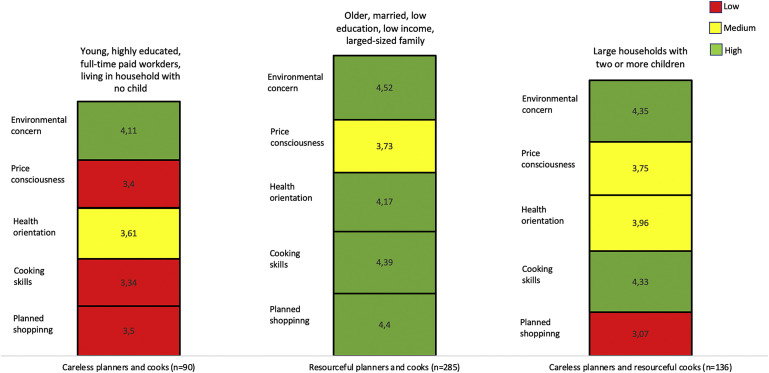
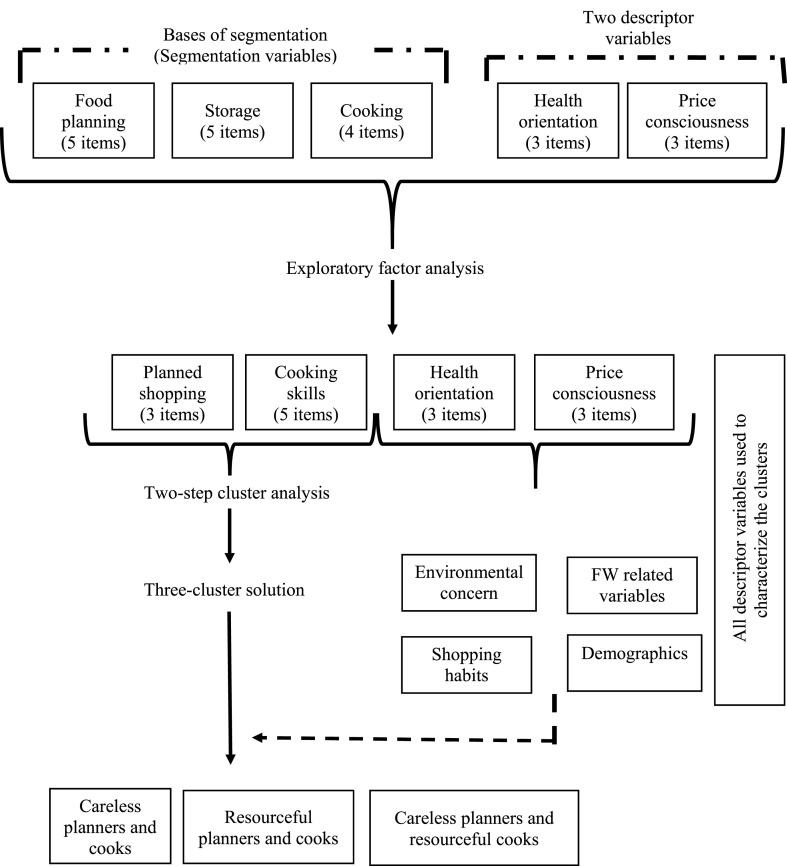
The COVID-19 pandemic has affected how households buy, prepare and consume food, with resultant impacts on food waste generated. These impacts have not yet been properly understood, especially in the context of developing countries. Better understanding of the impacts of COVID-19 on food management behavior of households can aid in the design of policy interventions to reduce the amounts of wasted food during disastrous events. This becomes particularly important in light of the likely pro-longed effect held by the pandemic on household lifestyles in the future. This study has segmented households in Turkey, a rapidly emerging economy, on the basis of the effects imposed by COVID-19 on their food management behavior. A two-step clustering analysis has been conducted on the factor scores of planned shopping and cooking skills. Three segments were identified: and The segments were further described using health orientation, price consciousness, environmental concern, food waste disposal routines and self-perception of the amount of food waste variables. The first and the smallest segment, is characterized by low levels of planned shopping and cooking skills, with resultant significant wastage. The largest segment of demonstrates excellent planned shopping and cooking skills, with resultant small wastage. The segment of showcases excellent cooking skills, but poor skills of planned shopping. The study provides first known evidence to understand how Turkish households differ on the grounds of their food management behavior in the time of the pandemic, thus laying a foundation for future segmentation studies in Turkey and beyond.
新冠疫情影响了家庭购买、准备和消费食物的方式,进而对食物浪费产生了影响。这些影响尚未得到充分理解,尤其是在发展中国家的背景下。更好地了解新冠疫情对家庭食物管理行为的影响,有助于设计政策干预措施,以减少灾难事件期间的食物浪费量。鉴于疫情未来可能对家庭生活方式产生长期影响,这一点变得尤为重要。本研究根据新冠疫情对土耳其(一个快速崛起的经济体)家庭食物管理行为的影响,对家庭进行了分类。对计划购物和烹饪技能的因子得分进行了两步聚类分析。确定了三个类别:[此处原文未给出类别具体内容]。使用健康导向、价格意识、环境关注、食物浪费处理习惯以及对食物浪费量的自我认知等变量对这些类别进行了进一步描述。第一个也是最小的类别,[此处原文未给出类别具体内容],其特点是计划购物和烹饪技能水平较低,导致大量浪费。最大的类别[此处原文未给出类别具体内容]展示了出色的计划购物和烹饪技能,导致少量浪费。[此处原文未给出类别具体内容]类别展示了出色的烹饪技能,但计划购物技能较差。该研究提供了首个已知证据,以了解土耳其家庭在疫情期间基于食物管理行为的差异,从而为土耳其及其他地区未来的分类研究奠定了基础。