Computational Systems Biomedicine Lab, Institut Pasteur, Université Paris Cité, Paris, France.
Computational Systems Biomedicine Lab, Institut Pasteur, Université Paris Cité, Paris, France, Department of Quantitative Biomedicine, University of Zurich, and ETH Zurich, Institute for Molecular Health Sciences, Zurich, Switzerland.
Arthritis Rheumatol. 2022 Dec;74(12):1991-2002. doi: 10.1002/art.42265. Epub 2022 Nov 2.
Primary Sjögren's syndrome (SS) is the second most frequent systemic autoimmune disease, affecting 0.1% of the general population. To characterize the molecular and clinical variabilities among patients with primary SS, we integrated transcriptomic, proteomic, cellular, and genetic data with clinical phenotypes in a cohort of 351 patients with primary SS.
We analyzed blood transcriptomes and genotypes of 351 patients with primary SS who were participants in a multicenter prospective clinical cohort. We replicated the transcriptome analysis in 3 independent cohorts (n = 462 patients). We determined circulating interferon-α (IFNα) and IFNγ protein concentrations using digital single molecular arrays (Simoa).
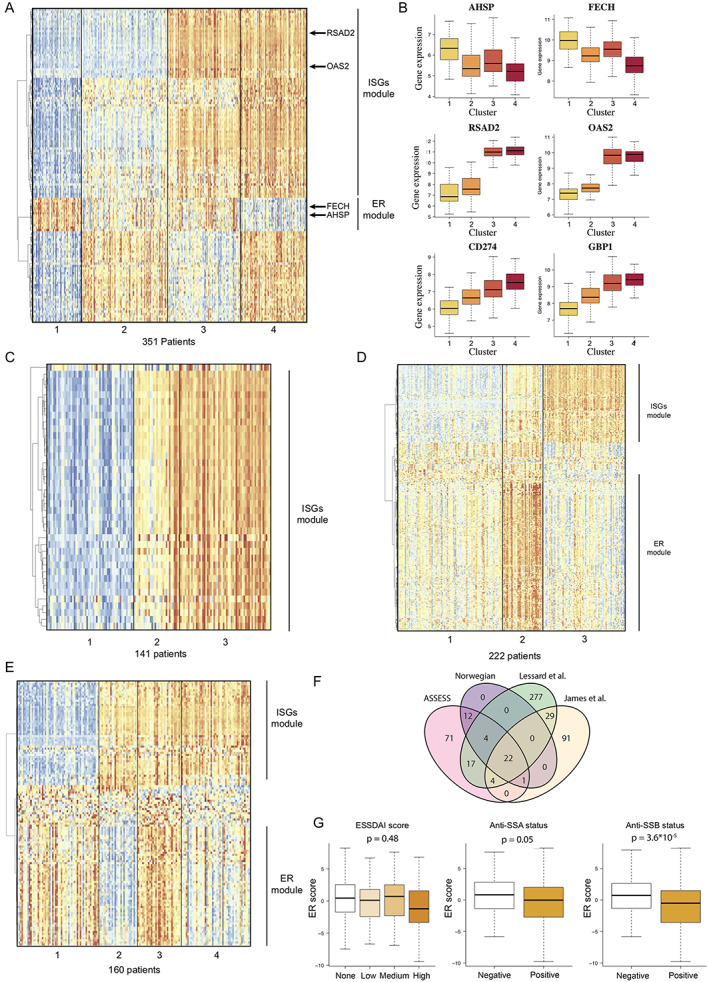
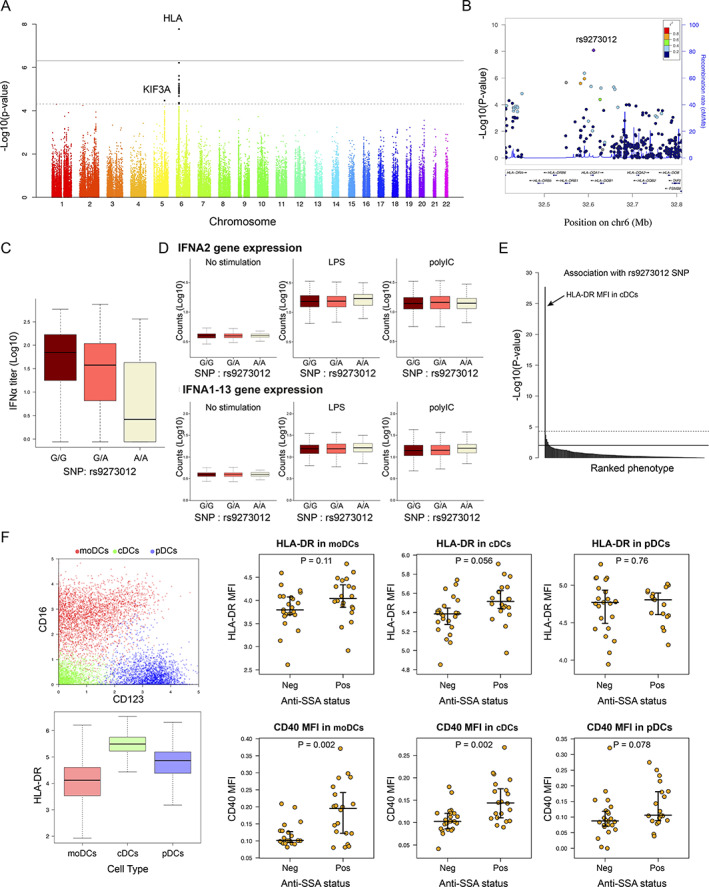
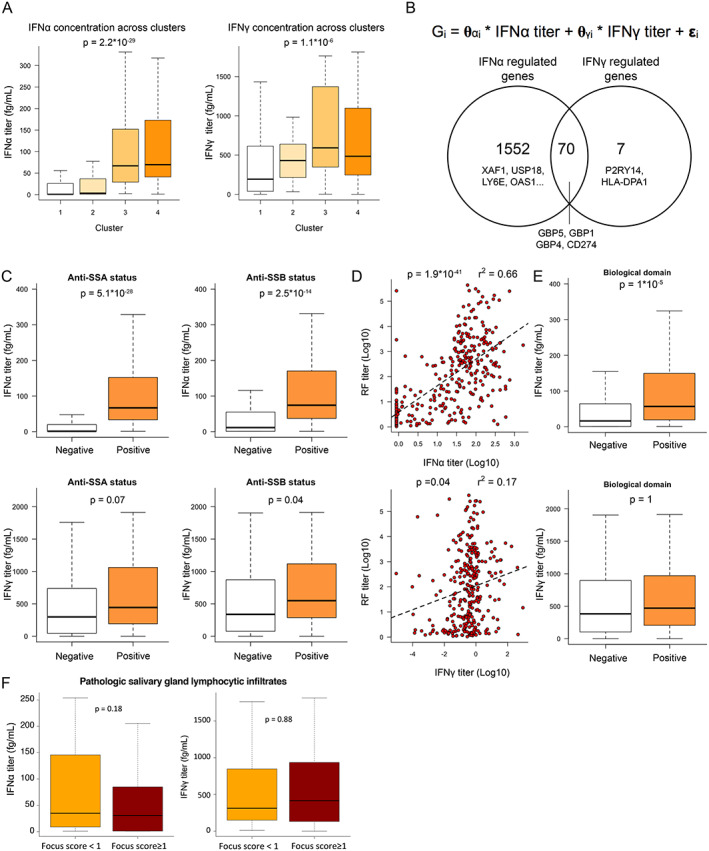
Transcriptome analysis of the prospective cohort showed a strong IFN gene signature in more than half of the patients; this finding was replicated in the 3 independent cohorts. Because gene expression analysis did not discriminate between type I IFN and type II IFN, we used Simoa to demonstrate that the IFN transcriptomic signature was driven by circulating IFNα and not by IFNγ protein levels. IFNα protein levels, detectable in 75% of patients, were significantly associated with clinical and immunologic features of primary SS disease activity at enrollment and with increased frequency of systemic complications over the 5-year follow-up. Genetic analysis revealed a significant association between IFNα protein levels, a major histocompatibility (MHC) class II haplotype, and anti-SSA antibody. Additional cellular analysis revealed that an MHC class II HLA-DQ locus acts through up-regulation of HLA class II molecules on conventional dendritic cells.
We identified the predominance of IFNα as a driver of primary SS variability, with IFNα demonstrating an association with HLA gene polymorphisms.
原发性干燥综合征(SS)是第二大常见的系统性自身免疫性疾病,影响 0.1%的普通人群。为了描述原发性 SS 患者的分子和临床变异性,我们整合了转录组学、蛋白质组学、细胞和遗传数据以及 351 例原发性 SS 患者的临床表型。
我们分析了 351 例原发性 SS 患者的血液转录组和基因型,这些患者是多中心前瞻性临床队列的参与者。我们在 3 个独立队列(n=462 例患者)中复制了转录组分析。我们使用数字单分子阵列(Simoa)测定循环干扰素-α(IFNα)和 IFNγ蛋白浓度。
前瞻性队列的转录组分析显示,超过一半的患者存在强烈的 IFN 基因特征;这一发现在 3 个独立队列中得到了复制。由于基因表达分析不能区分 I 型 IFN 和 II 型 IFN,我们使用 Simoa 证明 IFN 转录组特征是由循环 IFNα驱动的,而不是 IFNγ蛋白水平。IFNα 蛋白水平在 75%的患者中可检测到,与原发性 SS 疾病活动的临床和免疫特征在入组时以及在 5 年随访期间全身性并发症的发生率显著相关。遗传分析显示 IFNα 蛋白水平、主要组织相容性(MHC)II 类单倍型与抗 SSA 抗体之间存在显著关联。额外的细胞分析表明,MHC 类 II HLA-DQ 基因座通过上调常规树突状细胞上的 MHC 类 II 分子发挥作用。
我们确定了 IFNα 的主导地位是原发性 SS 变异性的驱动因素,IFNα 与 HLA 基因多态性相关。