Institute of Immunology and Sir Run Run Shaw Hospital, Zhejiang University School of Medicine, Hangzhou, 310058, P. R. China.
Liangzhu Laboratory, Zhejiang University Medical Center, 1369 West Wenyi Road, Hangzhou, P. R. China.
Nat Commun. 2022 Jun 21;13(1):3544. doi: 10.1038/s41467-022-31149-y.
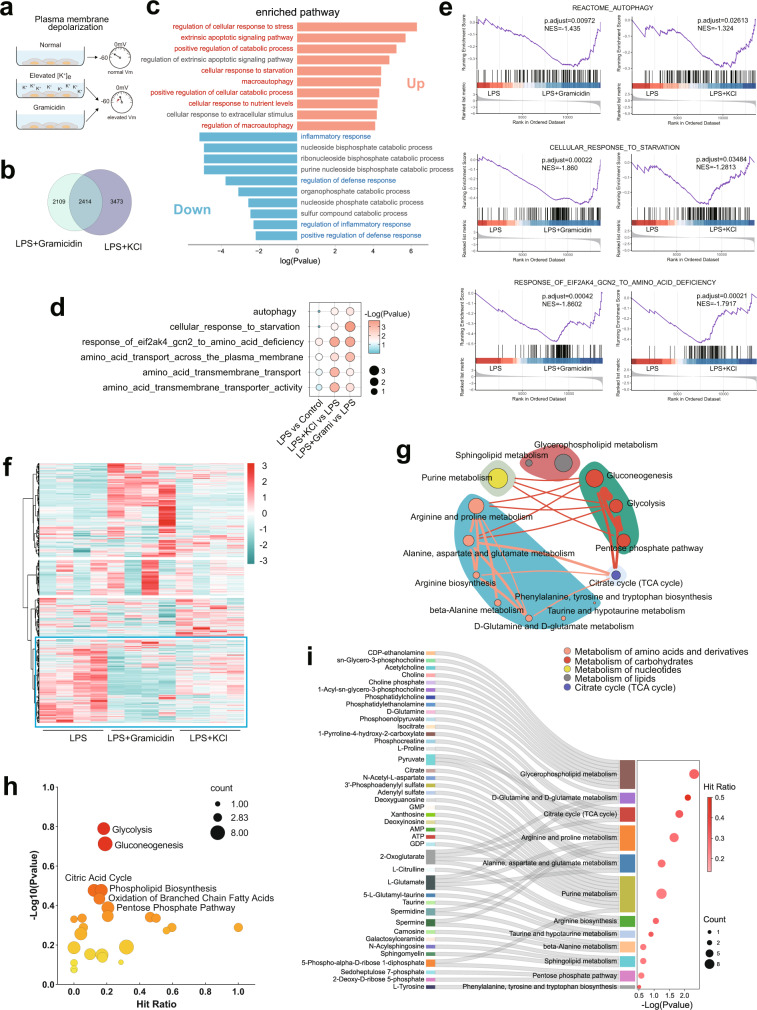
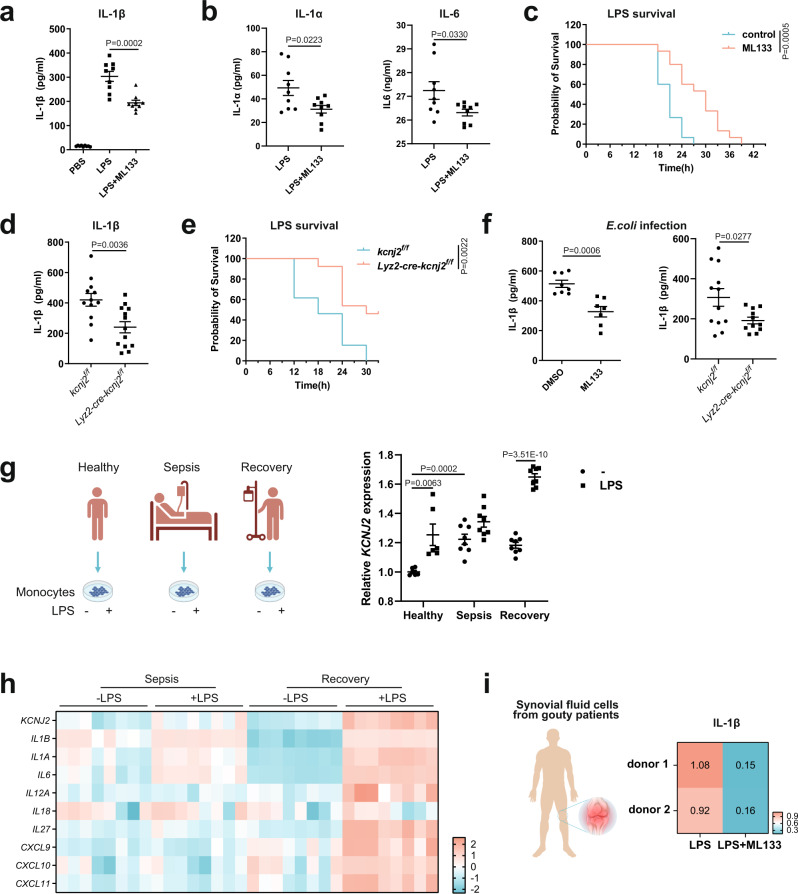
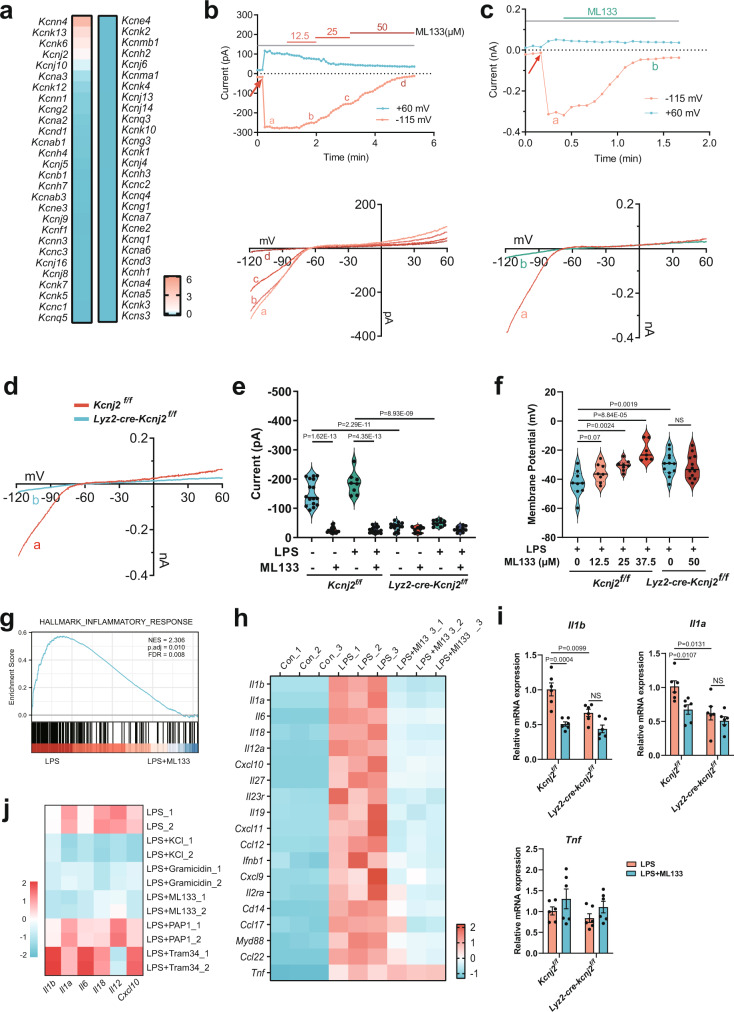
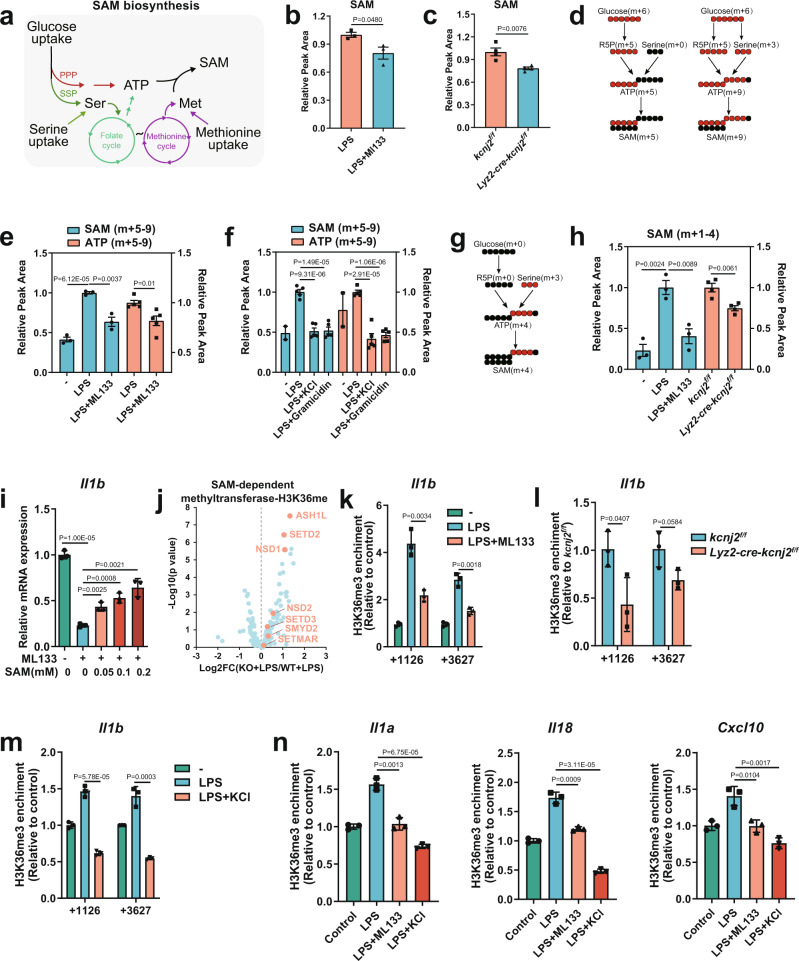
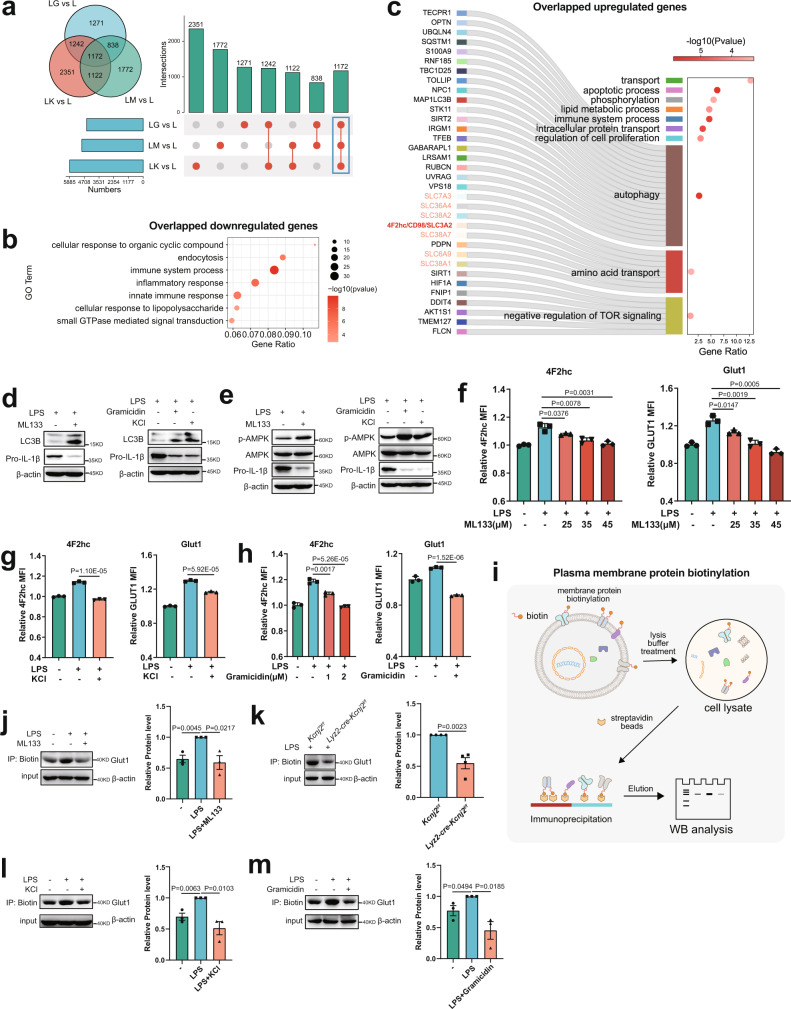
Immunometabolism contributes to inflammation, but how activated macrophages acquire extracellular nutrients to fuel inflammation is largely unknown. Here, we show that the plasma membrane potential (V) of macrophages mediated by Kir2.1, an inwardly-rectifying K channel, is an important determinant of nutrient acquisition and subsequent metabolic reprogramming promoting inflammation. In the absence of Kir2.1 activity, depolarized macrophage V lead to a caloric restriction state by limiting nutrient uptake and concomitant adaptations in nutrient conservation inducing autophagy, AMPK (Adenosine 5'-monophosphate-activated protein kinase), and GCN2 (General control nonderepressible 2), which subsequently depletes epigenetic substrates feeding histone methylation at loci of a cluster of metabolism-responsive inflammatory genes, thereby suppressing their transcription. Kir2.1-mediated V supports nutrient uptake by facilitating cell-surface retention of nutrient transporters such as 4F2hc and GLUT1 by its modulation of plasma membrane phospholipid dynamics. Pharmacological targeting of Kir2.1 alleviated inflammation triggered by LPS or bacterial infection in a sepsis model and sterile inflammation in human samples. These findings identify an ionic control of macrophage activation and advance our understanding of the immunomodulatory properties of V that links nutrient inputs to inflammatory diseases.
免疫代谢有助于炎症,但激活的巨噬细胞如何获得细胞外营养物质来促进炎症在很大程度上是未知的。在这里,我们表明,由内向整流钾通道 Kir2.1 介导的巨噬细胞膜电位 (V) 是营养物质获取和随后促进炎症的代谢重编程的重要决定因素。在没有 Kir2.1 活性的情况下,巨噬细胞 V 的去极化导致通过限制营养物质摄取和伴随的营养物质保护适应来限制热量,从而诱导自噬、AMPK(腺苷 5'-单磷酸激活蛋白激酶)和 GCN2(一般控制不可抑制 2),随后消耗表观遗传底物,在代谢反应性炎症基因簇的基因座上进行组蛋白甲基化,从而抑制其转录。Kir2.1 介导的 V 通过调节质膜磷脂动力学,支持通过 4F2hc 和 GLUT1 等营养转运体的细胞表面保留来促进营养物质摄取。Kir2.1 的药理学靶向作用减轻了脂多糖或细菌感染引发的败血症模型中的炎症和人类样本中的无菌性炎症。这些发现确定了巨噬细胞激活的离子控制,并增进了我们对 V 免疫调节特性的理解,该特性将营养物质输入与炎症性疾病联系起来。