Division of Allergy, Immunology & Rheumatology, Department of Paediatrics, University of California, San Diego, CA, USA.
Rady Children's Hospital, San Diego, CA, USA.
Nat Rev Rheumatol. 2022 Aug;18(8):448-463. doi: 10.1038/s41584-022-00797-1. Epub 2022 Jun 21.
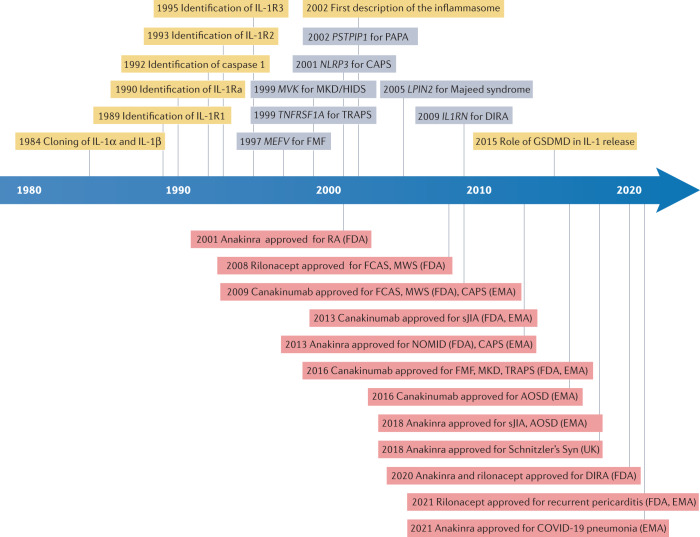
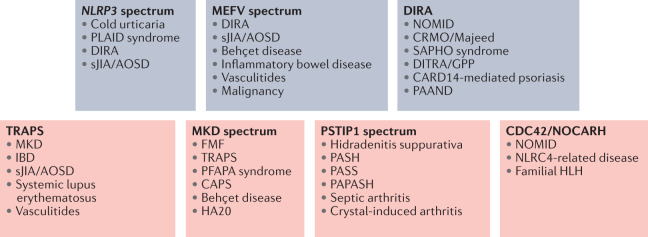
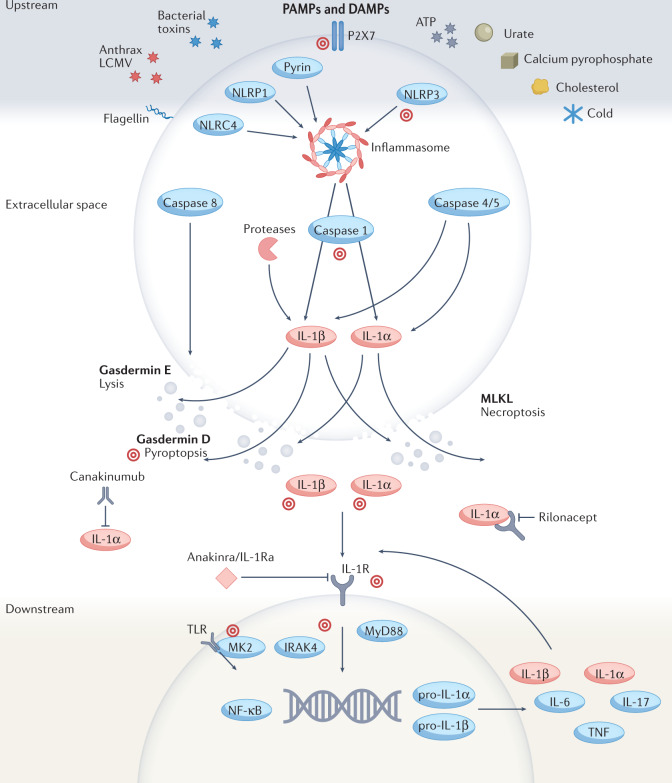
Over 20 years ago, it was first proposed that autoinflammation underpins a handful of rare monogenic disorders characterized by recurrent fever and systemic inflammation. The subsequent identification of novel, causative genes directly led to a better understanding of how the innate immune system is regulated under normal conditions, as well as its dysregulation associated with pathogenic mutations. Early on, IL-1 emerged as a central mediator for these diseases, based on data derived from patient cells, mutant mouse models and definitive clinical responses to IL-1 targeted therapy. Since that time, our understanding of the mechanisms of autoinflammation has expanded beyond IL-1 to additional innate immune processes. However, the number and complexity of IL-1-mediated autoinflammatory diseases has also multiplied to include additional monogenic syndromes with expanded genotypes and phenotypes, as well as more common polygenic disorders seen frequently by the practising clinician. In order to increase physician awareness and update rheumatologists who are likely to encounter these patients, this review discusses the general pathophysiological concepts of IL-1-mediated autoinflammation, the epidemiological and clinical features of specific diseases, diagnostic challenges and approaches, and current and future perspectives for therapy.
20 多年前,人们首次提出自身炎症是少数几种罕见的单基因疾病的基础,这些疾病的特征是反复发热和全身炎症。随后,新的致病基因的鉴定直接导致人们更好地理解了在正常情况下,先天免疫系统是如何被调节的,以及与致病性突变相关的失调。基于从患者细胞、突变小鼠模型和针对 IL-1 的明确临床治疗反应中获得的数据,IL-1 作为这些疾病的主要介质,早期就被认为是一个重要的治疗靶点。从那时起,我们对自身炎症机制的理解已经超出了 IL-1 ,扩展到了其他先天免疫过程。然而,IL-1 介导的自身炎症性疾病的数量和复杂性也增加了,包括具有扩展基因型和表型的其他单基因综合征,以及更常见的多基因疾病,这些疾病经常被临床医生遇到。为了提高医生的认识,并更新可能遇到这些患者的风湿病医生,本文讨论了 IL-1 介导的自身炎症的一般病理生理学概念、特定疾病的流行病学和临床特征、诊断挑战和方法,以及当前和未来的治疗前景。