Sengupta Pallav, Dutta Sulagna
Department of Physiology, Faculty of Medicine, Bioscience and Nursing, MAHSA University, Jenjarom, Selangor Malaysia.
Department of Oral Biology and Biomedical Sciences, Faculty of Dentistry, MAHSA University, Jenjarom, Selangor Malaysia.
Middle East Fertil Soc J. 2022;27(1):14. doi: 10.1186/s43043-022-00104-8. Epub 2022 Jun 15.
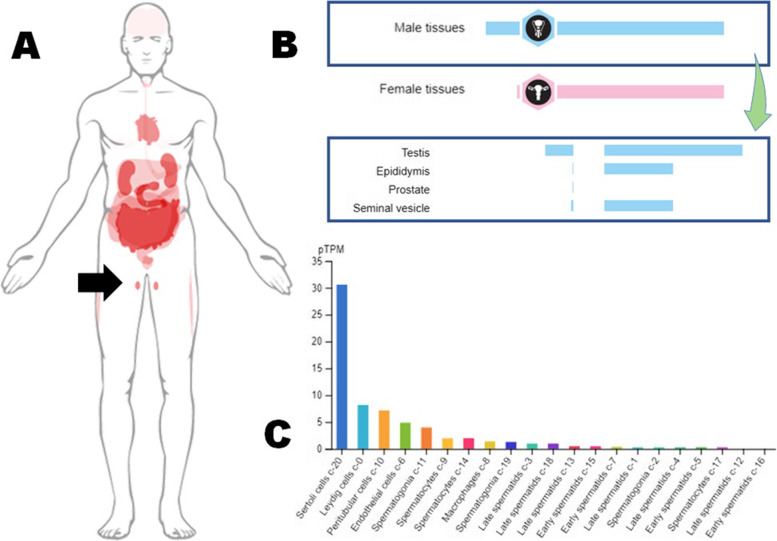
The severe acute respiratory syndrome coronavirus-2 (SARS-CoV-2), causing the coronavirus disease 2019 (COVID-19), has shown its persistent pandemic strength. This viral infectivity, kinetics, and the mechanisms of its actions in human body are still not completely understood. In addition, the infectivity and COVID-19 severity reportedly differ with patient's gender with men being more susceptible to the disease. Thus, different studies have also suggested the adverse impact of COVID-19 on male reproductive functions, mainly emphasizing on high expressions of angiotensin-converting enzyme 2 (ACE2) in the testes that allows the viral entry into the cells.
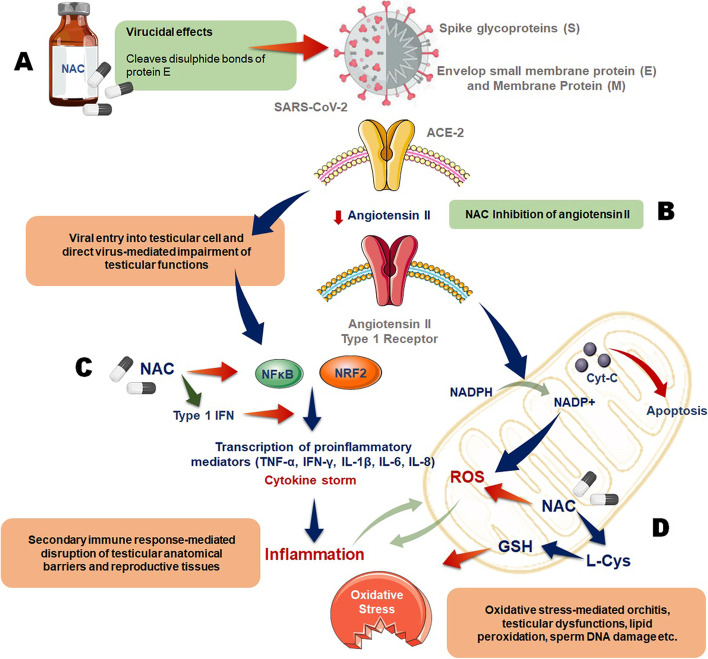
The N-acetylcysteine (NAC), a potent therapeutic agent of COVID-19, may be effective in reducing the impairing impacts of this disease on male reproductive functions. NAC acts as mucolytic agent by reducing sulfide bonds in the cross-linked glycoprotein matrix in mucus owing to its free sulfhydryl group. Since NAC also breaks the viral disulfide bonds required for the host cell invasion, it may help to prevent direct SARS-CoV-2 invasion into the testicular cells as well. NAC also acts as a potent anti-inflammatory and antioxidant, directly scavenging reactive oxygen species (ROS) and regulating the redox state by maintaining the thiol pool being a precursor of cysteine (an essential substrate for glutathione synthesis). Since it is suggested that male reproductive impairment in COVID-19 patient may be caused by secondary immune responses owing to systemic inflammation and OS, the anti-inflammatory and antioxidant properties of NAC explained above may attribute in protecting the male reproduction functions from these COVID-19-mediated damages.
This article explains the mechanisms how NAC treatment for COVID-19 may prevent the infection-mediated disruptions in male reproduction.
导致2019冠状病毒病(COVID-19)的严重急性呼吸综合征冠状病毒2(SARS-CoV-2)已显示出其持续的大流行强度。这种病毒的传染性、动力学及其在人体中的作用机制仍未完全了解。此外,据报道,COVID-19的传染性和严重程度因患者性别而异,男性更容易感染该疾病。因此,不同的研究也表明了COVID-19对男性生殖功能的不利影响,主要强调睾丸中血管紧张素转换酶2(ACE2)的高表达,这使得病毒能够进入细胞。
N-乙酰半胱氨酸(NAC)是一种治疗COVID-19的有效药物,可能有助于减轻该疾病对男性生殖功能的损害。NAC因其游离巯基可减少黏液中交联糖蛋白基质中的二硫键,从而起到黏液溶解剂的作用。由于NAC还能破坏宿主细胞入侵所需的病毒二硫键,因此它可能也有助于防止SARS-CoV-2直接侵入睾丸细胞。NAC还作为一种有效的抗炎和抗氧化剂,直接清除活性氧(ROS),并通过维持作为半胱氨酸(谷胱甘肽合成的必需底物)前体的硫醇池来调节氧化还原状态。由于有研究表明COVID-19患者的男性生殖功能损害可能是由全身炎症和氧化应激引起的继发性免疫反应所致,上述NAC的抗炎和抗氧化特性可能有助于保护男性生殖功能免受这些由COVID-19介导的损害。
本文解释了NAC治疗COVID-19可能预防感染介导的男性生殖功能破坏的机制。