Department of Biomedical Engineering, Duke University, Durham, NC, 27708-0281, USA.
Department of Chemical Engineering, University of Michigan, North Campus Research Complex, Building 28, 2800 Plymouth Rd, Ann Arbor, MI, 48109-2800, USA.
Adv Mater. 2022 Aug;34(33):e2201921. doi: 10.1002/adma.202201921. Epub 2022 Jul 14.
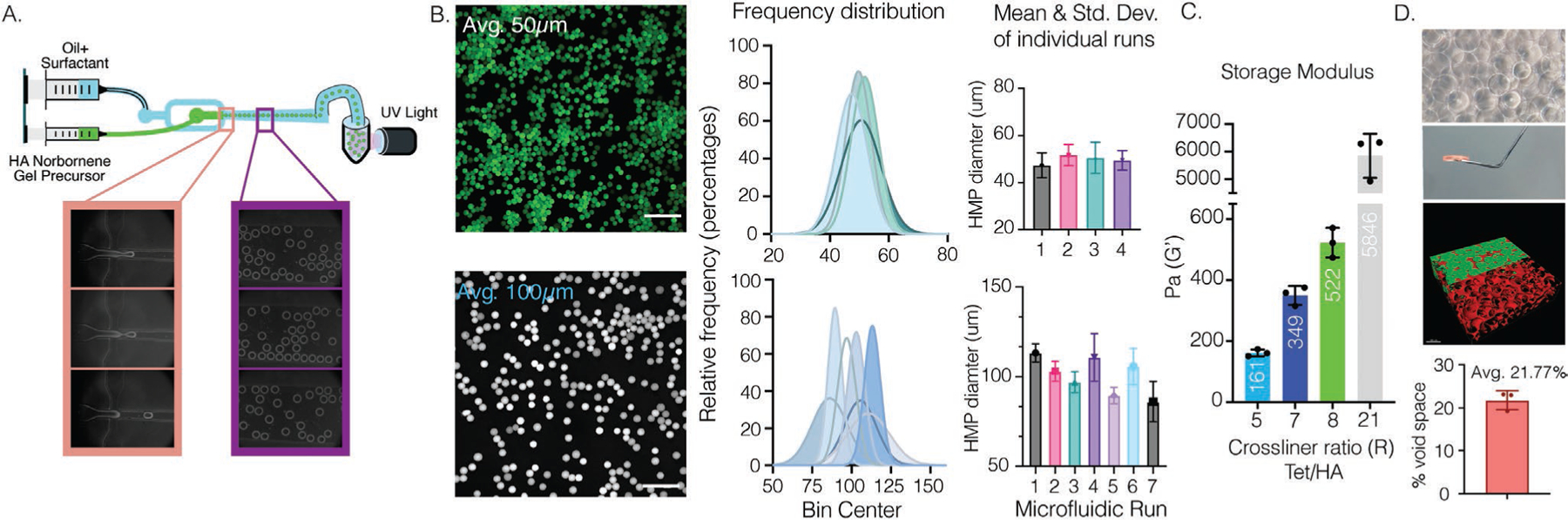
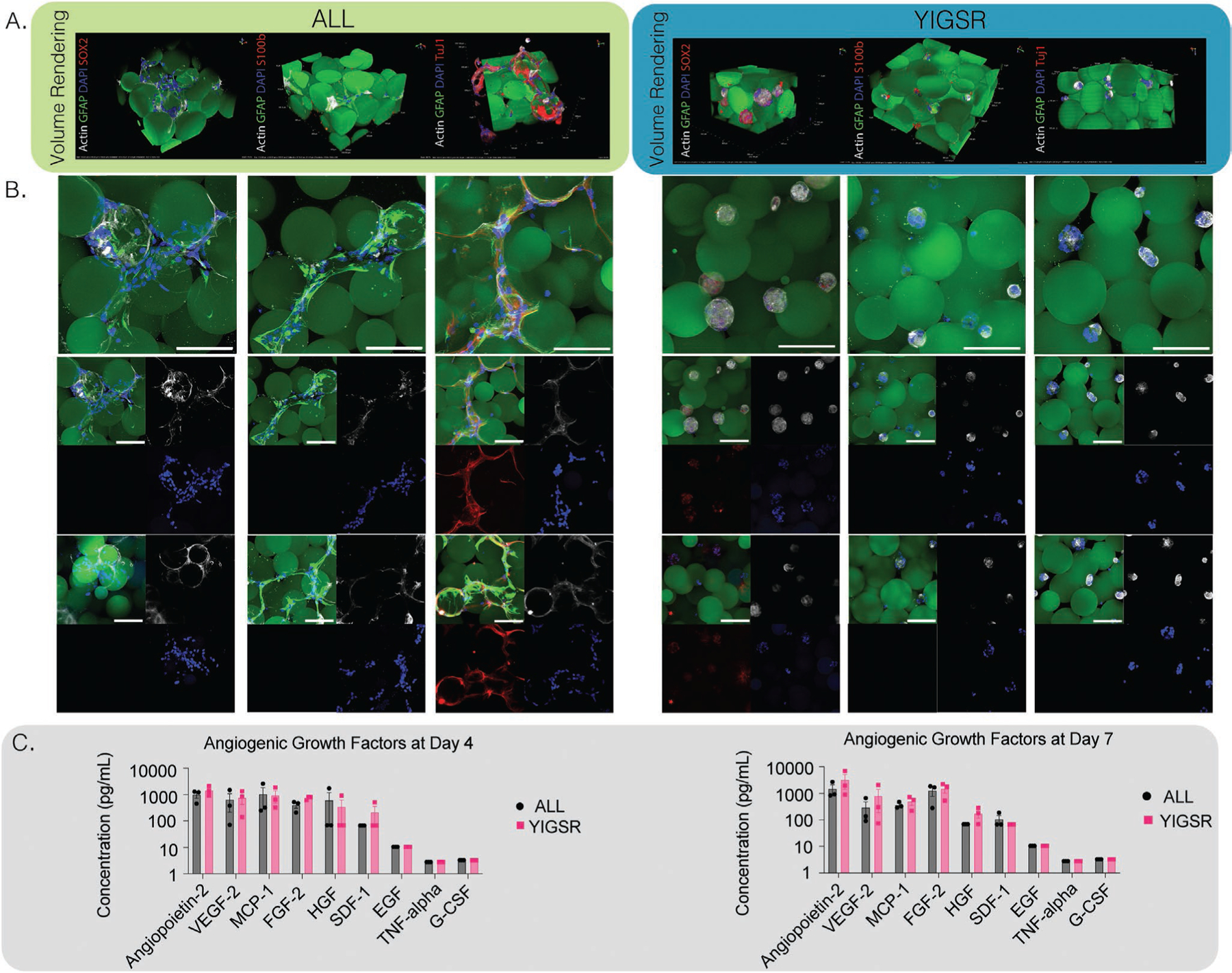
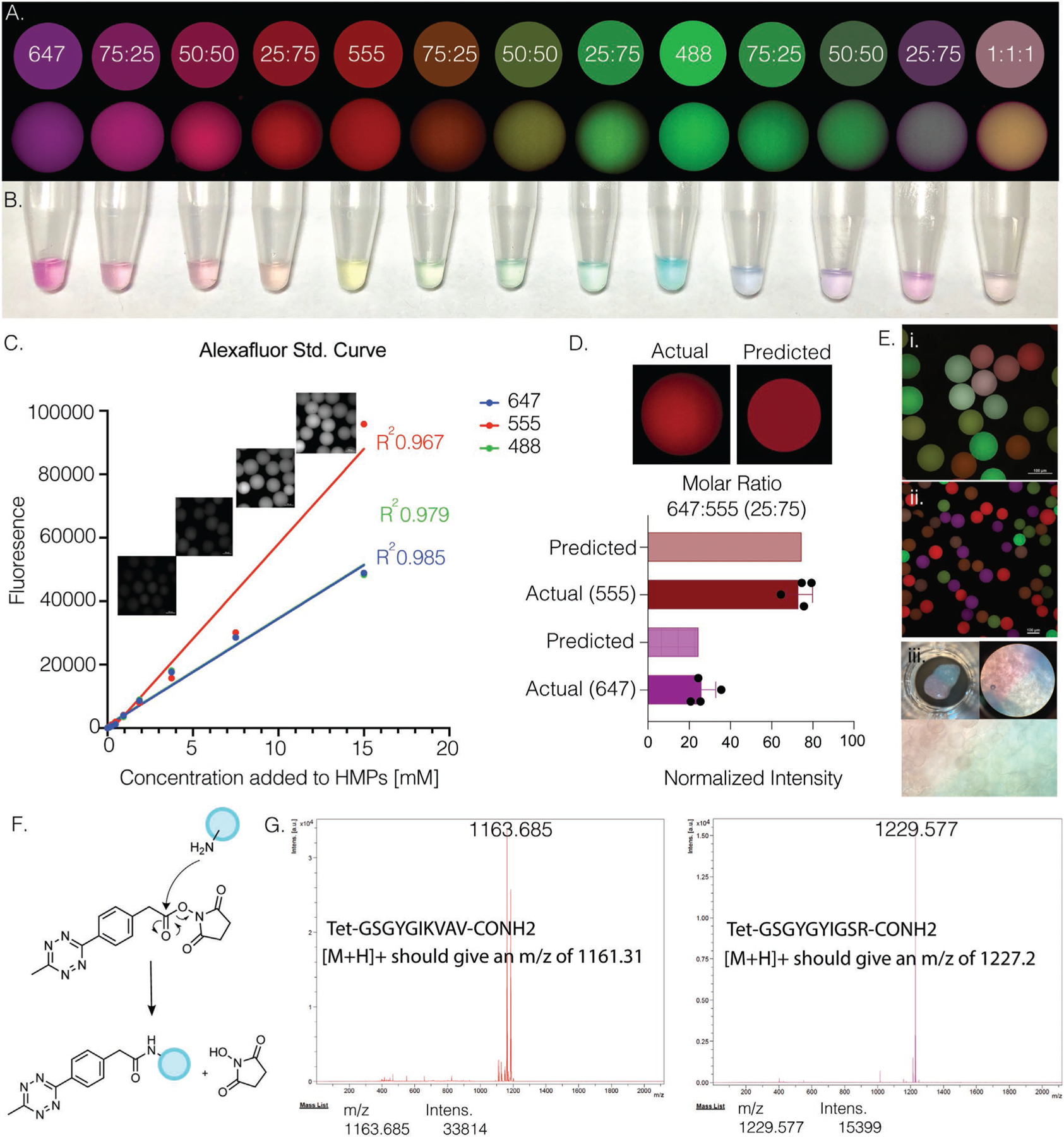
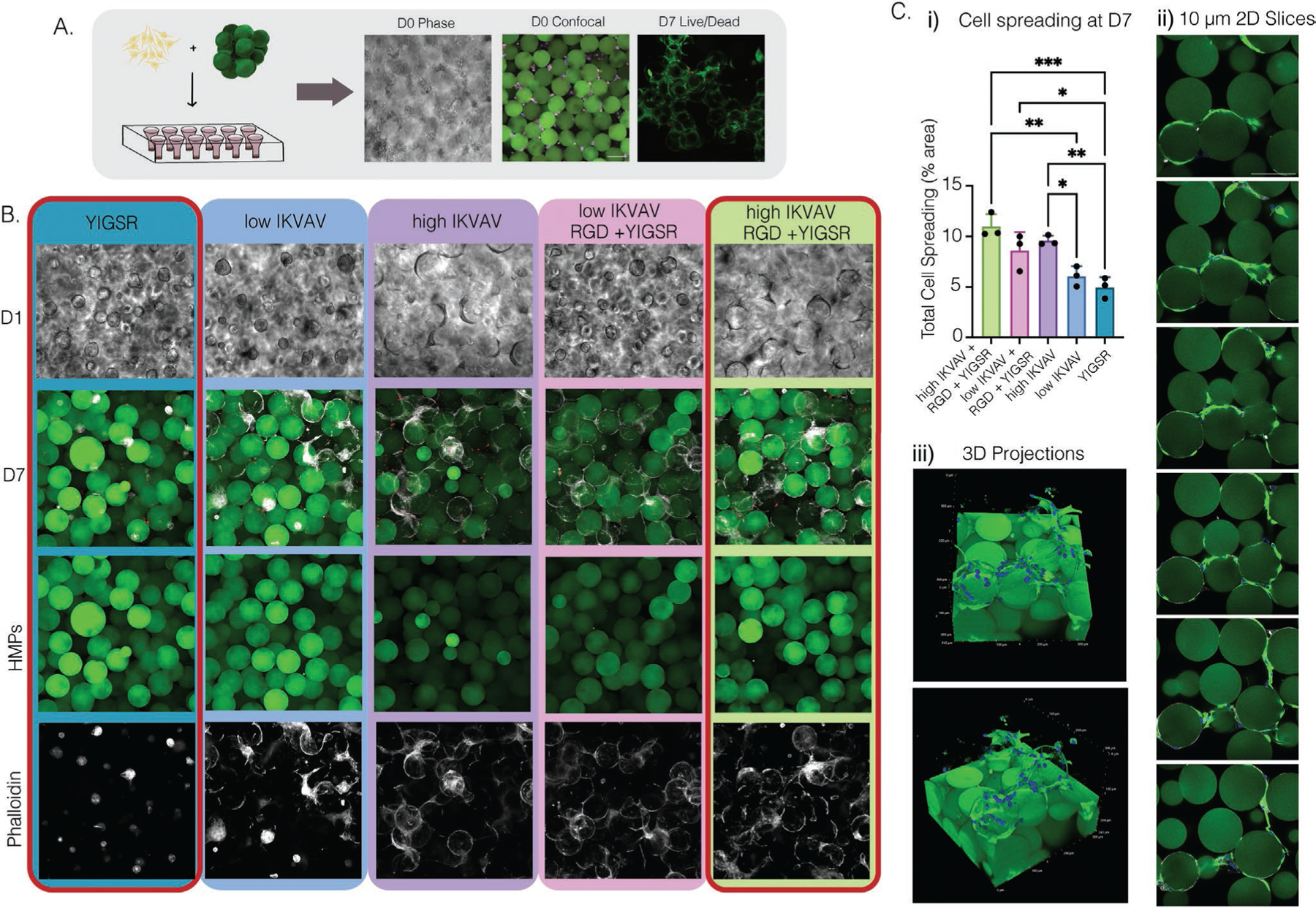
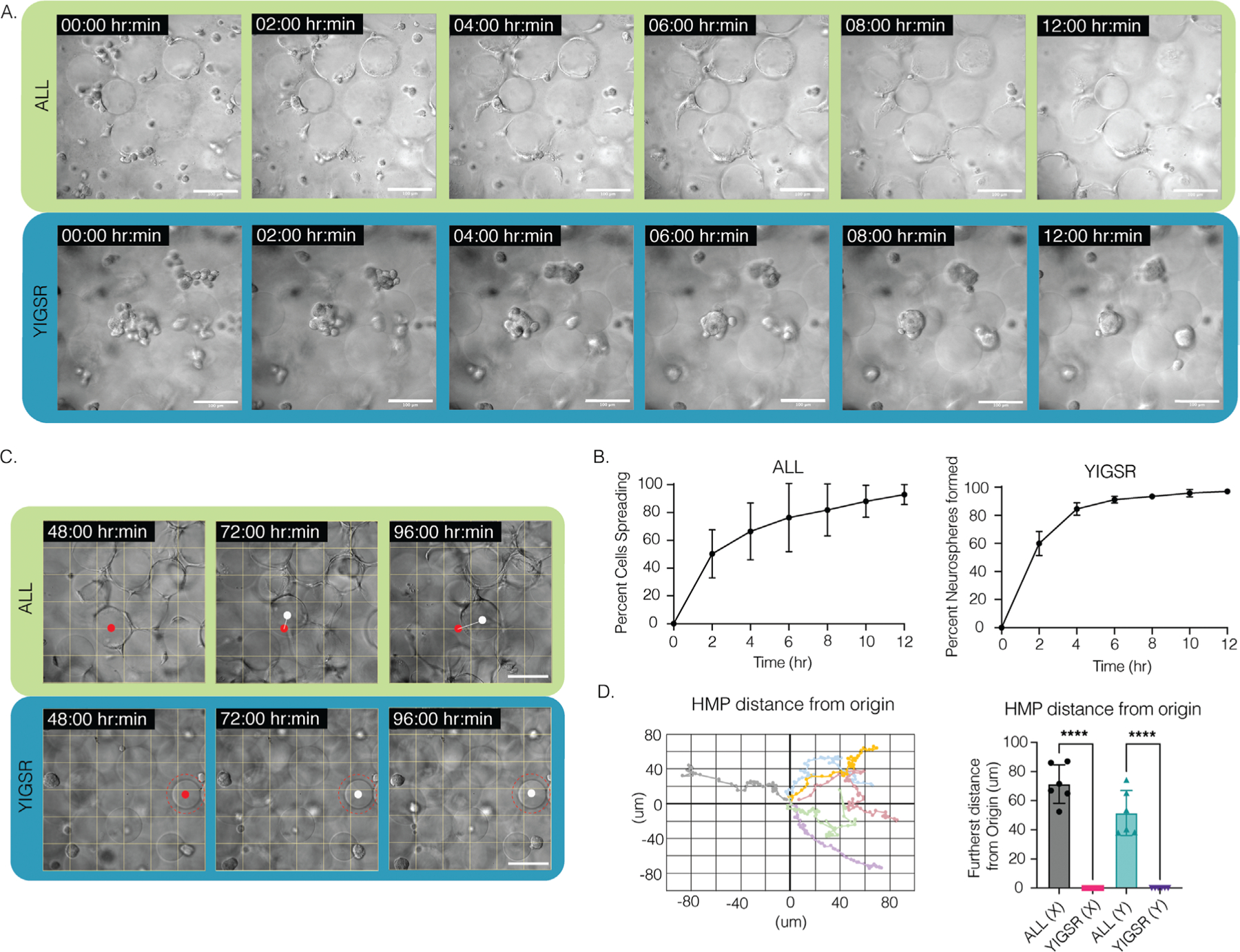
Microporous annealed particle (MAP) scaffolds are generated from assembled hydrogel microparticles (microgels). It has been previously demonstrated that MAP scaffold are porous, biocompatible, and recruit neural progenitor cells (NPCs) to the stroke cavity after injection into the stroke core. Here, the goal is to study NPC fate inside MAP scaffolds in vitro. To create plain microgels that can later be converted to contain different types of bioactivities, the inverse electron-demand Diels-Alder reaction between tetrazine and norbornene is utilized, which allows the post-modification of plain microgels stoichiometrically. As a result of adhesive peptide attachment, NPC spreading leads to contractile force generation which can be recorded by tracking microgel displacement. Alternatively, non-adhesive peptide integration results in neurosphere formation that grows within the void space of MAP scaffolds. Although the formed neurospheres do not impose a contractile force on the scaffolds, they are seen to continuously transverse the scaffolds. It is concluded that MAP scaffolds can be engineered to either promote neurogenesis or enhance stemness depending on the chosen post-modifications of the microgels, which can be key in modulating their phenotypes in various applications in vivo.
微孔退火颗粒 (MAP) 支架是由组装的水凝胶微球 (微凝胶) 生成的。此前已经证明,MAP 支架具有多孔性、生物相容性,并在注射到中风核心后将神经祖细胞 (NPC) 募集到中风腔中。在这里,目的是研究 NPC 在 MAP 支架内的体外命运。为了创建可以随后转化为包含不同类型生物活性的普通微凝胶,利用四嗪和降冰片烯之间的逆电子需求 Diels-Alder 反应,允许普通微凝胶以化学计量的方式进行后期修饰。由于粘附肽的附着,NPC 的扩散导致收缩力的产生,微凝胶位移的跟踪可以记录收缩力的产生。或者,非粘附肽的整合导致神经球的形成,神经球在 MAP 支架的空隙内生长。尽管形成的神经球不会对支架施加收缩力,但可以看到它们不断穿过支架。因此,可以根据微凝胶的选择后期修饰来设计 MAP 支架,以促进神经发生或增强干性,这对于调节它们在体内各种应用中的表型可能是关键。